
In 2026 geldt bij de overdracht van een woning die een koper zelf als hoofdverblijf gaat gebruiken, onder voorwaarden, een overdrachtsbelastingtarief van 2%. Dit is niet anders dan in 2025 toen hiervoor ook al het 2%-tarief gold.
Wat wel gewijzigd is, is het tarief voor overige woningen. Verkrijgt u een woning die u niet zelf als hoofdverblijf gaat gebruiken, dan gold daar in 2025 nog een overdrachtsbelastingtarief van 10,4%. Vanaf 2026 is dit tarief 8%.
Bij overige woningen moet u denken aan een vakantiewoning, een woning die u koopt voor een studerend kind of een woning die u verhuurt.
Voor de verkrijging van overig onroerend goed blijft het overdrachtsbelastingtarief, net als in 2025, 10,4%.
Starters tot 35 jaar oud kunnen bij de aankoop van een woning die zij als hoofdverblijf gaan gebruiken, onder voorwaarden, een vrijstelling toepassen. Ze betalen dan geen overdrachtsbelasting. Een van de voorwaarden is dat de marktwaarde van de woning niet hoger is dan een bepaald bedrag.
In 2026 geldt de startersvrijstelling tot een marktwaarde van € 555.000 (2025: € 525.000). Is de marktwaarde hoger, dan geldt de startersvrijstelling niet, dus ook niet tot het bedrag van € 555.000.
Tip! Het grensbedrag voor de startersvrijstelling in 2027 is ook al bekend. In 2027 geldt de startersvrijstelling tot een bedrag van € 615.000. Voor de toepassing van de vrijstelling is de datum van de levering van de woning bij de notaris bepalend.

De overdrachtsbelasting kent vanaf 2026 drie in plaats van twee tarieven. Daarnaast is de startersvrijstelling verhoogd. Waar moet u rekening mee houden?
LEES VERDER
De box 3-heffing is in 2026 nog gebaseerd op inkomen uit uw vermogen gebaseerd op forfaitaire rendementspercentages. Deze (voorlopige) percentages zijn eind 2025 bekendgemaakt:
| Categorie | Forfaitair rendementspercentage |
| Bank- en spaartegoeden | 1,28% (voorlopig) |
| Schulden | 2,70% (voorlopig) |
| Overige bezittingen | 6,00% (definitief) |
Let op! De percentages voor bank- en spaartegoeden en voor schulden worden pas begin 2027 definitief vastgesteld. De Belastingdienst houdt in 2026 bij het opleggen van de voorlopige aanslag IB 2026 rekening met de hierboven genoemde voorlopige percentages.
De categorie overige bezittingen omvat alles wat geen bank- of spaartegoed of een schuld is. Daarbij moet u denken aan beleggingen, aandelen, obligaties en vorderingen. Het percentage voor overige bezittingen is wel al definitief en bedraagt 6%.
Als uw werkelijke rendement in 2026 lager is dan het forfaitaire rendement, kunt u ook in 2026 een beroep doen op de tegenbewijsregeling. U betaalt dan geen belasting in box 3 over het forfaitaire rendement, maar over uw werkelijke rendement.
Let op! Houd er wel rekening mee dat het werkelijke rendement berekend moet worden volgens de Wet tegenbewijsregeling box 3. Daarbij tellen bijvoorbeeld ongerealiseerde waardestijgingen van onroerend goed en beleggingen ook mee, ook als u deze nog niet te gelde heeft gemaakt.
Het heffingsvrije vermogen is in 2026 hoger dan in 2025. Bedroeg dit in 2025 nog € 57.684, in 2026 komt het heffingsvrije vermogen uit op € 59.357. Dit heffingsvrije vermogen geldt per belastingplichtige. Heeft u een fiscale partner, dan bedraagt het heffingsvrije vermogen gezamenlijk het dubbele (€ 118.714 in 2026).
Ook andere bedragen in box 3 zijn met ingang van 2026 gewijzigd. Zo is de vrijstelling contant geld verhoogd van € 661 in 2025 naar € 672 in 2026. Dit bedrag geldt per belastingplichtige. Met een fiscale partner bedraagt in 2026 de vrijstelling gezamenlijk het dubbele, namelijk € 1.344.
Heeft u schulden, dan mag u in box 3 alleen rekening houden met deze schulden voor zover ze hoger zijn dan de zogenaamde schuldendrempel. Deze schuldendrempel bedraagt in 2026 net als in 2025 € 3.800 per belastingplichtige en € 7.600 voor fiscale partners gezamenlijk.
Heeft u groene beleggingen? De vrijstelling bedraagt in 2026 € 26.715 (2025: € 26.312). Heeft u een fiscale partner dan bedraagt de vrijstelling € 53.430 voor u gezamenlijk (2025: € 52.624). Houd er rekening mee dat de vrijstelling in 2027 nog maar € 200 (€ 400 voor fiscale partners gezamenlijk) bedraagt en per 2028 wordt afgeschaft.
Tip! U heeft in 2026 en 2027 ook recht op een heffingskorting van 0,1% voor uw groene beleggingen. Deze heffingskorting wordt in 2028 ook afgeschaft.
Het tarief in box 3 is in 2026 net als in 2025 36%.

De (voorlopige) forfaitaire rendementspercentages, het heffingsvrije vermogen en andere bedragen voor box 3 in 2026 zijn bekend. Waar moet u mee rekenen in 2026?
LEES VERDER
Na de overstap informeert de Belastingdienst alle klanten via de site en via de berichten die belastingplichtigen ontvangen. Denk hierbij bijvoorbeeld aan het bericht dat u een aanslag moet betalen of een toeslag deels terug moet betalen.
Let op! Tot 1 mei 2026 verandert er niets voor belastingplichtigen.
Vanaf half januari 2026 start de Belastingdienst met het verstrekken van nadere informatie over de wisseling van bank. Zorg dat u tijdig op de verandering inspeelt, om vertraging van uw betalingen en boetes te voorkomen. U vindt hier meer informatie.

De Belastingdienst en de Dienst Toeslagen krijgen per 1 mei 2026 een nieuw rekeningnummer. Het nieuwe rekeningnummer is het gevolg van de overstap van ING naar de Rabobank.
LEES VERDER
In deze Advieswijzer worden de belangrijkste wijzigingen van de Wtp toegelicht en verwerkt in de vereiste tijdslijnen. Ook worden uitzonderingen benoemd en toegelicht.
Het ‘oude’ pensioensysteem voldeed niet meer aan de eisen van de moderne maatschappij en de actuele arbeidsmarkt. Daarom is in 2010 afgesproken om de pensioenleeftijd, zowel van de AOW als de werkgever, te verhogen. Deze staat nu op 67 jaar en 3 maanden per 2028 voor de AOW en 68 jaar voor de werkgever en stijgt naarmate de levensverwachting verder toeneemt. Het pensioen mag op z’n vroegst (nog maar) tien jaar voor de AOW-datum ingaan, maar dan hoeft geen ‘niet-meer-werken verklaring’ te worden afgegeven. Na ingang van het pensioen mag dus gewoon – of na een aantal jaren – (door)gewerkt worden.
Verder stond de zogenaamde doorsneepremie onder druk, nu de meeste werknemers niet meer hun hele arbeidzame leven bij dezelfde werkgever en/of in dezelfde branche werkzaam zijn. Daardoor zou je als ‘jongere’ te veel premie, en als ‘oudere’ te weinig premie betalen voor je (middelloon)pensioenaanspraken. Ook moet ervoor gezorgd worden dat zo veel mogelijk werkenden – jongeren, flexwerkers en zzp’ers – pensioen kunnen en gaan opbouwen, als pensioen of als lijfrente. En tot slot ‘verpersoonlijkt’ de maatschappij en er is meer behoefte aan keuzes en maatwerk.
De kritiek op het oude pensioensysteem van ‘ouderen’ was voorts dat er onvoldoende ruimte was om te profiteren van goede beleggingsresultaten, zeker bij een dalende/lage marktrente, dat terwijl er altijd een inflatievast pensioen was gecommuniceerd.
Dit alles heeft uiteindelijk geresulteerd in de nieuwe Wtp met vier uitgangspunten.
Alle pensioenregelingen moeten per 2028 voldoen aan de wet. Dit geldt voor:
1. Alle pensioenregelingen worden premieovereenkomsten (beschikbare premieregelingen) en kennen een maximale premie-inleg van 30%. Iedere werknemer krijgt dan dezelfde premie toegezegd en er is geen onderscheid meer tussen jong en oud. De bekende beschikbare premiestaffels worden, behoudens een overgangsregime, afgeschaft. Ook de lijfrenteaftrek is verhoogd van 13,3% naar 30%, met ook nog een uitbreiding van de reserveringsruimte (‘inhaalpremie over de afgelopen jaren’). En deze 30% wordt eerst per 1 oktober 2034 herzien, afhankelijk van de dan geldende marktrente, en kan dan hoger of lager uitvallen.
Let op! Er komt geen pensioenplicht!
2. Middelloonregelingen en beschikbare premieregelingen op basis van stijgende staffels zijn vanaf 2028 verboden. Er bestaan alleen nog premieovereenkomsten met een flatratepremie: de solidaire variant en de flexibele variant. Daarnaast bestaat nog de premie-uitkeringsovereenkomst.
3. De solidaire premieovereenkomst wordt door de verplichte bedrijfstakpensioenfondsen uitgevoerd en kenmerkt zich door collectieve beleggingen en een verplichte solidariteitsreserve, primair om pensioenverlagingen te mitigeren, ter grootte van maximaal 15% van het fondsvermogen.
De flexibele premieovereenkomst wordt met name door ondernemingspensioenfondsen en in de vrije markt toegezegd. Deze kenmerkt zich door meer keuzevrijheid qua beleggingen, maar kan ook een risicodelingsreserve in de uitkeringsfase kennen, van ook maximaal 15% van het fondsvermogen. Deze mag dan niet gevuld worden uit rendement vanuit de persoonlijke kapitalen, maar is wel wederom bedoeld om pensioenverlagingen na ingang te mitigeren.
De premie-uitkeringsovereenkomst tot slot is de variant om vanaf 15 jaar voor pensioendatum jaarlijks een deel van de beleggingen om te zetten in een (uitgestelde) vaste pensioenuitkering. Alleen verzekeraars kunnen dit aanbieden.
Alle pensioenen worden ingevaren (lees: omgezet) in een persoonlijk pensioenkapitaal. Dát kapitaal is vervolgens bepalend voor de hoogte van het pensioen, waarbij jaarlijks beleggingsresultaat én wijziging in de levensverwachting worden verwerkt. Omdat de initiële uitkering gebaseerd is op een relatief laag verwacht (projectie)rendement én er een solidariteits- of risicodelingsreserve is, is de kans op verlagingen na ingang normaliter niet erg groot.
4. Er komt meer keuzevrijheid en maatwerk. Vooralsnog is dit onderdeel beperkt uitgebreid ten opzichte van de reeds bestaande mogelijkheden. Feitelijk is alleen het bedrag ineens, ofwel de lumpsum van 10% (van het pensioenkapitaal) op pensioendatum, erbij gekomen als flexibiliseringselement. Dit is overigens pas per 1 juli 2026 mogelijk zoals het er nu uitziet. Dit mag dan niet in combinatie met een hoog/laag-pensioen. Alle andere flexibiliseringselementen, zoals eerder of later met (deeltijd)pensioen, een hoog/laag-pensioen, uitruil ouderdoms- en partnerpensioen en bijsparen, bestonden al en blijven uiteraard.
Let op! Ook al mogen zittende werknemers per eind 2027 hun bestaande regeling houden, wellicht willen ze toch kiezen voor de nieuwe regeling voor nieuwe werknemers. Dat is geen recht. In sommige cao’s is dit wel afgesproken!
De sociale partners verzoeken het pensioenfonds om de opgebouwde pensioenen in te varen, of niet. Als dit niet wordt verzocht, blijft het huidige systeem, het zogenaamde Financieel ToetsingsKader (FTK), van kracht en blijft de dekkingsgraad primair bepalend of er geïndexeerd kan worden en/of de pensioenen zelfs verlaagd worden.
Als er wel wordt ingevaren, dan mag het pensioenfonds de dekkingsgraadbuffer gebruiken voor een invaarbonus, dus een verhoging van alle pensioenen, en/of voor compensatie van 45-plussers. Ook de solidariteitsreserve wordt ermee gevuld.
Omdat de doorsneepremie wordt afgeschaft, en dus 45-plussers niet meer kunnen profiteren van premiesubsidie van jongeren, moeten zij adequaat gecompenseerd worden voor het gemis aan toekomstige opbouw. Dit wordt bij pensioenfondsen veelal uit de buffer gefinancierd, en soms ook uit de premie van de (jongere) actieven. ‘Adequaat’ is niet wettelijk vastgelegd en hoeft dan ook niet op de euro nauwkeurig te zijn. Gedurende tien jaar mag dan 3% extra pensioenpremie worden gegeven als compensatie. Ook nieuwe werknemers krijgen dan recht op dezelfde pensioencompensatie. De compensatiemag echter ook in de vorm van extra salaris; dat geldt dan niet per definitie voor nieuwe werknemers.
Het is altijd een optie om met het pensioenkapitaal op pensioendatum een vast pensioen in te kopen bij een verzekeraar. Dit moet dan wel zijn toegestaan vanuit een (verplichte) solidaire pensioenregeling. Dit impliceert dan ook dat opgebouwde (premievrije) uitkeringsovereenkomsten (middelloon en/of nog eindloon) gewoon in stand kunnen blijven bij verzekeraars en niet hoeven te worden ingevaren. Eventuele indexatie-toezeggingen blijven hierop dan ook van kracht.
Deze kennen een overgangsregime voor alle werknemers die per ultimo 2027 in dienst zijn. Nieuwe werknemers na 2028 moeten wél een flatratepremie krijgen. Als gekozen wordt voor het overgangsregime, hoeft er niet gecompenseerd te worden. Als ook zittende werknemers over (moeten) gaan naar een flatratepremie, dan moeten ook zij wél adequaat worden gecompenseerd, wederom via extra pensioen of salaris.
Het partnerpensioen wordt vereenvoudigd. Allereerst krijgen zowel gehuwden (en dus geregistreerde partners) als samenwonende partners recht op hetzelfde partnerpensioen, áls er partnerpensioen is toegezegd. Er kan dan via een samenlevingsklaring worden aangetoond, zelfs achteraf, dat er sprake is van een samenleving. De hoogte wordt maximaal 50% van het salaris en is diensttijdonafhankelijk. Tot slot wordt het partnerpensioen uitsluitend nog op risicobasis verzekerd. Bij uitdiensttreding (en dus ook bij zzp’er worden) of echtscheiding, vervalt het. Wel kan het dan of vrijwillig worden voortgezet of kan het kapitaal bedoeld voor het ouderdomspensioen worden gebruik voor een voortgezette dekking.
Op de pensioendatum moet dan definitief worden gekozen of met het pensioenkapitaal alleen een ouderdoms- of ook een partnerpensioen wordt aangekocht!
Let op! Het wezenpensioen wordt verplicht tot 25 jaar uitgekeerd. Een andere leeftijd is niet meer toegestaan. Dit geldt ook voor bestaande regelingen!
Omdat de meeste pensioenregelingen een premie kennen lager dan 30%, of niet over het hele salaris pensioen toekennen (inclusief niet over de bijtelling auto van de zaak), zullen de meeste werknemers vrijwillig kunnen bijsparen. Dit kan in pensioen, tot 30% of via een (bancaire) lijfrente, en dan ook over de bijtelling auto van de zaak.
Bij de keus tussen beide vormen van bijsparen, moet bedacht worden dat een pensioenuitkering altijd levenslang is, bij overlijden vervalt en vaak collectief wordt beheerd. Een lijfrente kan ook een tijdelijke uitkering kennen van minimaal vijf jaar en maximaal € 27.192 (2026) per jaar. En het niet-uitgekeerde kapitaal vererft altijd bij een bancaire lijfrente, naast het (meer) persoonlijke vermogensbeheer.
Een ‘levenslange’ bancaire lijfrente (van in principe twintig jaar vanaf AOW-datum), hoeft bij ingang na AOW-datum ook nog maar twintig jaar minus dat aantal jaren te duren. Een lijfrente is al met al flexibeler en vererft.
Hoewel vroegpensioen sec geen onderdeel is van de Wtp, is in aanvulling op de Wtp het boetevrije Recht op Vervroegde Uittreding in 2021 geïntroduceerd en per 2026 onbepaald verlengd als invulling van een ‘zware beroepen-regeling’.
Tot een bedrag van € 2.357 per maand, en in echt knellende situaties zelfs € 2.657 per maand, mag een werknemer vanaf drie jaar voor AOW-datum ‘met RVU’, zonder (loonbelasting) boete voor de werkgever. Per cao of bedrijf mag dit worden geregeld. Daarnaast kan er invulling worden gegeven aan ‘vroegpensioen’, door alle flexibiliseringsmogelijkheden te combineren tot een ‘generatieregeling’. Bijvoorbeeld vanaf vijf jaar voor AOW-datum een verkorte werkweek tot 70%, met behoud van 80% salaris en 90% pensioenopbouw. Alles tussen 50 en 100%, vanaf tien jaar voor AOW-datum, is toegestaan. Ook demotie is een vorm van vroegpensioen voor ‘zware beroepers’.
Dit kan de werknemer dan vervolgens zelf combineren met deeltijdpensioen, hoog/laag en overbrugging van de AOW, en uiteraard privévoorzieningen.
Gezien de vergrijzing en verkrappende arbeidsmarkt zal er de komende jaren dan ook veel aandacht moeten zijn voor employability & pensioen.
Ook dit is gelijk met Wtp door de sociale partners afgesproken, primair op initiatief van de vakbonden. Maar deze wordt niet voor 2030 verwacht, met name gezien de onuitvoerbaarheid door het UWV. En zelfs dan komen er nog diverse opting-out mogelijkheden.
Het is te verwachten dat na de transitieperiode er (nog) meer flexibiliseringsmogelijkheden komen. Te denken valt aan herziene keuzemogelijkheden na ingang en gebruik pensioengeld vóór ingang, bijvoorbeeld voor scholing, mantelzorg, maar ook voor een sabbatical.
Een algehele pensioenplicht ligt nog niet in het verschiet, evenmin als afschaffing van de verplichtstelling.
De totale tijdslijn voor de doorvoering was/is dan ook als volgt:
Het is van belang dat u als werkgever zelf goed weet waar u op moet letten. Ook moet u uw werknemers duidelijkheid verschaffen en op tijd meenemen in het proces. Denk hierbij aan:
Let op! Het gehele traject om over te stappen naar de nieuwe Wtp duurt ten minste acht tot twaalf maanden. Bent u nog niet begonnen, start dan nu direct!

Per 1 juli 2023 is de Wet toekomst pensioenen (Wtp) in werking getreden. Er geldt een overgangsregeling tot 2028. Dat betekent dat per 2028 alle pensioenregelingen aangepast moeten zijn aan de Wtp, al dan niet gebruikmakend van de diverse overgangsregelingen.
LEES VERDER
De mogelijkheid om stikstof uit te stoten hangt af van de vereiste omgevingsvergunning. In sommige gevallen kan de hoeveelheid uit te stoten stikstof, de stikstofdispositieruimte, worden gebruikt door andere ondernemers. Deze betalen hiervoor een prijs aan de ondernemer, die de na wijziging van zijn bedrijfsactiviteiten de stikstofdispositieruimte aanbiedt.
De Belastingdienst neemt het standpunt in dat stikstofdispositieruimte een zelfstandig bedrijfsmiddel is. In een eerder Besluit (d.d. 27 oktober 1998, nr. DB98/2669M) is het standpunt ingenomen dat ammoniakrechten een zelfstandig bedrijfsmiddel vormen. Omdat stikstofdispositieruimte hiermee vergelijkbaar is, geldt dit daarom ook voor deze rechten. Ook rechtspraak uit het verleden steunt deze zienswijze.
De Belastingdienst geeft aan dat afschrijven op stikstofdispositieruimte niet mogelijk is. De omgevingsvergunning waarmee de stikstofdispositieruimte verbonden is, kent namelijk geen einddatum.
Aangegeven wordt dat het mogelijk is een HIR te vormen voor de ontvangen vergoeding die betaald wordt voor de mogelijkheid stikstof uit te stoten. Het is immers een verkregen vergoeding voor de vervreemding van een zelfstandig bedrijfsmiddel. Uiteraard moet voldaan worden aan de voor een HIR geldende voorwaarden.
Het is niet mogelijk deze HIR af te boeken op nieuwbouw als een ondernemer na beëindiging van stikstofbelastende activiteiten hierin investeert. Een investering in nieuwbouw dient namelijk te worden afgeschreven in meer dan tien jaar. De HIR vereist dan dat de nieuwe investering eenzelfde economische functie heeft als de vervreemde investering. Het huisvesten van bedrijfsactiviteiten heeft niet dezelfde economische functie als die van de stikstofdispositieruimte, namelijk een vergunning om bepaalde activiteiten te verrichten. Het afboeken op de HIR is daarom dan ook niet mogelijk.

De Belastingdienst heeft een standpunt bekendgemaakt over stikstofdispositieruimte. Het standpunt betreft de mogelijkheid tot afschrijven en het toepassen van de herinvesteringsreserve (HIR) op de stikstofdispositieruimte.
LEES VERDER
Of u kwijtschelding krijgt als erfgenaam voor de belastingschulden van de overledene, hangt af van uw (financiële) situatie. Is er voldoende financiële draagkracht, dan krijgt u geen kwijtschelding.
Let op! U kunt alleen kwijtschelding krijgen als u daarom verzoekt. Dit doet u met een door de Belastingdienst beschikbaar gesteld formulier.
U bent partner van de overledene als u met hem/haar getrouwd was of een geregistreerd partnerschap had. In zo’n geval kijkt de Belastingdienst bij het beoordelen van de kwijtschelding ook naar uw eigen financiële omstandigheden.
Bent u echter alleen erfgenaam en geen partner van de overledene? Dan kijkt de Belastingdienst niet naar uw eigen financiële omstandigheden. De Belastingdienst kijkt dan vooral of de belastingschuld (deels) uit de erfenis betaald kan worden.
Als u van tevoren weet dat de nalatenschap meer schulden dan bezittingen bevat, kunt u deze misschien beter niet aanvaarden, maar verwerpen. Een andere mogelijkheid is beneficiair aanvaarden. In zo’n geval aanvaardt u de erfenis, onder voorwaarde dat u niet privé aansprakelijk bent voor de schulden uit de erfenis.
Tip! De Belastingdienst heeft online informatie over wat u kunt doen bij een belastingschuld van een overledene. Neem voor advies over uw eigen situatie contact op met onze adviseurs.

Als een overledene belastingschulden heeft, kan de Belastingdienst deze in bepaalde gevallen kwijtschelden bij de erfgenamen. Voor erfgenamen die geen partner zijn van de overledene, zijn er wellicht ruimere mogelijkheden.
LEES VERDER
Voor de waarde van maaltijden in bedrijfskantines of soortgelijke ruimtes of tijdens personeelsfeesten op de bedrijfslocatie, bedraagt het normbedrag in 2026 € 4,05. In 2025 bedroeg dit bedrag nog € 3,95.
Let op! Het normbedrag – verminderd met een eventuele bijdrage van uw werknemer – is loon voor uw werknemer.
Tip! U kunt er ook voor kiezen om dit loon aan te wijzen als eindheffingsloon in de vrije ruimte. In dat geval betaalt u werknemer hier geen loonbelasting over. U bent dan 80% eindheffing verschuldigd als het totaal van aangewezen loonbestanddelen de vrije ruimte in een jaar overschrijdt.
Voor de extra kosten die verbonden zijn aan thuiswerken kunt u, onder voorwaarden, een onbelaste vergoeding geven aan uw werknemer. Deze onbelaste vergoeding bedraagt in 2026 € 2,45 per dag. In 2025 was dit nog € 2,40.
Verzorgt u huisvesting op de werkplek, dan kan daar onder voorwaarden een nihilwaardering voor gelden. Als deze nihilwaardering niet van toepassing is en er geen sprake is van een (dienst)woning, kunt u onder voorwaarden voor de waarde van de huisvesting in 2026 het normbedrag van € 7,00 per dag aanhouden. In 2025 bedroeg dit normbedrag nog € 6,80 per dag.
Het bedrag van de onbelaste reiskostenvergoeding is in 2026 net als in 2025 € 0,23 per kilometer.

Binnen de werkkostenregeling bestaan verschillende normbedragen, bijvoorbeeld voor maaltijden, thuiswerken, huisvesting op de werkplek en reiskosten. Welke normbedragen gelden in 2026?
LEES VERDER
Veelal wordt geschonken aan kinderen. Hiervoor gelden dan ook de meeste vrijstellingen, die ook voor 2026 zijn geïndexeerd. U mag aan ieder kind in 2026 € 6.908 belastingvrij schenken (2025: € 6.713).
Er geldt ook een tweetal eenmalig verhoogde vrijstellingen voor schenkingen van ouders aan hun kinderen. Zo mogen ouders in 2026 aan ieder kind in de leeftijd tussen de 18 en 40 jaar – uiterlijk op de 40e verjaardag – eenmalig een bedrag van € 33.129 (2025: € 32.195) schenken.
Let op! Als u dit eenmalig verhogde bedrag in 2026 schenkt, mag u uw kind niet ook nog het bedrag van € 6.908 belastingvrij schenken.
Volgt uw kind een dure studie? Dan mag u eenmalig een bedrag van € 69.009 (2025: € 67.064) aan uw kind tussen 18 en 40 jaar schenken ter financiering hiervan. Aan deze schenking is een aantal voorwaarden verbonden. Onder meer moet de studie minstens € 20.000 per jaar kosten, exclusief de kosten van het levensonderhoud. U moet de schenking notarieel vastleggen. Ook moet u kunnen aantonen dat de schenking daadwerkelijk voor de studie gebruikt is.
Let op! Ook hier geldt dat als u dit bedrag schenkt, u uw kind in dat jaar niet ook nog het bedrag van € 6.908 belastingvrij mag schenken.
Let op! U mag de verhoogde vrijstellingen alleen gebruiken als er in het verleden niet eerder gebruikgemaakt is van een verhoogde vrijstelling. Dit geldt ook voor de verhoogde vrijstelling die enige jaren gold ten behoeve van een eigen woning.
Schenkt u een bedrag aan een ander dan uw kind, bijvoorbeeld aan uw kleinkind, dan bedraagt de vrijstelling in 2026 € 2.769 (2025: € 2.690).
Let op! Alle genoemde vrijstellingen gelden per kalenderjaar.
Schenkt u meer dan de genoemde bedragen, dan betalen uw kinderen in 2026 10% belasting over een bedrag tot € 158.669 (2025: € 154.197). Over het meerdere betalen ze 20% belasting. Kleinkinderen en verdere afstammelingen betalen 18% belasting over een bedrag tot € 158.669 en 36% over het meerdere. Voor alle anderen bedraagt het tarief 30% tot € 158.669 en 40% over het meerdere.
Naast de bedragen van de vrijstellingen in de schenkbelasting, zijn ook de vrijgestelde bedragen in de erfbelasting verhoogd als gevolg van de jaarlijkse indexatie. Dit levert de onderstaande vrijstellingen op:
| 2025 | 2026 | |
| Vrijstelling partner | € 804.698 | € 828.035 |
| Vrijstelling invalide kind | € 76.453 | € 78.671 |
| Vrijstelling (klein)kinderen | € 25.490 | € 26.230 |
| Vrijstelling ouder | € 60.359 | € 62.110 |
Met betrekking tot bovenstaande vrijstellingen is van belang dat kinderen die geen juridische band hebben met hun biologische ouder gelijkgesteld worden aan kinderen die deze band wel hebben. Over schenkingen en erfenissen van hun biologische, maar niet juridische ouder, gelden voortaan dus dezelfde vrijstellingen.

Ook in 2026 kunt u weer gebruikmaken van de jaarlijkse schenkvrijstellingen. Tot welke bedragen kunt u belastingvrij schenken? Wat is er daarnaast nog gewijzigd met betrekking tot belastingvrij schenken?
LEES VERDER
De gebruikelijkloonregeling geldt voor elke aandeelhouder met een aanmerkelijk belang in een bv die ook werkzaamheden verricht voor die bv.
Let op! Verricht uw fiscale partner ook werkzaamheden voor de bv, dan moet ook voor uw partner een gebruikelijk loon in aanmerking worden genomen.
Het gebruikelijk loon bedraagt in 2026 het hoogste bedrag van een van de volgende bedragen:
Het normbedrag voor het gebruikelijk loon is in 2026 € 2.000 hoger dan in 2025 toen dit nog € 56.000 bedroeg.
Tip! Komt het berekende loon hoger uit dan het loon uit de meest vergelijkbare dienstbetrekking? Dan mag u uw gebruikelijk loon vaststellen op dat lagere loon. De discussie met de Belastingdienst hierbij zal met name gaan over de vraag of het door u gestelde loon inderdaad het loon uit de meest vergelijkbare dienstbetrekking is.

Een dga die werkt voor zijn eigen bv moet een gebruikelijk loon genieten uit zijn bv. Het normbedrag binnen de gebruikelijkloonregeling stijgt per 2026 naar € 58.000.
LEES VERDER
Bij het bepalen van de hoogte van de transitievergoeding dient onder meer gekeken te worden naar eerdere dienstverbanden als deze zes maanden of korter geleden zijn beëindigd. In een aan de Hoge Raad voorgelegde zaak, ging het om een werknemer die door de werkgever binnen zes maanden na diens ontslagname was teruggevraagd. Er was vervolgens een nieuwe arbeidsovereenkomst tussen partijen gesloten. Naar de letter van de wet telt dan het oude dienstverband mee.
De nieuwe arbeidsovereenkomst werd later door de kantonrechter ontbonden op grond van een verstoorde arbeidsrelatie (de zogenaamde g-grond). De werknemer was het vervolgens niet eens met de berekening van de transitievergoeding.
De Hoge Raad oordeelt echter dat het meenemen van het eerdere dienstverband, beëindigd door de werknemer zelf, niet overeenkomstig de geest van de wet is zoals deze naar voren komt uit de parlementaire stukken en de wet dus niet zo moet worden uitgelegd.
Volgens de Hoge Raad brengt een redelijke wetsuitleg mee dat eerdere arbeidsovereenkomsten die zijn beëindigd op initiatief van de werknemer – zonder dat sprake was van ernstig verwijtbaar handelen of nalaten van de werkgever – niet worden meegerekend bij de toepassing van de wet, waar het gaat om de samentelling van dienstverbanden ter bepaling van de hoogte van de transitievergoeding.
In deze casus hoefde de werkgever bij het vaststellen van een transitievergoeding dus niet de eerdere arbeidsovereenkomst mee te rekenen in de uiteindelijke transitievergoeding.

De hoogte van de transitievergoeding is mede afhankelijk van de duur van de beëindigde arbeidsovereenkomst. Voor elk jaar dat de arbeidsovereenkomst heeft geduurd is een derde van het brutomaandsalaris verschuldigd. Is dat altijd het geval?
LEES VERDER
Please note! Due to significant uncertainty as to whether the government’s plans will be approved by the House of Representatives and the Senate, some of the tips below may still change (in part) before the end of the year. Please bear this in mind!
Should you pay a dividend this year, or would it be better to wait until 2026? There is no one-size-fits-all answer to this question. In any case, be sure to take the following points into consideration:
Please note! Discuss your own situation with our advisers. They can calculate the effect of the dividend payment on, for example, your tax credits and your tax liability in Box 3. Based on this, you can decide whether or not to pay out a dividend. At present, the advice is to wait for the time being until there is a little more clarity on which tax plans will ultimately be passed by the House of Representatives and the Senate.
The measure concerning excessive borrowing from one’s own company broadly means that a director and major shareholder who borrows too much from their own private limited company will pay Box 2 tax on this amount. A threshold of €500,000 currently applies, but the government intends to lower this limit to €100,000. This will be implemented in five stages of €80,000 per year, starting in 2027. By the end of 2027, the threshold will stand at €420,000, and by the end of 2031, the €100,000 limit will have been reached. Although the measure still needs to be passed by the House of Representatives and the Senate, it may well be wise to factor the reduction in the threshold into your dividend planning.
Please note! As is currently the case, home loan debts remain exempt under the proposal and will therefore not count towards the threshold from 2027 onwards. However, for home loan debts incurred on or after 1 January 2023, the condition applies that these must be secured by a mortgage registered against the property.
From 2027, a 12% pseudo-final levy will apply to company cars if these vehicles emit CO₂ (hereinafter: fossil-fuelled company cars). This levy is calculated on the basis of the car’s list price (and, for cars older than 25 years, on the basis of its market value). This is an employer’s levy that you are not permitted to pass on to the employee! Furthermore, the employee may also be liable for the additional tax liability relating to private use.
So what can you still do now to avoid this levy in 2027?
Any vehicle that is not a passenger car, such as a van, lorry or tractor, is also exempt from the 12% pseudo-final levy. Please note, however, that a campervan and a minibus may also be classified as passenger cars. Check the classification in the vehicle registration register. An M1 vehicle is a passenger car!
Please note! When changing employers, the transitional arrangement – which normally runs until 31 December 2030 – ceases to apply. This is because the transitional arrangement is linked to the car in combination with the employer. If a former employee takes the car with them to a new employer, that link is broken and the transitional arrangement lapses. The new employer will then be subject to the 12% pseudo-final levy from day one.
There are still a number of exceptions to the 12% pseudo-final levy. For example, under certain conditions, a replacement car is exempt from the levy for up to fourteen consecutive days, and manual-gearbox driving school cars are also exempt.
There may be various reasons for setting up a private limited company in 2026 and transferring your income tax business into it. One reason could be that you were already planning to do this and also wish to transfer a fossil-fuelled passenger car into the company:
If you contribute the income tax business to the private limited company in 2026 with a tax settlement, you can still benefit from the cessation allowance of €3,630. In 2027, this allowance will fall to €908. If you still have a FOR that is due to be released, you can also make use of the cessation allowance in the event of a silent contribution.
Furthermore, a number of the entrepreneur’s income tax benefits will be further scaled back. For example, the self-employed person’s allowance will fall from €1,200 in 2026 to €900 in 2027; the additional self-employed person’s allowance for a start-up will fall from €2,123 in 2026 to €10 in 2027; and the family business allowance will be reduced by 75% in 2027.
This may also be a reason to switch to a private limited company (BV) in 2026.
Please note! Whether it is advantageous to transfer your income tax-registered business into a private limited company naturally depends not only on the 12% pseudo-final levy, the cessation allowance and other business tax deductions. In addition to tax considerations, other factors, such as limited liability, may also play a role. You should therefore consult our advisers to determine whether switching to a private limited company might be advisable. Do not wait too long to do so. You will need a solicitor to set up a private limited company, and solicitors’ diaries generally fill up quickly towards the end of the year.
From 2027, a new authorisation scheme will come into force for parties that supply workers (labour providers). This is regulated by the Labour Supply Authorisation Act (Wtta).
The licensing scheme applies to anyone who makes workers (including self-employed persons) available to third parties. This includes temporary employment agencies, secondment agencies and agencies that supply self-employed persons. However, even a private limited company that supplies its director-major shareholder to another company may fall under the licensing scheme!
Fortunately, there are exceptions. For example, peer-to-peer lending where no profit is made is not subject to the authorisation scheme. The same applies to lending and borrowing within a group of companies.
If no exception applies, you may be able to apply for an exemption. This is possible if your income from lending services in a given year amounts to less than 10 per cent of your total income and that income does not exceed €5 million per year. In addition, an accountant must certify annually that these thresholds are not exceeded.
Please note! To be able to make use of a transitional arrangement, it is important that you submit an application between 1 November 2026 and 31 December 2026! This will ensure that you can continue to lend for the time being. It is, however, important that you also submit an application for admission to the scheme between 1 May 2027 and 30 June 2027. If you have an SNA quality mark by 30 June 2027 at the latest, you do not need to register for the transitional scheme in 2026. You will, however, still need to apply for admission between 1 May 2027 and 30 June 2027.
A property that is not your main residence – for example, a holiday home or a property you let out – falls under Box 3. If you are planning to purchase such a property, it may be advantageous to have the transfer at the solicitor’s take place in 2027 rather than in 2026.
This is because the transfer tax on the acquisition of properties that are not your main residence is currently still 8 per cent, but will be 7 per cent from 2027 onwards. Furthermore, the flat-rate Box 3 tax on bank balances (should you purchase the property using bank balances) is considerably lower than that applied to the property itself, which is classified as other assets.
For a new, fully electric car made available in 2026, an additional tax liability of 18 per cent applies to the first €30,000 of the list price and 22 per cent on the amount above that. If the new, fully electric car is first made available in 2027, the additional tax liability will be 20 per cent on the first €30,000 of the list price and 22 per cent on the amount above that. If the car runs on hydrogen or is powered by solar panels, the €30,000 limit does not apply and the additional tax liability in 2026 will be 18 per cent of the full list price, and in 2027 20 per cent of the full list price. These additional tax rates apply for a period of 60 months. This may be a reason to try to acquire a car with zero CO₂ emissions in 2026, or failing that, in 2027.
If your car with CO₂ emissions falls under the ‘youngtimer’ scheme, the additional tax liability will not be 22 per cent (or 25 per cent for a car first registered before 2017) of the list price, but 35 per cent of the market value. The ‘youngtimer’ scheme will apply in 2026 if the car is 16 years old or older on 1 January 2026, or if it was already at your disposal in 2025 and turns 16 in 2026. From 1 January 2027, the age limit is likely to rise to 17 years (it is currently 25 years) and from 1 January 2028 to 20 years. Do you drive the ‘youngtimer’ through your income tax business, such as a sole trader? If so, you may wish to transfer the car to your private name. Normally, this isn’t possible without further ado, but due to the legislative change, there may be options available. Please discuss this with our advisers.
Check whether you have any remaining allowance under the work-related expenses scheme (wkr) and make use of it. In 2026, this allowance amounts to 2 per cent of the first €400,000 of the wage bill and 1.18 per cent above that amount. Any allowance remaining in 2026 cannot be carried forward to 2027!
Incidentally, the allowance will increase slightly in 2027. It will then amount to 2.16% on the first €400,000 of the wage bill and 1.18% on the amount above that.
Please note! The targeted exemption for staff discounts on sector-specific products will be abolished from 2027. Therefore, only in 2026 will you still be able to grant a targeted exemption for a reimbursement or discount of up to 20 per cent of the product’s market value, with a maximum of €500 per employee per year.
A new, attractive scheme for share options at start-ups and scale-ups is due to come into force, probably from 2027. Under the new scheme, 35% of the benefit (= the difference between the proceeds from the sale of the shares on the one hand and the contribution and purchase price of the shares on the other) remains tax-free. Furthermore, the employee only pays tax upon the sale of the shares acquired through the share options.
Various conditions apply, and the Netherlands Enterprise Agency (RVO) must classify your company as an innovative start-up or scale-up. What is important for now is that share option rights granted on or after 17 April 2025 may be eligible for the new scheme. It is therefore important that these share option rights have not yet been included in payroll tax as at 31 December 2026. In any case, ensure that share option rights granted on or after 17 April 2025 meet this requirement.

As an entrepreneur, director and major shareholder, employer or private individual in the Netherlands, what can or must you sort out before the end of 2026? Or what should you actually wait to do? What changes are coming into effect in 2027 that you can already prepare for now? We’ve put together a few important tips for you.
READ MORE
Please note! Not all the points listed below are taken from the 2027 Tax Plan. Some changes had already been decided upon, but adjustments have since been made to them.
From 2027, the government will be scaling back various tax benefits for entrepreneurs.
The entrepreneur’s allowance reduces the profit on which an entrepreneur pays income tax. From 2027, further cuts will apply to various components of this allowance.
Please note! This scheme applies to self-employed people who do not meet the 1,225-hour criterion but do meet the reduced 800-hour criterion and are entitled to incapacity benefit.
The cessation allowance and the rates for the co-worker allowance will cease to apply at the start of the third calendar year following the year in which the reduction takes effect. As the changes come into force in 2027, the schemes will therefore cease to apply on 1 January 2030.
As of 1 January 2028, another tax benefit for business owners will be abolished: the discretionary depreciation scheme for start-ups.
Start-up business owners, those planning to cease trading within a few years, and business owners with a co-working partner will be particularly affected. The choice between a sole trader, a general partnership (VOF) or a private limited company (BV) therefore once again requires a calculation based on actual profits and personal circumstances.
Please note!If there are significant changes to your profits, business partnerships or business succession, have a fresh assessment carried out to determine which legal form is best suited to your business.
Tip! Due to the higher aggregate income, benefits may also change. You should therefore check your estimated income for benefit purposes in good time for 2027 and 2028.
Employers may, with retroactive effect up to and including 1 January 2026, reimburse a maximum of €0.25 per business kilometre tax-free. This was previously €0.23. The increase also applies to commuting. The government is now enshrining this increase in law with retroactive effect.
Please note!The increase does not automatically mean that every employee is entitled to €0.25 per kilometre. This depends on the employment contract, the collective labour agreement and the employer’s own mobility policy. For employers, a higher allowance may lead to higher wage costs.
The discretionary allowance on the first €400,000 of the taxable wage bill will increase from 2% to 2.16% with effect from 1 January 2027. This will give you a maximum of €640 extra discretionary allowance per year. This increase was adopted earlier and is therefore not part of the 2027 Tax Plan.
Tip! Update your staff handbook, expense claim policy and payroll administration in good time, and assess whether a higher mileage allowance is desirable from both a financial and employment conditions perspective. Does your organisation offer staff discounts on sector-specific products? If so, consider what the end of this exemption will mean. This will mainly affect the retail and manufacturing sectors.
If, as an employer, you make a passenger car with emissions available to an employee for private use from 2027 onwards, you will be subject to a pseudo-final levy of 12 per cent of the list price. This levy is in addition to the employee’s additional tax liability and must not be passed on to the employee. Transitional provisions apply to cars made available before 1 January 2027.
The pseudo-final levy was already adopted last year, but following consultation, four amendments are being proposed.
The ‘youngtimer’ scheme will be scaled back more gradually than previously stipulated, and the changes will be less far-reaching. The additional tax liability will continue to be based on the market value, but the age limit will rise from 16 years to 17 years in 2027 and to 20 years from 2028 onwards. The previously planned rapid increase to 25 years from 2027 will therefore not go ahead.
Transitional provisions apply to cars that have already been made available by 31 December 2025 at the latest and which will be 17 years old in 2027. These cars may continue to benefit from the youngtimer scheme throughout 2027. From 1 January 2028, the scheme will only apply to cars older than 20 years.
For employers, the decision to provide a company car is becoming increasingly important, particularly due to the ‘pseudo-final levy’. The contract term, drive type and the date on which a car is first made available can have significant tax implications. As a result, an existing lease plan may turn out to be much more expensive or, conversely, much more attractive.
Tip! Before making any new leasing decisions, carefully assess the total employer costs, the employee’s additional tax liability, the lease term and the transitional tax rules.
Normally, the thresholds for tax bands and various tax credits in Box 1 rise in line with inflation. This means that the tax burden normally remains the same as income rises, in line with inflation.
In 2027 and 2028, the government will apply the inflation adjustment only partially. Without this measure, the inflation adjustment for 2027 would amount to 2.6 per cent. Of this, 48 per cent will be applied. As a result, tax band thresholds and tax credits will rise less in line with inflation. Incidentally, the 48 per cent is not applied to the second tax bracket threshold, which therefore remains the same in 2027 as in 2026. The first tax bracket threshold rises from €38,883 to €39,247. The second tax bracket threshold remains at €78,426.
At the same time, the Box 1 rates are changing. For taxpayers under the state pension age, the rate in the first tax bracket will rise by 0.48 per cent: from 35.75 per cent in 2026 to 36.23 per cent in 2027. The rate in the second tax bracket will rise by 0.60 per cent: from 37.56 per cent to 38.16 per cent. The rate in the third tax bracket remains at 49.50 per cent.
Due to the increase in rates and limited indexation, the tax burden in Box 1 will rise. This effect is mitigated for homeowners who can also deduct their mortgage interest at the higher rate of up to 38.16%.
Please note! Always assess your salary, dividends and profits in conjunction with one another. The tax burden may in fact be unexpectedly higher, as the general tax credit depends on your aggregate income. This may therefore also fall as a result of a dividend payment.
Box 3 taxes private assets, such as savings, investments and a second home. Under the current system, the tax authorities calculate the return largely using flat-rate figures. If your actual return is lower, you can provide evidence to the contrary, subject to certain conditions.
The Government has provisionally deferred consideration of the ‘Actual Return on Box 3’ Bill. It will present a new proposal in the 2027 Spring Memorandum. Consequently, the intended introduction on 1 January 2028 will not take place, or at the very least, this date remains uncertain. The Government is re-examining whether a capital gains tax would be more appropriate than a capital appreciation tax.
Under a capital appreciation tax, even an unrealised increase in value is taken into account annually. Under a capital gains tax, tax is only levied upon, for example, the sale of an asset. For entrepreneurs and directors/major shareholders with investments, let property or other assets that are difficult to sell, this makes a significant difference.
Please note!Until a new system comes into force, it remains important to keep accurate records of interest, dividends, rent, costs and changes in value. This information is required for the rebuttal scheme and for weighing up whether to invest privately or through a private limited company.
Tip! Do not wait for the new system. Record the actual return on each asset annually and retain the supporting documents.
The government is making various tax schemes for investment and innovation more attractive. For example, the energy investment allowance will rise from 40% to 45.5% with effect from 1 January 2027. Are you investing in qualifying energy-efficient business assets? If so, you’ll be able to deduct a larger portion of your investment from your profits.
The tax relief for research and development work is also being extended. The flat-rate hourly wage will rise from €29 to €33. This scheme reduces the payroll tax you, as an employer, pay when your employees are working on technically new products, processes or software.
Does your business make use of the innovation box? This scheme is also being made more attractive. From 1 January 2027, the maximum flat-rate amount will rise from €25,000 to €100,000 per year. The flat rate remains capped at 25% of profit. The current three-year application period will also remain unchanged. This allows you to have a larger proportion of your profit taxed at the lower Innovation Box rate.
Tip! Do you wish to make use of the energy investment allowance? Before entering into any commitments, check whether the business asset is included on the energy list. Then submit your application to RVO within the applicable three-month deadline.
To stimulate innovation and growth in specific young enterprises, the government is introducing an attractive tax scheme for employee share options at start-ups and scale-ups.
In principle, the employee pays tax when they actually sell the shares acquired through the options. After deducting the exercise price attributable to the shares, only 65 per cent of the benefit is taxed as income, subject to certain conditions. If the employee sells the share option right rather than the shares themselves, this lower tax base does not apply. The employee may also opt in writing for earlier taxation at the time the option right is exercised or as soon as the shares become tradable.
The scheme applies only to companies that qualify as start-ups or scale-ups and hold a decision from RVO. This decision is valid for eight years from the date of issue. Subject to certain conditions, you may extend the decision in five-year increments, up to a maximum total duration of 23 years. In addition, in principle, there must be a minimum period of two years between the grant of the share option and the sale of that option or the shares resulting from it. If the employee sells earlier due to a sale following the company’s initial public offering (IPO), an exception applies and the rule does apply.
The scheme is due to come into force on 1 January 2027. The definitive date of entry into force will be determined by Royal Decree. Share option rights granted on or after 17 April 2025 may also be eligible for the scheme. For this to apply, the share option rights must not yet have been included in payroll tax as at 31 December 2026, and the other conditions must be met. In that case, your company must apply to the RVO for the decision by 31 December 2027 at the latest.
Tip! Check in good time whether your company is eligible for an RVO decision. Also consider whether employee participation can help you attract, reward and retain talent.
Employers must also pay a so-called ‘freedom contribution’ to fund rising defence expenditure. The government intends to collect most of this additional burden through an increase in the contribution to the Disability Fund (Aof). According to estimates, this increase will generate €1.5 billion in additional contribution revenue in 2027. From 2028 onwards, this will amount to €1.7 billion per year on a structural basis.
The high and low Aof contribution rates have not yet been finalised. The contribution rates will be announced at a later date, alongside the annual contribution rates for employees’ insurance schemes. As a result, it is not yet clear exactly how much your employer’s contributions will increase.
Tip! Allow for higher employer’s contributions in your 2027 staff budget. Adjust your payroll cost calculations as soon as the high and low AOF contribution rates for 2027 have been officially set.
Are you buying a property in which you will not be living yourself on a long-term basis? If so, you will pay transfer tax at the standard residential rate. This applies, for example, to a let property or a holiday home. From 1 January 2027, this rate will fall from 8% to 7%. The 2% rate for a property in which you will be living yourself and the first-time buyer’s exemption remain unchanged.
Please note! This reduction does not apply to commercial premises. In the case of mixed-use properties, conversions and property development projects, there may be some debate as to which part qualifies as a residential property. The use and condition of the property at the time of acquisition play an important role in this regard.
Due to the rate reduction, it may be worth reconsidering the timing of the transaction. You should also take other factors into account, such as financing, return on investment, VAT and the legal structure.
Tip! Before signing the purchase agreement, have an assessment carried out to determine which rate applies to your situation. In doing so, investigate whether it is sensible and feasible to postpone the transfer of title at the solicitor’s office until after 1 January 2027.
Certain non-reimbursed healthcare costs are currently tax-deductible under specific conditions. These include specific medicines, medical aids, dietary costs, transport and additional family care. The relief only applies after any reimbursements and an income-related threshold have been taken into account.
The Government is abolishing the deduction for specific healthcare costs with effect from 1 January 2028. The associated scheme for reimbursement of specific healthcare costs, the TSZ scheme, will also be abolished. For people with a chronic illness, the Government is working on a targeted compensation scheme. The bill does not include any transitional provisions. The measure primarily affects people with a chronic illness, a disability or structurally high, non-reimbursed healthcare costs. Entrepreneurs and directors/major shareholders may also face higher net personal tax liabilities as a result. The financial impact varies greatly, as not every out-of-pocket healthcare expense is currently tax-deductible.
Tip! Make a list of your recurring deductible healthcare costs. This will show which tax benefits may be lost from 2028 onwards and to what extent a future compensation scheme will cover them.

What tax proposals for entrepreneurs did the Dutch Government announce on Prince’s Day 2026? We have listed ten key proposals for you.
READ MORE
The entrepreneur’s allowance comprises the self-employed person’s allowance (in Dutch: zelfstandigenaftrek), the allowance for research and development (in Dutch: aftrek voor speur- en ontwikkelingswerk), the co-worker’s allowance (in Dutch: meewerkaftrek), the start-up allowance in the event of incapacity for work (in Dutch: startersaftrek bij arbeidsongeschiktheid), and the cessation allowance (in Dutch: stakingsaftrek). These allowances may be deducted from business profits for the purposes of income tax.
Foreign taxpayers are taxed in the Netherlands to the extent that they receive Dutch income. Dutch income includes, amongst other things, the profit generated by a foreign entrepreneur’s permanent establishment in the Netherlands. The question is whether the entrepreneur’s allowance may be deducted in full from the profit of this permanent establishment or whether a different allocation must be made?
For the portion of the foreign entrepreneur’s profit that is taxable in the Netherlands, the letter of the law first requires the global profit to be determined, i.e. the foreign entrepreneur’s total profit, including profit earned outside the Netherlands. The Tax and Customs Administration states that the entrepreneur’s allowance and the SME profit exemption (in Dutch: mkb-winstvrijstelling)are deducted in full from these worldwide profits. The profit taxable in the Netherlands is that part of the worldwide profit, after deduction of the entrepreneur’s allowance and the SME profit exemption, which is attributable to the Dutch permanent establishment.
The business allowance is therefore not deducted in full from the profits of the permanent establishment, but in proportion to the ratio of Dutch profits to total worldwide profits.
The Tax and Customs Administration states that the portion of the SME profit exemption that may be charged against the profit taxable in the Netherlands must be determined in the same way as for the entrepreneur’s allowance.
Please note! According to the Tax and Customs Administration, the fact that the entrepreneur’s allowance and the SME profit exemption must be determined in the manner described above also follows from a 2010 ruling by the Supreme Court (in Dutch: Hoge Raad).

The Tax and Customs Administration has provided an answer to the question of whether an entrepreneur residing abroad is entitled to deduct the full business allowance (in Dutch: ondernemersaftrek) from their Dutch profits.
READ MORE
In principle, the Tax and Customs Administration has eight weeks to process your VAT refund claim. If this takes longer, you are entitled to compensation for tax interest provided that the VAT refund relates to a previous year and 1 April has already passed.
Example
The Tax and Customs Administration receives your request for a VAT refund for the fourth quarter of 2025 on 20 January 2026. If you have not yet received a refund decision from the Tax and Customs Administration by 1 April 2026, you are entitled to compensation for tax interest from 1 April 2026.
The period over which tax interest is calculated begins on 1 April or eight weeks after receipt of your claim (if this is later than 1 April). The period runs until fourteen days after the date of the refund decision.
Continuation of example
If the Tax and Customs Administration issues a refund decision dated 15 June 2026, it must reimburse 5% tax interest for the period from 1 April 2026 up to and including 29 June 2026.
Has the Tax and Customs Administration wrongly rejected your VAT refund claim? If so, you must lodge an objection in good time, i.e. within six weeks of the date of the rejection notice. If the Tax and Customs Administration subsequently grants the VAT refund, you are also entitled to reimbursement of tax interest.
Please note! In response to enquiries on this matter, the Tax and Customs Administration has stated that there is no entitlement to reimbursement of tax interest if the original application for a VAT refund was submitted too late and/or if the appeal against the rejection notice was lodged too late.

Have you applied for a VAT refund and is the processing taking a long time? If so, you may be entitled to compensation for tax interest.
READ MORE
It is laid down in law that taxpayers have the right to inspect their own tax files held by the Tax and Customs Administration. In the letter, the State Secretary sets out how the implementation of this right of access to tax files will take shape in the coming years, what the intended timetable is and what exceptions will be made to the right of access.
At present, the Tax and Customs Administration does not yet have a centralised file system: the information in the tax file remains highly fragmented across dozens of unlinked systems. To facilitate the right of access to tax files, the Tax and Customs Administration will therefore need to implement a change in its working methods. The aim is to achieve a structured, externally oriented and accessible filing system, according to the State Secretary. The documents in the tax file will be made available digitally in stages over the coming years.
Under the ‘Keuze digitaal’ programme currently being implemented within the Tax and Customs Administration, decisions, invitations, reminders and submitted documents will gradually become available on MijnBelastingdienst (Business) by 2030. This will later be expanded to include standard letters and automated messages, followed by information from individual files, for example regarding the processing of a tax return.
The letter also sets out a provisional timetable, which includes the planned introduction of the right of access to tax records:
For Customs, the right of tax inspection would only apply to excise duties and consumption taxes. However, the State Secretary is excluding these levies from the right of tax inspection. The State Secretary points out that this does not mean that Customs is not committed to further improving the information position and legal protection of taxpayers.
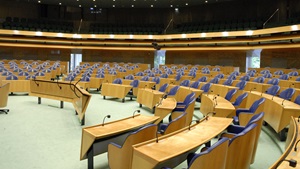
In a letter to the House of Representatives, the State Secretary for Finance has outlined the current situation regarding the introduction of the right of access to tax records. This right of access will be introduced in phases.
READ MORE
The introduction of the legal presumption does not mean that every contractor working at an hourly rate below €38 is automatically employed by the company. It does, however, mean that the presumption of an employment relationship is accepted. The contractor may rely on this presumption, but the company has the option to demonstrate that no employment contract exists.
If the company fails to prove this, the contractor is entitled to all the protection afforded by employment law. This includes continued payment during holidays and sick leave, and protection against dismissal
The contractor may rely on the legal presumption, but it has effect only under civil law. This means that the UWV, the Tax and Customs Administration and the Labour Inspectorate will not assess this legal presumption. They will continue to carry out their own investigations based on the elements of work, pay and a relationship of authority.
The legal presumption will come into force immediately on 31 December 2026. Do you have a contractor who is already carrying out work for you before 31 December 2026 at an hourly rate of less than €38? And will that contractor still be doing so from 31 December 2026 onwards? If so, from 31 December 2026 there will be a presumption that this contractor is employed by you.

The legal presumption of an employment contract for an hourly rate below €38 will come into force on 31 December 2026. What does this mean for you as a client or company?
READ MORE
Solvit is a body established by the European Commission that mediates in disputes regarding the correct application of EU law. Solvit’s services are free of charge.
The issues you can bring to Solvit are diverse. These include problems related to visas, child benefits, or pensions. For businesses, issues concerning trade and services, the recognition of professional qualifications, and VAT refunds are particularly relevant.
Please note!You cannot use Solvit if you have a problem with another business, if you have a problem as a consumer, or if you are seeking compensation. Solvit also cannot help if your case has been brought before a court.
A complaint or problem can be submitted online. You must indicate the nature of the problem and which government agency you wish to report the issue to. You may also attach relevant documents, such as correspondence. After submission, the Solvit center in your own country will contact you to prepare your case and then forward it to the Solvit center in the country to which your complaint relates. The goal is to resolve a problem within ten weeks.
On the Solvit website, you’ll find numerous examples of cases that have been resolved with Solvit’s help. These include, for example, the failure to refund VAT or delays in doing so. Another case involves the refusal to issue a certificate of inheritance. Yet another example involves the refusal to allow a product onto the French market, even though it complied with European regulations.
Solvit can also be contacted if you need advice on your EU rights. If necessary, you will be referred to services that can provide better assistance. Requests for advice are answered within a week.

Are you, as a citizen or business, facing problems because a government agency in another EU country, Iceland, Liechtenstein, or Norway is not complying with EU law? If so, you can try to resolve this through Solvit.
READ MORE
If you owe taxes, you will receive a notice from the Tax and Customs Administration. The new account number will be included in the notice regarding the taxes due.
Please note!The new account number does not affect the payment method. For example, online payments will still be possible.
If you pay the Tax and Customs Administration periodically via direct debit, you do not need to do anything. The payments will be automatically transferred to the new account number.
You only need to be careful if you have arranged a recurring payment differently, for example via a recurring transfer with your bank. In that case, you must ensure that the account number is updated yourself.
If you accidentally use the “old” account number for a payment to the Tax Authority, your payment will still be forwarded to the Tax Authority and processed there for the time being. The Tax Authority has made arrangements with ING regarding this, so that taxpayers are not penalized.
To pay a provisional or final income tax assessment, you can use the new account number starting April 20, 2026.
The Benefits Service is also switching to Rabobank and will therefore have a new account number starting May 1, 2026. From that date, you can make payments to the Benefits Service using the new account number NL04 RABO 0200112244. The Benefits Service will make its first payments from this number on Monday, June 22, 2026.
Please note! Here too, if you make a payment to the old account number, the payment will be forwarded to the Tax and Customs Administration’s new account number for the time being.
Due to the change in account numbers, the Tax and Customs Administration strongly warns against phishing. Criminals regularly attempt to collect non-existent tax debts from taxpayers via email, text message, WhatsApp, or by phone. However, the Tax and Customs Administration never collects taxes in this manner. If you are unsure whether a message is genuine, follow the step-by-step guide on the Tax and Customs Administration’s website and verify the account number.

As of May 1, 2026, the Dutch Tax and Customs Administration and the Benefits Service will switch from ING to Rabobank. This means that the account numbers will also change.
READ MORE
For businesses that buy or sell goods, cash payments of €3,000 or more will no longer be permitted starting January 1, 2026. It does not matter whether the business is buying from or selling to another business or to a private individual. In all cases, cash payments of €3,000 or more are prohibited.
Please note! A private individual may accept a cash payment exceeding €3,000 from another private individual, for example, when selling on a marketplace.
The €3,000 limit is intended to make it more difficult to launder cash derived from illegal transactions and thereby also combat terrorism. The limit is also intended to ensure that payment transactions remain accessible.
The fine for violating the ban is set at a fixed base amount of €10,000. The Wwft Supervision Bureau, a division of the Tax and Customs Administration, oversees compliance with the ban.
Special circumstances, such as financial capacity, may justify reducing the fine. On the other hand, repeated violations of the prohibition may justify increasing the fine. For example, a fine of €20,000 may be imposed if the prohibition is violated again within five years of a previous fine.
Please note! Criminal proceedings may also be initiated under the Economic Offenses Act.

Starting January 1, 2026, Dutch merchants may no longer make or accept cash payments of €3,000 or more. The base amount of the fine for violating this prohibition is a fixed amount of €10,000.
READ MORE
It is particularly common among migrant workers for employers to provide accommodation and deduct an amount from the employee's wages for this. In the case of the minimum wage, this deduction may still be a maximum of 25% of that wage in 2025.
The government believes that the deduction can encourage a model of earning and dependence on the employee. This can lead to the exploitation of migrant workers. The government therefore wants to abolish the scheme.
The proposal is to reduce the deduction by 5% per year from 2026 and to completely abolish the possibility of deducting housing costs from the statutory minimum wage from 2030.
| Year | Maximum deduction percentage |
| 2025 | 25 |
| 2026 | 20 |
| 2027 | 15 |
| 2028 | 10 |
| 2029 | 5 |
| 2030 | 0 |
Tip! Employers will still be allowed to provide housing for their employees from 2030 onwards. However, it will no longer be possible to deduct part of the costs from the statutory minimum wage.
The proposal has been submitted for internet consultation. Responses to the proposal can be submitted until June 6, 2025.

In the Netherlands in 2025, employers will be allowed to deduct a maximum of 25% of the minimum wage from an employee's statutory minimum wage to cover the costs of housing. The proposal off the Dutch government is to reduce this percentage by 5% annually from 2026 to 2029.
READ MORE

Contact
Schoutlaan 7
6002 EA Weert
0495 53 07 55
info@w-o.nl
W&O Accountants en Adviseurs
Algemene Voorwaarden
Klachtenregeling
Klokkenluidersregeling
Privacyverklaring
W&O Registeraccountants
Algemene Voorwaarden
Klachtenregeling
Klokkenluidersregeling
Privacyverklaring
