
In een zaak die speelde voor rechtbank Zeeland-West-Brabant, ging het om de vraag of de advieskosten die aan een bv in rekening waren gebracht over het wel of niet toepassen van BOR al dan niet zakelijk waren. De bv vond van wel en had de advieskosten ten laste van de winst gebracht en de hierop drukkende btw in aftrek gebracht op de af te dragen btw. De inspecteur was het hiermee niet eens, waarna de zaak voor de rechter kwam.
In deze zaak had de grootaandeelhouder van een miljoenenbedrijf besloten om een deel van de aandelen aan zijn kinderen te schenken. Volgens hem zou het mogelijk verdwijnen van de BOR betekenen dat de verkrijgers van de aandelen de te betalen belasting zouden moeten voldoen door middel van winstuitkeringen uit de bv. Volgens de schenker zou dit de continuïteit van het bedrijf in gevaar brengen en was er dus sprake van een zakelijk belang om hierover advies in te winnen, wat hij dus ook had gedaan.
Volgens de rechtbank was er echter geen sprake van een zakelijk belang. De advieskosten waren gemaakt ter bevrediging van een persoonlijke behoefte, namelijk het beperken van het betalen van belasting door de verkrijgers van de aandelen.
Volgens de rechtbank was ook van belang dat via de aandelen het bedrijf slechts gedeeltelijk aan de kinderen werd overgedragen en dat de zeggenschap over de bv door middel van preferente aandelen bij de schenker bleef. Bovendien kwam, gelet op de vermogens- en winstpositie van de bv, de continuïteit niet in gevaar als de BOR niet langer van toepassing zou zijn geweest.
De schenker voerde nog aan dat bij verkoop van het bedrijf aan een derde, de advieskosten wel aftrekbaar zouden zijn en deed een beroep op het gelijkheidsbeginsel. De rechtbank ging hier echter niet in mee en stelde dat er in die situatie geen sprake was van gelijke gevallen.
De advieskosten konden dan ook niet ten laste van de winst worden gebracht. Evenmin was de btw aftrekbaar.

Stel, je wint advies in over de ontwikkelingen van de bedrijfsopvolgingsregeling, de BOR, omdat je op basis van die informatie wel of geen bedrijfsaandelen schenkt. Zijn die advieskosten dan zakelijk en dus fiscaal aftrekbaar van de winst? En hoe zit het met de btw over deze advieskosten? Een casus.
LEES VERDER
Als een werknemer van een buitenlands concernonderdeel in Nederland komt werken, kan het zijn dat het buitenlandse concernonderdeel als formele werkgever in Nederland inhoudingsplichtig is. Een Nederlands concernonderdeel kan dan, op verzoek, de loonheffingen inhouden en afdragen.
Voor de verleggingsregeling is een gezamenlijk verzoek nodig van het Nederlandse én het buitenlandse concernonderdeel. In dit verzoek moeten onder meer de NAW-gegevens, het loonheffingsnummer van het Nederlandse én (voor zover aanwezig) het buitenlandse concernonderdeel worden opgenomen. Verder moet het verzoek de gewenste ingangsdatum van de beschikking voor de verleggingsregeling bevatten.
Let op! U kunt om een algemene beschikking, maar ook om een beschikking voor een of meer specifieke werknemers verzoeken. In het laatste geval moet u ook de NAW-gegevens en het BSN van de werknemer(s) in het verzoek opnemen.
Nieuw in de versie van het Handboek Loonheffingen van oktober 2025 is de voorwaarde dat u bij het gezamenlijk verzoek ook een gezamenlijk ondertekende verklaring voegt. In deze verklaring moeten het Nederlandse én het buitenlandse concernonderdeel beiden akkoord gaan met het verleggen van de inhoudingsplicht.
Het Nederlandse concernonderdeel moet verder verklaren dat het alle verplichtingen die samenhangen met de verleggingsregeling volledig en zonder voorbehoud zal nakomen. Tot slot moet het buitenlandse concernonderdeel verklaren dat het alle gegevens verstrekt die nodig zijn voor het vaststellen van het in Nederland belastbare loon van de werknemer(s).
Tip! Het is mogelijk om voor meerdere buitenlandse concernonderdelen tegelijk een verzoek in te dienen.

Een Nederlands concernonderdeel kan onder voorwaarden de inhoudingsverplichtingen van een buitenlands concernonderdeel overnemen. Dit heet de verleggingsregeling voor inhouding van loonheffingen. De Belastingdienst voegt in de nieuwste versie van het Handboek Loonheffingen (oktober 2025) een nieuwe voorwaarde toe.
LEES VERDER
Uw vrije ruimte bedraagt in 2025 2% van uw totale fiscale loonsom tot € 400.000 en 1,18% daarboven. In beginsel kunt u alle vergoedingen, verstrekkingen en terbeschikkingstellingen die u doet aan werknemers aanwijzen in de vrije ruimte. De werknemer betaalt dan geen loonbelasting. U betaalt alleen een eindheffing van 80% voor zover het totaal van aangewezen vergoedingen, verstrekkingen en terbeschikkingstellingen hoger is dan uw vrije ruimte.
U kunt niet alles aanwijzen in de vrije ruimte. Bepaalde zaken moet u verplicht bij uw werknemer belasten. Dit geldt bijvoorbeeld voor een auto van de zaak of het rentevoordeel van een personeelslening voor een eigen woning waarvan de rente aftrekbaar is in de inkomstenbelasting.
Daarnaast mag u alleen die zaken aanwijzen in de vrije ruimte die voldoen aan de gebruikelijkheidseis. De Belastingdienst verduidelijkt dit in een nieuwe versie van het Handboek Loonheffingen van oktober 2025.
U voldoet aan de gebruikelijkheidseis als de vergoedingen, verstrekkingen en terbeschikkingstellingen niet meer dan 30% afwijken van wat in vergelijkbare omstandigheden gebruikelijk is. De Belastingdienst verduidelijkt waar u dan in ieder geval naar moet kijken, te weten:
Let op! Voldoet u niet aan de gebruikelijkheidseis? Dan mag u het deel van de vergoeding, verstrekking of ter beschikkingstelling dat niet meer dan 30% afwijkt wel in de vrije ruimte aanwijzen. Het bedrag boven deze 30%-grens moet u dan echter individueel belasten bij de werknemer.
De beoordeling of iets voldoet aan de gebruikelijkheidseis is niet altijd eenvoudig. Om discussie over elke euro met de Belastingdienst te voorkomen, kunt u gebruikmaken van de doelmatigheidsmarge van € 2.400. Tot een bedrag van maximaal € 2.400 per werknemer per jaar beschouwt de Belastingdienst de zaken namelijk in alle redelijkheid als gebruikelijk. In alle redelijkheid betekent dat het loon van de werknemer bijvoorbeeld niet lager mag worden dan het wettelijk minimumloon of bij een stagiair.
Tip! Bepaalde vergoedingen, verstrekking en terbeschikkingstellingen zijn gericht vrijgesteld of op nihil gewaardeerd. Deze zaken verlagen uw vrije ruimte dan niet.

De Belastingdienst heeft in oktober 2025 een nieuwe versie van het Handboek Loonheffingen uitgebracht. In een aantal hoofdstukken verduidelijkt de Belastingdienst dat u alleen vergoedingen en verstrekkingen in de vrije ruimte kunt onderbrengen als voldaan wordt aan de gebruikelijkheidseis.
LEES VERDER
Voor het einde van de verplichte loondoorbetalingsperiode van in beginsel 104 weken – aangeduid met de term wachttijd – bepaalt het UWV of een werkgever voldoende heeft gedaan aan de re-integratie van de langdurig arbeidsongeschikte werknemer. Dit staat bekend als de poortwachtertoets of de toets op de re-integratie inspanningen (RIV-toets). Als het UWV van mening is dat er onvoldoende is gedaan aan de re-integratie kan het UWV een loonsanctie opleggen bestaande uit een verlenging van de loondoorbetaling met standaard 52 weken.
Op dit moment kan een loonsanctie worden opgelegd omdat bedrijfsarts en verzekeringsarts verschillend dachten over de inzetbaarheid van een werknemer. Dit terwijl de werkgever in goed vertrouwen is afgegaan op het oordeel van de bedrijfsarts. Om die onzekerheid weg te nemen wordt voorgesteld het advies van de bedrijfsarts leiden te maken bij de poortwachtertoets.
Normaal gesproken moet een voorschot worden terugbetaald als dit ten onrechte is verleend omdat er geen of een korter recht bestond op een WW- dan wel WIA-uitkering. Het is inmiddels al enige jaren buitenwettelijk beleid dat voorschotten in deze situatie niet hoeven te worden terugbetaald. Dit beleid wil het kabinet definitief maken met het onderstaande voorstel.
De wijze van financiering van WIA-voorschotten wijzigt. De voorschotten worden betaald uit het Arbeidsongeschiktheidsfonds (Aof) dat gevoed wordt door de basispremie WAO/WIA die iedere werkgever betaalt. Nadat is beoordeeld of er recht bestaat op de uitkering, worden de kosten op de juiste plek geboekt. Als een voorschot wordt kwijtgescholden, blijft dat ten laste van het Aof komen.
Let op! Volgt er te zijner tijd toekenning van een WW- dan wel WIA-uitkering, dan worden de betaalde voorschotten uiteraard wel verrekend.
Wajongers behouden hun uitkering als zij werken in een beschutte werkplaats, onafgebroken vijf jaar hebben gewerkt en daarna met dat werk voldoende verdienen. Dit geldt ook voor mensen met een Wajong-uitkering voor wie de werkgever loonkostensubsidie of loondispensatie krijgt.
Tot en met 17 november 2025 kan er worden meegedacht over deze voorstellen in een internetconsultatie.

Zoals bekend loopt het UWV vast in de uitvoering van de WIA. Reden waarom het kabinet op zoek is naar manieren om de uitvoering van de WIA te vereenvoudigen. Als leidraad daarbij dienen de aanbevelingen uit het vorig jaar verschenen rapport van de afhankelijke Commissie Toekomst Arbeidsongeschiktheidsstelsel (OCTAS). Het kabinet is gestart met een internetconsultatie over twee voorgenomen vereenvoudigingen.
LEES VERDER
De Belastingdienst gaat nader in op deze situatie aan de hand van een casus. Tussen het kantoor van een werkgever en de parkeerplaatsen bevindt zich een openbare ruimte. Ook derden kunnen van de parkeergelegenheid gebruik maken. Parkeren daar kost € 16 per dag.
De Belastingdienst stelt zich op het standpunt dat parkeren tijdens een vakantie in deze situatie belast is. De parkeerruimte bevindt zich namelijk niet op de werkplek en kan dus ook niet aangemerkt worden als een voorziening op de werkplek.
Er is ook geen sprake van een nihilwaardering, omdat er sprake is van een substantieel voordeel en dit wordt maatschappelijke gezien ook als loon wordt ervaren. Het gelegenheid geven tot parkeren is bovendien in de omschreven situatie, tijdens een vakantie, niet in het belang van het arbeids- of bedrijfsproces.
Het Handboek Loonheffingen hanteert echter een ruimere uitleg en stelt dat het parkeren onbelast is, als de werknemer de werkgever met succes aansprakelijk kan stellen. De Belastingdienst is van mening dat werkgevers hieraan het vertrouwen kunnen ontlenen dat parkeren onder genoemde omstandigheden onbelast is. Het Handboek zal op dit punt wel worden aangepast.
Vanwege deze onduidelijkheid hanteert de Belastingdienst daarom een overgangsperiode voor werkgevers die vóór het onderhavige standpunt van de Belastingdienst, dus vóór 9 oktober 2025, op basis van de tekst van het Handboek 2025 parkeergelegenheid in de omgeving van de werkplek ter beschikking hebben gesteld aan hun werknemers. Tot de datum van publicatie van het Handboek 2026 blijft in die gevallen het parkeren onbelast.
Tip! Zorg ervoor dat u in soortgelijke omstandigheden inspeelt op de aanstaande wijziging. Uw werknemer zal vanaf de wijziging belasting moeten betalen over het voordeel. U kunt dit voordeel uiteraard ook bruteren of onderbrengen in de werkkostenregeling als dit voldoet aan het gebruikelijkheidscriterium.

Werkgevers die over voldoende parkeerruimte in de omgeving van het bedrijf beschikken, stellen hun werknemers soms in staat om bijvoorbeeld tijdens de vakantie hun auto daar te stallen. Is dergelijke parkeerruimte, dus niet op het bedrijfsterrein zelf, dan belast of niet?
LEES VERDER
Twee kinderen krijgen in 2017 een schenking van hun moeder van € 100.000 voor de eigen woning. Destijds gold daar nog een vrijstelling voor de schenkbelasting voor, de zogenaamde jubelton. Vlak na de schenking van hun moeder krijgen ze ook allebei nog een schenking van een ander van € 100.000. Dit is een zakenrelatie van hun vader. De moeder schenkt vervolgens ook aan de vier kinderen van de zakenrelatie elk € 50.000.
De kinderen willen zowel op de schenking van hun moeder als op de schenking van de ander de vrijstelling voor de schenkbelasting voor de eigen woning toepassen. De Belastingdienst staat dat niet toe. Ook de rechtbank en het gerechtshof staan dit niet toe.
Uiteindelijk komt de zaak bij de Hoge Raad, die ook de vrijstelling op de schenking van de ander niet toestaat. De Hoge Raad oordeelt dat de kruislingse schenkingen zo op elkaar afgestemd zijn dat sprake is van wetsontduiking (fraus legis). Van belang voor dit oordeel is onder meer dat de kruislings geschonken bedragen min of meer gelijk waren en kort na elkaar werden gedaan.
Nu de hoge vrijstelling schenkbelasting voor de eigen woning is afgeschaft, is het belang van kruislings schenken beperkter dan voorheen. Overweegt u toch afspraken met anderen te maken over het wederzijds schenken aan elkaars kinderen, wees dan gewaarschuwd door het oordeel van de Hoge Raad in de hiervoor beschreven zaak.
Twee kinderen die elk van hun moeder € 100.000 en van een ander ook € 100.000 kregen, konden daarvan niet zo profiteren als gehoopt. De Hoge Raad stond maar één keer de toenmalige vrijstelling schenkbelasting eigen woning toe.
LEES VERDER
Een Nederlands transportbedrijf (bedrijf A) maakt sinds 2013 gebruik van chauffeurs die in dienst zijn van een bedrijf in Cyprus (bedrijf B). Bedrijf A doet om die reden geen aangifte loonheffingen meer in Nederland.
De Belastingdienst is van oordeel dat dit onterecht is, omdat sprake is van een schijnconstructie (Cyprusconstructie) en bedrijf A feitelijk de werkgever is van de chauffeurs. De Belastingdienst merkt bedrijf A met terugwerkende kracht aan als inhoudingsplichtige. Omdat bedrijf A vanaf dat moment wel aangiften doet, maar deze niet betaalt, legt de Belastingdienst naheffingsaanslagen op met vergrijpboeten wegens primair opzet en subsidiair grove schuld. Vervolgens wordt hierover geprocedeerd.
De rechtbank schaart zich achter het standpunt van de Belastingdienst. Vervolgens gaat het bedrijf in hoger beroep.
Het gerechtshof is van oordeel dat de chauffeurs op basis van payrolling door bedrijf B aan bedrijf A ter beschikking zijn gesteld. De inspecteur heeft niet aannemelijk gemaakt dat er sprake is van een dienstbetrekking tussen bedrijf A en de chauffeurs. Het is inherent aan driehoeksrelaties, zoals bij uitzending en payrolling, dat het gezag wordt uitgeoefend door de inlenende werkgever, dus door bedrijf A. Het gerechtshof is van oordeel dat deze gestelde feitelijke gang van zaken past in de figuur van payrolling (en van uitzending in het algemeen) dat de inlener (bedrijf A) beslist of hij de inlening van werknemers wil voortzetten. Het is dan aan de uitlener/payroller (bedrijf B) om te beslissen welke gevolgen dat heeft voor de arbeidsrelatie tussen de uitlener en de werknemer; de inlener staat daarbuiten.
Het is op zich ongebruikelijk dat de payrollovereenkomst niet schriftelijk is vastgelegd, maar dat legt onvoldoende gewicht in de schaal om te constateren dat er geen sprake is van een dergelijke overeenkomst, aldus het gerechtshof.
Ook niet van belang is dat bedrijf B in diverse andere procedures (met StiPP, de SVB, en de Stichting bedrijfstakpensioenfonds voor het beroepsvervoer over de weg) heeft ontkend een uitzendbureau, dan wel een payrollorganisatie te zijn.
Het resultaat is dan ook dat het gerechtshof alle opgelegde naheffingsaanslagen en boeten vernietigt.

Bij een payrollconstructie is van belang na te gaan bij wie de werknemers feitelijk in dienst zijn. Dat kan bij een dergelijke constructie complex zijn. Dit speelde ook in de zogenaamde Cyprusroute.
LEES VERDER
Door een indexatie van 2,15% zal het wettelijk minimumuurloon voor een werknemer vanaf 21 jaar vanaf 1 januari 2026 € 14,71 per uur bedragen. Nu bedraagt het wettelijk minimumuurloon voor een werknemer van 21 jaar en ouder nog € 14,40 per uur.
Let op! De berekening van het indexatiepercentage is gebaseerd op het gemiddelde van de procentuele ontwikkeling van de contractlonen in de marktsector, in de gepremieerde en gesubsidieerde sector en bij de overheid.
Door de stijging van het wettelijk minimumuurloon voor werknemers van 21 jaar en ouder, stijgt het wettelijk minimumuurloon voor jongere werknemers per 1 januari 2026 als volgt:
| Leeftijd | Percentage | Minimumuurloon |
| 21 jaar en ouder | 100,0% | € 14,71 |
| 20 jaar | 80,0% | € 11,77 |
| 19 jaar | 60,0% | € 8,83 |
| 18 jaar | 50,0% | € 7,36 |
| 17 jaar | 39,5% | € 5,81 |
| 16 jaar | 34,5% | € 5,07 |
| 15 jaar | 30,0% | € 4,41 |
Voor werknemers met een arbeidsovereenkomst in verband met een beroepsbegeleidende leerweg (bbl) geldt voor werknemers in de leeftijd van 18 tot en met 20 jaar een ander percentage. Het wettelijk minimumuurloon voor deze werknemers bedraagt per 1 januari 2026 als volgt:
| Leeftijd | Percentage | Minimumuurloon |
| 21 jaar en ouder | 100,0% | € 14,71 |
| 20 jaar | 61,5% | € 9,05 |
| 19 jaar | 52,5% | € 7,72 |
| 18 jaar | 45,5% | € 6,69 |
| 17 jaar | 39,5% | € 5,81 |
| 16 jaar | 34,5% | € 5,07 |
| 15 jaar | 30,0% | € 4,41 |
Let op! In juli 2025 maakt de minister van OC&W bekend dat hij de lagere percentages voor werknemers in de bbl met ingang van 1 januari 2027 wil afschaffen. Dit is nu nog een plan dat verder nog niet concreet is.

Het wettelijk minimumuurloon wordt per 1 januari 2026 verhoogd. Wat zijn de nieuwe geïndexeerde uurtarieven?
LEES VERDER
Kinderopvangorganisaties kunnen de subsidie aanvragen voor een praktijk(leer)plaats voor doorontwikkeling van groepshulpen. De subsidie biedt een tegemoetkoming in de loonkosten van groepshulpen. Het doel is dat door de subsidie meer groepshulpen worden aangenomen en dat zij kunnen doorgroeien in de kinderopvang.
De subsidie bedraagt maximaal € 10.056 per jaar per groepshulp en is afhankelijk van het aantal contracturen dat de groepshulp per week werkt. Een organisatie kan voor maximaal twee groepshulpen subsidie aanvragen.
Let op! Het beschikbare budget bedraagt in 2025 € 1.735.000. Ook in 2026 is de subsidie nog beschikbaar. Het beschikbare budget voor 2026 bedraagt € 1.775.000.
De subsidie kent een aantal voorwaarden:
Tip! Kijk voor alle voorwaarden hier.
De subsidie is aan te vragen via RVO.nl. RVO neemt alle op tijd ingediende volledige aanvragen in behandeling. Bij overschrijding van het budget wordt de hoogte van de subsidie per groepshulp naar rato verlaagd.
Tip! Deed u een aanvraag voor de Subsidieregeling praktijkleren of praktijkleren in de derde leerweg voor een groepshulp, maar heeft u nog geen beslissing daarop ontvangen? Vraag dan ook altijd de subsidie voor groepshulpen in de kinderopvang al aan. Als u wacht op de beslissing op uw aanvraag op de subsidie praktijkleren (in de derde leerweg), bent u waarschijnlijk te laat om nog de subsidie voor groepshulpen in de kinderopvang aan te vragen.

Van 3 november 2025 9.00 uur tot en met 28 november 2025 17.00 kunt u weer subsidie aanvragen voor groepshulpen in de kinderopvang.
LEES VERDER
Met ouderschapsverlof kunnen ouders na de geboorte van een kind wennen aan de nieuwe gezinssituatie. Het verlof moet binnen een jaar na de geboorte worden opgenomen. Bij pleeg- en adoptiekinderen moet het verlof worden opgenomen binnen een jaar nadat het kind in het gezin is opgenomen en voordat het kind acht jaar oud is.
De werkgever moet het betaalde ouderschapsverlof aanvragen bij het UWV voor de betreffende werkgever Een niet voor de werknemersverzekeringen verzekerde dga moet echter zelf het betaalde ouderschapsverlof aanvragen via Mijn UWV. Het UWV beslist binnen vier weken op een ingediend verzoek. De uitkering van het UWV verloopt in dat geval rechtstreeks aan de dga en dus niet via de bv.
Werknemers hebben recht op negen weken betaald ouderschapsverlof. De uitkering voor hen bedraagt 70% van het dagloon, voor de niet voor de werkverzekeringen verzekerde dga’s geldt echter 70% van het minimumloon.
Het bedrag aan betaald ouderschapsverlof dat de dga ontvangt, is niet van invloed op de hoogte van het gebruikelijk loon. Wel mag rekening worden gehouden met het feit dat de dga door het ouderschapsverlof minder uren werkt. Het gebruikelijk loon moet worden gebaseerd op de werkzaamheden over het gehele jaar. Wordt een deel van het jaar niet gewerkt, dan mag het gebruikelijk loon dienovereenkomstig lager worden vastgesteld.
Let op! Dit moet wel aannemelijk gemaakt kunnen worden!

Werknemers hebben onder voorwaarden recht op ouderschapsverlof, waarvan een deel betaald wordt door het UWV. Betaald ouderschapsverlof geldt ook voor de dga. Een dga is immers in dienst van een bv. Er gelden voor de dga die niet verzekerd is voor de werknemersverzekeringen wel bijzondere regels.
LEES VERDER
Please note! Due to significant uncertainty as to whether the government’s plans will be approved by the House of Representatives and the Senate, some of the tips below may still change (in part) before the end of the year. Please bear this in mind!
Should you pay a dividend this year, or would it be better to wait until 2026? There is no one-size-fits-all answer to this question. In any case, be sure to take the following points into consideration:
Please note! Discuss your own situation with our advisers. They can calculate the effect of the dividend payment on, for example, your tax credits and your tax liability in Box 3. Based on this, you can decide whether or not to pay out a dividend. At present, the advice is to wait for the time being until there is a little more clarity on which tax plans will ultimately be passed by the House of Representatives and the Senate.
The measure concerning excessive borrowing from one’s own company broadly means that a director and major shareholder who borrows too much from their own private limited company will pay Box 2 tax on this amount. A threshold of €500,000 currently applies, but the government intends to lower this limit to €100,000. This will be implemented in five stages of €80,000 per year, starting in 2027. By the end of 2027, the threshold will stand at €420,000, and by the end of 2031, the €100,000 limit will have been reached. Although the measure still needs to be passed by the House of Representatives and the Senate, it may well be wise to factor the reduction in the threshold into your dividend planning.
Please note! As is currently the case, home loan debts remain exempt under the proposal and will therefore not count towards the threshold from 2027 onwards. However, for home loan debts incurred on or after 1 January 2023, the condition applies that these must be secured by a mortgage registered against the property.
From 2027, a 12% pseudo-final levy will apply to company cars if these vehicles emit CO₂ (hereinafter: fossil-fuelled company cars). This levy is calculated on the basis of the car’s list price (and, for cars older than 25 years, on the basis of its market value). This is an employer’s levy that you are not permitted to pass on to the employee! Furthermore, the employee may also be liable for the additional tax liability relating to private use.
So what can you still do now to avoid this levy in 2027?
Any vehicle that is not a passenger car, such as a van, lorry or tractor, is also exempt from the 12% pseudo-final levy. Please note, however, that a campervan and a minibus may also be classified as passenger cars. Check the classification in the vehicle registration register. An M1 vehicle is a passenger car!
Please note! When changing employers, the transitional arrangement – which normally runs until 31 December 2030 – ceases to apply. This is because the transitional arrangement is linked to the car in combination with the employer. If a former employee takes the car with them to a new employer, that link is broken and the transitional arrangement lapses. The new employer will then be subject to the 12% pseudo-final levy from day one.
There are still a number of exceptions to the 12% pseudo-final levy. For example, under certain conditions, a replacement car is exempt from the levy for up to fourteen consecutive days, and manual-gearbox driving school cars are also exempt.
There may be various reasons for setting up a private limited company in 2026 and transferring your income tax business into it. One reason could be that you were already planning to do this and also wish to transfer a fossil-fuelled passenger car into the company:
If you contribute the income tax business to the private limited company in 2026 with a tax settlement, you can still benefit from the cessation allowance of €3,630. In 2027, this allowance will fall to €908. If you still have a FOR that is due to be released, you can also make use of the cessation allowance in the event of a silent contribution.
Furthermore, a number of the entrepreneur’s income tax benefits will be further scaled back. For example, the self-employed person’s allowance will fall from €1,200 in 2026 to €900 in 2027; the additional self-employed person’s allowance for a start-up will fall from €2,123 in 2026 to €10 in 2027; and the family business allowance will be reduced by 75% in 2027.
This may also be a reason to switch to a private limited company (BV) in 2026.
Please note! Whether it is advantageous to transfer your income tax-registered business into a private limited company naturally depends not only on the 12% pseudo-final levy, the cessation allowance and other business tax deductions. In addition to tax considerations, other factors, such as limited liability, may also play a role. You should therefore consult our advisers to determine whether switching to a private limited company might be advisable. Do not wait too long to do so. You will need a solicitor to set up a private limited company, and solicitors’ diaries generally fill up quickly towards the end of the year.
From 2027, a new authorisation scheme will come into force for parties that supply workers (labour providers). This is regulated by the Labour Supply Authorisation Act (Wtta).
The licensing scheme applies to anyone who makes workers (including self-employed persons) available to third parties. This includes temporary employment agencies, secondment agencies and agencies that supply self-employed persons. However, even a private limited company that supplies its director-major shareholder to another company may fall under the licensing scheme!
Fortunately, there are exceptions. For example, peer-to-peer lending where no profit is made is not subject to the authorisation scheme. The same applies to lending and borrowing within a group of companies.
If no exception applies, you may be able to apply for an exemption. This is possible if your income from lending services in a given year amounts to less than 10 per cent of your total income and that income does not exceed €5 million per year. In addition, an accountant must certify annually that these thresholds are not exceeded.
Please note! To be able to make use of a transitional arrangement, it is important that you submit an application between 1 November 2026 and 31 December 2026! This will ensure that you can continue to lend for the time being. It is, however, important that you also submit an application for admission to the scheme between 1 May 2027 and 30 June 2027. If you have an SNA quality mark by 30 June 2027 at the latest, you do not need to register for the transitional scheme in 2026. You will, however, still need to apply for admission between 1 May 2027 and 30 June 2027.
A property that is not your main residence – for example, a holiday home or a property you let out – falls under Box 3. If you are planning to purchase such a property, it may be advantageous to have the transfer at the solicitor’s take place in 2027 rather than in 2026.
This is because the transfer tax on the acquisition of properties that are not your main residence is currently still 8 per cent, but will be 7 per cent from 2027 onwards. Furthermore, the flat-rate Box 3 tax on bank balances (should you purchase the property using bank balances) is considerably lower than that applied to the property itself, which is classified as other assets.
For a new, fully electric car made available in 2026, an additional tax liability of 18 per cent applies to the first €30,000 of the list price and 22 per cent on the amount above that. If the new, fully electric car is first made available in 2027, the additional tax liability will be 20 per cent on the first €30,000 of the list price and 22 per cent on the amount above that. If the car runs on hydrogen or is powered by solar panels, the €30,000 limit does not apply and the additional tax liability in 2026 will be 18 per cent of the full list price, and in 2027 20 per cent of the full list price. These additional tax rates apply for a period of 60 months. This may be a reason to try to acquire a car with zero CO₂ emissions in 2026, or failing that, in 2027.
If your car with CO₂ emissions falls under the ‘youngtimer’ scheme, the additional tax liability will not be 22 per cent (or 25 per cent for a car first registered before 2017) of the list price, but 35 per cent of the market value. The ‘youngtimer’ scheme will apply in 2026 if the car is 16 years old or older on 1 January 2026, or if it was already at your disposal in 2025 and turns 16 in 2026. From 1 January 2027, the age limit is likely to rise to 17 years (it is currently 25 years) and from 1 January 2028 to 20 years. Do you drive the ‘youngtimer’ through your income tax business, such as a sole trader? If so, you may wish to transfer the car to your private name. Normally, this isn’t possible without further ado, but due to the legislative change, there may be options available. Please discuss this with our advisers.
Check whether you have any remaining allowance under the work-related expenses scheme (wkr) and make use of it. In 2026, this allowance amounts to 2 per cent of the first €400,000 of the wage bill and 1.18 per cent above that amount. Any allowance remaining in 2026 cannot be carried forward to 2027!
Incidentally, the allowance will increase slightly in 2027. It will then amount to 2.16% on the first €400,000 of the wage bill and 1.18% on the amount above that.
Please note! The targeted exemption for staff discounts on sector-specific products will be abolished from 2027. Therefore, only in 2026 will you still be able to grant a targeted exemption for a reimbursement or discount of up to 20 per cent of the product’s market value, with a maximum of €500 per employee per year.
A new, attractive scheme for share options at start-ups and scale-ups is due to come into force, probably from 2027. Under the new scheme, 35% of the benefit (= the difference between the proceeds from the sale of the shares on the one hand and the contribution and purchase price of the shares on the other) remains tax-free. Furthermore, the employee only pays tax upon the sale of the shares acquired through the share options.
Various conditions apply, and the Netherlands Enterprise Agency (RVO) must classify your company as an innovative start-up or scale-up. What is important for now is that share option rights granted on or after 17 April 2025 may be eligible for the new scheme. It is therefore important that these share option rights have not yet been included in payroll tax as at 31 December 2026. In any case, ensure that share option rights granted on or after 17 April 2025 meet this requirement.

As an entrepreneur, director and major shareholder, employer or private individual in the Netherlands, what can or must you sort out before the end of 2026? Or what should you actually wait to do? What changes are coming into effect in 2027 that you can already prepare for now? We’ve put together a few important tips for you.
READ MORE
Please note! Not all the points listed below are taken from the 2027 Tax Plan. Some changes had already been decided upon, but adjustments have since been made to them.
From 2027, the government will be scaling back various tax benefits for entrepreneurs.
The entrepreneur’s allowance reduces the profit on which an entrepreneur pays income tax. From 2027, further cuts will apply to various components of this allowance.
Please note! This scheme applies to self-employed people who do not meet the 1,225-hour criterion but do meet the reduced 800-hour criterion and are entitled to incapacity benefit.
The cessation allowance and the rates for the co-worker allowance will cease to apply at the start of the third calendar year following the year in which the reduction takes effect. As the changes come into force in 2027, the schemes will therefore cease to apply on 1 January 2030.
As of 1 January 2028, another tax benefit for business owners will be abolished: the discretionary depreciation scheme for start-ups.
Start-up business owners, those planning to cease trading within a few years, and business owners with a co-working partner will be particularly affected. The choice between a sole trader, a general partnership (VOF) or a private limited company (BV) therefore once again requires a calculation based on actual profits and personal circumstances.
Please note!If there are significant changes to your profits, business partnerships or business succession, have a fresh assessment carried out to determine which legal form is best suited to your business.
Tip! Due to the higher aggregate income, benefits may also change. You should therefore check your estimated income for benefit purposes in good time for 2027 and 2028.
Employers may, with retroactive effect up to and including 1 January 2026, reimburse a maximum of €0.25 per business kilometre tax-free. This was previously €0.23. The increase also applies to commuting. The government is now enshrining this increase in law with retroactive effect.
Please note!The increase does not automatically mean that every employee is entitled to €0.25 per kilometre. This depends on the employment contract, the collective labour agreement and the employer’s own mobility policy. For employers, a higher allowance may lead to higher wage costs.
The discretionary allowance on the first €400,000 of the taxable wage bill will increase from 2% to 2.16% with effect from 1 January 2027. This will give you a maximum of €640 extra discretionary allowance per year. This increase was adopted earlier and is therefore not part of the 2027 Tax Plan.
Tip! Update your staff handbook, expense claim policy and payroll administration in good time, and assess whether a higher mileage allowance is desirable from both a financial and employment conditions perspective. Does your organisation offer staff discounts on sector-specific products? If so, consider what the end of this exemption will mean. This will mainly affect the retail and manufacturing sectors.
If, as an employer, you make a passenger car with emissions available to an employee for private use from 2027 onwards, you will be subject to a pseudo-final levy of 12 per cent of the list price. This levy is in addition to the employee’s additional tax liability and must not be passed on to the employee. Transitional provisions apply to cars made available before 1 January 2027.
The pseudo-final levy was already adopted last year, but following consultation, four amendments are being proposed.
The ‘youngtimer’ scheme will be scaled back more gradually than previously stipulated, and the changes will be less far-reaching. The additional tax liability will continue to be based on the market value, but the age limit will rise from 16 years to 17 years in 2027 and to 20 years from 2028 onwards. The previously planned rapid increase to 25 years from 2027 will therefore not go ahead.
Transitional provisions apply to cars that have already been made available by 31 December 2025 at the latest and which will be 17 years old in 2027. These cars may continue to benefit from the youngtimer scheme throughout 2027. From 1 January 2028, the scheme will only apply to cars older than 20 years.
For employers, the decision to provide a company car is becoming increasingly important, particularly due to the ‘pseudo-final levy’. The contract term, drive type and the date on which a car is first made available can have significant tax implications. As a result, an existing lease plan may turn out to be much more expensive or, conversely, much more attractive.
Tip! Before making any new leasing decisions, carefully assess the total employer costs, the employee’s additional tax liability, the lease term and the transitional tax rules.
Normally, the thresholds for tax bands and various tax credits in Box 1 rise in line with inflation. This means that the tax burden normally remains the same as income rises, in line with inflation.
In 2027 and 2028, the government will apply the inflation adjustment only partially. Without this measure, the inflation adjustment for 2027 would amount to 2.6 per cent. Of this, 48 per cent will be applied. As a result, tax band thresholds and tax credits will rise less in line with inflation. Incidentally, the 48 per cent is not applied to the second tax bracket threshold, which therefore remains the same in 2027 as in 2026. The first tax bracket threshold rises from €38,883 to €39,247. The second tax bracket threshold remains at €78,426.
At the same time, the Box 1 rates are changing. For taxpayers under the state pension age, the rate in the first tax bracket will rise by 0.48 per cent: from 35.75 per cent in 2026 to 36.23 per cent in 2027. The rate in the second tax bracket will rise by 0.60 per cent: from 37.56 per cent to 38.16 per cent. The rate in the third tax bracket remains at 49.50 per cent.
Due to the increase in rates and limited indexation, the tax burden in Box 1 will rise. This effect is mitigated for homeowners who can also deduct their mortgage interest at the higher rate of up to 38.16%.
Please note! Always assess your salary, dividends and profits in conjunction with one another. The tax burden may in fact be unexpectedly higher, as the general tax credit depends on your aggregate income. This may therefore also fall as a result of a dividend payment.
Box 3 taxes private assets, such as savings, investments and a second home. Under the current system, the tax authorities calculate the return largely using flat-rate figures. If your actual return is lower, you can provide evidence to the contrary, subject to certain conditions.
The Government has provisionally deferred consideration of the ‘Actual Return on Box 3’ Bill. It will present a new proposal in the 2027 Spring Memorandum. Consequently, the intended introduction on 1 January 2028 will not take place, or at the very least, this date remains uncertain. The Government is re-examining whether a capital gains tax would be more appropriate than a capital appreciation tax.
Under a capital appreciation tax, even an unrealised increase in value is taken into account annually. Under a capital gains tax, tax is only levied upon, for example, the sale of an asset. For entrepreneurs and directors/major shareholders with investments, let property or other assets that are difficult to sell, this makes a significant difference.
Please note!Until a new system comes into force, it remains important to keep accurate records of interest, dividends, rent, costs and changes in value. This information is required for the rebuttal scheme and for weighing up whether to invest privately or through a private limited company.
Tip! Do not wait for the new system. Record the actual return on each asset annually and retain the supporting documents.
The government is making various tax schemes for investment and innovation more attractive. For example, the energy investment allowance will rise from 40% to 45.5% with effect from 1 January 2027. Are you investing in qualifying energy-efficient business assets? If so, you’ll be able to deduct a larger portion of your investment from your profits.
The tax relief for research and development work is also being extended. The flat-rate hourly wage will rise from €29 to €33. This scheme reduces the payroll tax you, as an employer, pay when your employees are working on technically new products, processes or software.
Does your business make use of the innovation box? This scheme is also being made more attractive. From 1 January 2027, the maximum flat-rate amount will rise from €25,000 to €100,000 per year. The flat rate remains capped at 25% of profit. The current three-year application period will also remain unchanged. This allows you to have a larger proportion of your profit taxed at the lower Innovation Box rate.
Tip! Do you wish to make use of the energy investment allowance? Before entering into any commitments, check whether the business asset is included on the energy list. Then submit your application to RVO within the applicable three-month deadline.
To stimulate innovation and growth in specific young enterprises, the government is introducing an attractive tax scheme for employee share options at start-ups and scale-ups.
In principle, the employee pays tax when they actually sell the shares acquired through the options. After deducting the exercise price attributable to the shares, only 65 per cent of the benefit is taxed as income, subject to certain conditions. If the employee sells the share option right rather than the shares themselves, this lower tax base does not apply. The employee may also opt in writing for earlier taxation at the time the option right is exercised or as soon as the shares become tradable.
The scheme applies only to companies that qualify as start-ups or scale-ups and hold a decision from RVO. This decision is valid for eight years from the date of issue. Subject to certain conditions, you may extend the decision in five-year increments, up to a maximum total duration of 23 years. In addition, in principle, there must be a minimum period of two years between the grant of the share option and the sale of that option or the shares resulting from it. If the employee sells earlier due to a sale following the company’s initial public offering (IPO), an exception applies and the rule does apply.
The scheme is due to come into force on 1 January 2027. The definitive date of entry into force will be determined by Royal Decree. Share option rights granted on or after 17 April 2025 may also be eligible for the scheme. For this to apply, the share option rights must not yet have been included in payroll tax as at 31 December 2026, and the other conditions must be met. In that case, your company must apply to the RVO for the decision by 31 December 2027 at the latest.
Tip! Check in good time whether your company is eligible for an RVO decision. Also consider whether employee participation can help you attract, reward and retain talent.
Employers must also pay a so-called ‘freedom contribution’ to fund rising defence expenditure. The government intends to collect most of this additional burden through an increase in the contribution to the Disability Fund (Aof). According to estimates, this increase will generate €1.5 billion in additional contribution revenue in 2027. From 2028 onwards, this will amount to €1.7 billion per year on a structural basis.
The high and low Aof contribution rates have not yet been finalised. The contribution rates will be announced at a later date, alongside the annual contribution rates for employees’ insurance schemes. As a result, it is not yet clear exactly how much your employer’s contributions will increase.
Tip! Allow for higher employer’s contributions in your 2027 staff budget. Adjust your payroll cost calculations as soon as the high and low AOF contribution rates for 2027 have been officially set.
Are you buying a property in which you will not be living yourself on a long-term basis? If so, you will pay transfer tax at the standard residential rate. This applies, for example, to a let property or a holiday home. From 1 January 2027, this rate will fall from 8% to 7%. The 2% rate for a property in which you will be living yourself and the first-time buyer’s exemption remain unchanged.
Please note! This reduction does not apply to commercial premises. In the case of mixed-use properties, conversions and property development projects, there may be some debate as to which part qualifies as a residential property. The use and condition of the property at the time of acquisition play an important role in this regard.
Due to the rate reduction, it may be worth reconsidering the timing of the transaction. You should also take other factors into account, such as financing, return on investment, VAT and the legal structure.
Tip! Before signing the purchase agreement, have an assessment carried out to determine which rate applies to your situation. In doing so, investigate whether it is sensible and feasible to postpone the transfer of title at the solicitor’s office until after 1 January 2027.
Certain non-reimbursed healthcare costs are currently tax-deductible under specific conditions. These include specific medicines, medical aids, dietary costs, transport and additional family care. The relief only applies after any reimbursements and an income-related threshold have been taken into account.
The Government is abolishing the deduction for specific healthcare costs with effect from 1 January 2028. The associated scheme for reimbursement of specific healthcare costs, the TSZ scheme, will also be abolished. For people with a chronic illness, the Government is working on a targeted compensation scheme. The bill does not include any transitional provisions. The measure primarily affects people with a chronic illness, a disability or structurally high, non-reimbursed healthcare costs. Entrepreneurs and directors/major shareholders may also face higher net personal tax liabilities as a result. The financial impact varies greatly, as not every out-of-pocket healthcare expense is currently tax-deductible.
Tip! Make a list of your recurring deductible healthcare costs. This will show which tax benefits may be lost from 2028 onwards and to what extent a future compensation scheme will cover them.

What tax proposals for entrepreneurs did the Dutch Government announce on Prince’s Day 2026? We have listed ten key proposals for you.
READ MORE
The entrepreneur’s allowance comprises the self-employed person’s allowance (in Dutch: zelfstandigenaftrek), the allowance for research and development (in Dutch: aftrek voor speur- en ontwikkelingswerk), the co-worker’s allowance (in Dutch: meewerkaftrek), the start-up allowance in the event of incapacity for work (in Dutch: startersaftrek bij arbeidsongeschiktheid), and the cessation allowance (in Dutch: stakingsaftrek). These allowances may be deducted from business profits for the purposes of income tax.
Foreign taxpayers are taxed in the Netherlands to the extent that they receive Dutch income. Dutch income includes, amongst other things, the profit generated by a foreign entrepreneur’s permanent establishment in the Netherlands. The question is whether the entrepreneur’s allowance may be deducted in full from the profit of this permanent establishment or whether a different allocation must be made?
For the portion of the foreign entrepreneur’s profit that is taxable in the Netherlands, the letter of the law first requires the global profit to be determined, i.e. the foreign entrepreneur’s total profit, including profit earned outside the Netherlands. The Tax and Customs Administration states that the entrepreneur’s allowance and the SME profit exemption (in Dutch: mkb-winstvrijstelling)are deducted in full from these worldwide profits. The profit taxable in the Netherlands is that part of the worldwide profit, after deduction of the entrepreneur’s allowance and the SME profit exemption, which is attributable to the Dutch permanent establishment.
The business allowance is therefore not deducted in full from the profits of the permanent establishment, but in proportion to the ratio of Dutch profits to total worldwide profits.
The Tax and Customs Administration states that the portion of the SME profit exemption that may be charged against the profit taxable in the Netherlands must be determined in the same way as for the entrepreneur’s allowance.
Please note! According to the Tax and Customs Administration, the fact that the entrepreneur’s allowance and the SME profit exemption must be determined in the manner described above also follows from a 2010 ruling by the Supreme Court (in Dutch: Hoge Raad).

The Tax and Customs Administration has provided an answer to the question of whether an entrepreneur residing abroad is entitled to deduct the full business allowance (in Dutch: ondernemersaftrek) from their Dutch profits.
READ MORE
In principle, the Tax and Customs Administration has eight weeks to process your VAT refund claim. If this takes longer, you are entitled to compensation for tax interest provided that the VAT refund relates to a previous year and 1 April has already passed.
Example
The Tax and Customs Administration receives your request for a VAT refund for the fourth quarter of 2025 on 20 January 2026. If you have not yet received a refund decision from the Tax and Customs Administration by 1 April 2026, you are entitled to compensation for tax interest from 1 April 2026.
The period over which tax interest is calculated begins on 1 April or eight weeks after receipt of your claim (if this is later than 1 April). The period runs until fourteen days after the date of the refund decision.
Continuation of example
If the Tax and Customs Administration issues a refund decision dated 15 June 2026, it must reimburse 5% tax interest for the period from 1 April 2026 up to and including 29 June 2026.
Has the Tax and Customs Administration wrongly rejected your VAT refund claim? If so, you must lodge an objection in good time, i.e. within six weeks of the date of the rejection notice. If the Tax and Customs Administration subsequently grants the VAT refund, you are also entitled to reimbursement of tax interest.
Please note! In response to enquiries on this matter, the Tax and Customs Administration has stated that there is no entitlement to reimbursement of tax interest if the original application for a VAT refund was submitted too late and/or if the appeal against the rejection notice was lodged too late.

Have you applied for a VAT refund and is the processing taking a long time? If so, you may be entitled to compensation for tax interest.
READ MORE
It is laid down in law that taxpayers have the right to inspect their own tax files held by the Tax and Customs Administration. In the letter, the State Secretary sets out how the implementation of this right of access to tax files will take shape in the coming years, what the intended timetable is and what exceptions will be made to the right of access.
At present, the Tax and Customs Administration does not yet have a centralised file system: the information in the tax file remains highly fragmented across dozens of unlinked systems. To facilitate the right of access to tax files, the Tax and Customs Administration will therefore need to implement a change in its working methods. The aim is to achieve a structured, externally oriented and accessible filing system, according to the State Secretary. The documents in the tax file will be made available digitally in stages over the coming years.
Under the ‘Keuze digitaal’ programme currently being implemented within the Tax and Customs Administration, decisions, invitations, reminders and submitted documents will gradually become available on MijnBelastingdienst (Business) by 2030. This will later be expanded to include standard letters and automated messages, followed by information from individual files, for example regarding the processing of a tax return.
The letter also sets out a provisional timetable, which includes the planned introduction of the right of access to tax records:
For Customs, the right of tax inspection would only apply to excise duties and consumption taxes. However, the State Secretary is excluding these levies from the right of tax inspection. The State Secretary points out that this does not mean that Customs is not committed to further improving the information position and legal protection of taxpayers.
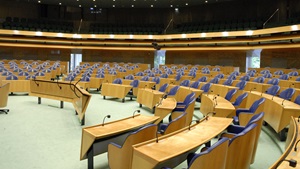
In a letter to the House of Representatives, the State Secretary for Finance has outlined the current situation regarding the introduction of the right of access to tax records. This right of access will be introduced in phases.
READ MORE
The introduction of the legal presumption does not mean that every contractor working at an hourly rate below €38 is automatically employed by the company. It does, however, mean that the presumption of an employment relationship is accepted. The contractor may rely on this presumption, but the company has the option to demonstrate that no employment contract exists.
If the company fails to prove this, the contractor is entitled to all the protection afforded by employment law. This includes continued payment during holidays and sick leave, and protection against dismissal
The contractor may rely on the legal presumption, but it has effect only under civil law. This means that the UWV, the Tax and Customs Administration and the Labour Inspectorate will not assess this legal presumption. They will continue to carry out their own investigations based on the elements of work, pay and a relationship of authority.
The legal presumption will come into force immediately on 31 December 2026. Do you have a contractor who is already carrying out work for you before 31 December 2026 at an hourly rate of less than €38? And will that contractor still be doing so from 31 December 2026 onwards? If so, from 31 December 2026 there will be a presumption that this contractor is employed by you.

The legal presumption of an employment contract for an hourly rate below €38 will come into force on 31 December 2026. What does this mean for you as a client or company?
READ MORE
Solvit is a body established by the European Commission that mediates in disputes regarding the correct application of EU law. Solvit’s services are free of charge.
The issues you can bring to Solvit are diverse. These include problems related to visas, child benefits, or pensions. For businesses, issues concerning trade and services, the recognition of professional qualifications, and VAT refunds are particularly relevant.
Please note!You cannot use Solvit if you have a problem with another business, if you have a problem as a consumer, or if you are seeking compensation. Solvit also cannot help if your case has been brought before a court.
A complaint or problem can be submitted online. You must indicate the nature of the problem and which government agency you wish to report the issue to. You may also attach relevant documents, such as correspondence. After submission, the Solvit center in your own country will contact you to prepare your case and then forward it to the Solvit center in the country to which your complaint relates. The goal is to resolve a problem within ten weeks.
On the Solvit website, you’ll find numerous examples of cases that have been resolved with Solvit’s help. These include, for example, the failure to refund VAT or delays in doing so. Another case involves the refusal to issue a certificate of inheritance. Yet another example involves the refusal to allow a product onto the French market, even though it complied with European regulations.
Solvit can also be contacted if you need advice on your EU rights. If necessary, you will be referred to services that can provide better assistance. Requests for advice are answered within a week.

Are you, as a citizen or business, facing problems because a government agency in another EU country, Iceland, Liechtenstein, or Norway is not complying with EU law? If so, you can try to resolve this through Solvit.
READ MORE
If you owe taxes, you will receive a notice from the Tax and Customs Administration. The new account number will be included in the notice regarding the taxes due.
Please note!The new account number does not affect the payment method. For example, online payments will still be possible.
If you pay the Tax and Customs Administration periodically via direct debit, you do not need to do anything. The payments will be automatically transferred to the new account number.
You only need to be careful if you have arranged a recurring payment differently, for example via a recurring transfer with your bank. In that case, you must ensure that the account number is updated yourself.
If you accidentally use the “old” account number for a payment to the Tax Authority, your payment will still be forwarded to the Tax Authority and processed there for the time being. The Tax Authority has made arrangements with ING regarding this, so that taxpayers are not penalized.
To pay a provisional or final income tax assessment, you can use the new account number starting April 20, 2026.
The Benefits Service is also switching to Rabobank and will therefore have a new account number starting May 1, 2026. From that date, you can make payments to the Benefits Service using the new account number NL04 RABO 0200112244. The Benefits Service will make its first payments from this number on Monday, June 22, 2026.
Please note! Here too, if you make a payment to the old account number, the payment will be forwarded to the Tax and Customs Administration’s new account number for the time being.
Due to the change in account numbers, the Tax and Customs Administration strongly warns against phishing. Criminals regularly attempt to collect non-existent tax debts from taxpayers via email, text message, WhatsApp, or by phone. However, the Tax and Customs Administration never collects taxes in this manner. If you are unsure whether a message is genuine, follow the step-by-step guide on the Tax and Customs Administration’s website and verify the account number.

As of May 1, 2026, the Dutch Tax and Customs Administration and the Benefits Service will switch from ING to Rabobank. This means that the account numbers will also change.
READ MORE
For businesses that buy or sell goods, cash payments of €3,000 or more will no longer be permitted starting January 1, 2026. It does not matter whether the business is buying from or selling to another business or to a private individual. In all cases, cash payments of €3,000 or more are prohibited.
Please note! A private individual may accept a cash payment exceeding €3,000 from another private individual, for example, when selling on a marketplace.
The €3,000 limit is intended to make it more difficult to launder cash derived from illegal transactions and thereby also combat terrorism. The limit is also intended to ensure that payment transactions remain accessible.
The fine for violating the ban is set at a fixed base amount of €10,000. The Wwft Supervision Bureau, a division of the Tax and Customs Administration, oversees compliance with the ban.
Special circumstances, such as financial capacity, may justify reducing the fine. On the other hand, repeated violations of the prohibition may justify increasing the fine. For example, a fine of €20,000 may be imposed if the prohibition is violated again within five years of a previous fine.
Please note! Criminal proceedings may also be initiated under the Economic Offenses Act.

Starting January 1, 2026, Dutch merchants may no longer make or accept cash payments of €3,000 or more. The base amount of the fine for violating this prohibition is a fixed amount of €10,000.
READ MORE
It is particularly common among migrant workers for employers to provide accommodation and deduct an amount from the employee's wages for this. In the case of the minimum wage, this deduction may still be a maximum of 25% of that wage in 2025.
The government believes that the deduction can encourage a model of earning and dependence on the employee. This can lead to the exploitation of migrant workers. The government therefore wants to abolish the scheme.
The proposal is to reduce the deduction by 5% per year from 2026 and to completely abolish the possibility of deducting housing costs from the statutory minimum wage from 2030.
| Year | Maximum deduction percentage |
| 2025 | 25 |
| 2026 | 20 |
| 2027 | 15 |
| 2028 | 10 |
| 2029 | 5 |
| 2030 | 0 |
Tip! Employers will still be allowed to provide housing for their employees from 2030 onwards. However, it will no longer be possible to deduct part of the costs from the statutory minimum wage.
The proposal has been submitted for internet consultation. Responses to the proposal can be submitted until June 6, 2025.

In the Netherlands in 2025, employers will be allowed to deduct a maximum of 25% of the minimum wage from an employee's statutory minimum wage to cover the costs of housing. The proposal off the Dutch government is to reduce this percentage by 5% annually from 2026 to 2029.
READ MORE

Contact
Schoutlaan 7
6002 EA Weert
0495 53 07 55
info@w-o.nl
W&O Accountants en Adviseurs
Algemene Voorwaarden
Klachtenregeling
Klokkenluidersregeling
Privacyverklaring
W&O Registeraccountants
Algemene Voorwaarden
Klachtenregeling
Klokkenluidersregeling
Privacyverklaring
