
De site biedt uitgebreid info over diverse financieringsvormen, zoals bijvoorbeeld een zakelijke lening, crowdfunding, factoring of leasing. Na een korte toelichting kan informatie worden opgevraagd over de betreffende financieringsvorm, inclusief kosten en bijvoorbeeld eventuele fiscale aspecten. Ook wordt desgewenst doorverwezen naar experts die nader kunnen adviseren.
Door aan te geven waarvoor een financiering nodig is, worden mogelijkheden aangereikt betreffende een specifieke situatie. Zo zijn de financieringsbehoeften verschillend voor starters, ondernemers die gaan innoveren of bijvoorbeeld een bestaand bedrijf willen overnemen.
Via een keuzetool wordt de ondernemer begeleidt bij het vinden van de juiste financieringsvorm. Gevraagd wordt naar het benodigde kapitaal en waarvoor het gebruikt gaat worden, de gewenste terugbetalingstermijn en eventueel te bieden zekerheden. Ook dient onder meer de rechtsvorm aangegeven te worden en de branche.
Na invulling van de gevraagde gegevens wordt automatisch inzicht verstrekt in de financieringsmogelijkheden voor de betreffende situatie. Op basis van een keuze te maken uit de beschikbare financieringsvormen, worden organisaties gemeld die de betreffende financieringsvorm kunnen aanbieden. Ook het telefoonnummer, emailadres en de website worden verstrekt, zodat de aanvraag voor een financiering gestart kan.
De KVK biedt ook de helpende hand voor ondernemers die bij hun financieringsvraagstukken hulp nodig hebben. Dit kan telefonisch, maar er kan ook online een afspraak gemaakt worden met een financieel expert van de KVK in de regio.

Via een nieuwe tool van de Kamer van Koophandel (KVK) kunnen ondernemers informatie krijgen over beschikbare financieringsvormen die zijn afgestemd op de specifieke wensen van de ondernemer. Welke mogelijkheden zijn er, waarvoor zijn ze te gebruiken en waar kan de ondernemer terecht?
LEES VERDER
Belgische werknemers betalen een bepaald percentage belasting over hun inkomen aan de nationale overheid. Daarnaast betalen ze extra percentages over hun inkomen aan stedelijke agglomeraties en gemeenten. Niet in België woonachtige belastingplichtigen betalen in plaats van deze extra percentages, een toeslag (opcentiemen genoemd) aan de nationale overheid. Deze toeslag ligt tussen de 6% en 7%.
Uit antwoorden van het Hof van Justitie op door een Belgische rechter gestelde vragen komt naar voren dat deze toeslag misschien in strijd is met EU-recht.
Die strijd met EU-recht is er als de belastingdruk op een niet in België woonachtige belastingplichtige zwaarder is dan de belastingdruk op een wel in België woonachtige belastingplichtige. Dit zou het geval kunnen zijn omdat de stedelijke agglomeraties en gemeenten zelf kunnen bepalen of ze extra percentages willen rekenen en zo ja, hoe hoog die zijn. Als gevolg daarvan kan het zijn dat de belastingdruk (inclusief de opcentiemen) voor buitenlandse belastingplichtigen hoger is dan de belastingdruk (inclusief de extra percentages voor gemeenten) voor inwoners van België. Of zo’n situatie zich voor doet, moet de Belgische rechter nog onderzoeken.
Het voorgaande betekent dat niet in België wonende belastingplichtigen, zoals veel grensarbeiders, hun Belgische belastingaanslag voor wat betreft de toeslag misschien met succes kunnen aanvechten. Een en ander is nog wel afhankelijk van het onderzoek van de Belgische rechter. Zijn er situaties in België waarin de belastingdruk van een Belgische inwoner lager is dan de belastingdruk van een niet in België wonende belastingplichtige? Dan is er sprake van discriminatie en strijd met EU-recht voor alle niet in België wonende belastingplichtigen.
Let op!De toekomstige uitspraak van de Belgische rechter zal meer duidelijkheid geven. In verband met het verlopen van termijnen, is het wel verstandig om nu al in actie te komen. Neem hiervoor contact op met uw (Belgische) adviseur.

De Belgische belastingheffing is voor wat betreft de toeslag (opcentiemen genoemd) discriminerend en daardoor in strijd EU-recht. Als gevolg hiervan kunnen personen die geen fiscaal inwoner van België zijn misschien met succes in bezwaar gaan tegen dit deel van de belastingheffing over hun Belgische inkomen.
LEES VERDER
De Nederlandse Vereniging van Banken (NVB) heeft hierover informatie op de website geplaatst.
Bij een aflossingsvrije hypotheek lost de geldlener (over het algemeen de eigenaar van de woning waarop de hypotheek gevestigd is) de hypotheek niet af. Hij betaalt dus alleen de rente.
Een voordeel is dat hierdoor de maandelijkse lasten minder groot zijn dan bij een niet-aflossingsvrije hypotheek. In de huidige woningmarkt is een woning dan eerder betaalbaar.
Een nadeel van een aflossingsvrije hypohteek is dat de hypothecaire schuld niet afneemt en dus bestaan. Dit brengt een risico met zich mee als de huizenprijzen dalen en de woning verkocht wordt. Het kan zijn dat er dan een restschuld bij de bank overblijft. Bovendien brengt dit het risico met zich mee dat er mogelijk geen nieuwe hypothecaire geldlening verstrekt wordt als de hypotheek afloopt. Dit kan zich voordoen als er op dat moment onvoldoende inkomen is om een nieuwe hypotheek af te sluiten.
Een ander belangrijk nadeel is dat de rente van aflossingsvrije hypotheken die vanaf 1 januari 2013 zijn afgesloten, niet fiscaal aftrekbaar is. Daardoor kunnen de lasten van een dergelijke hypotheek een stuk hoger zijn dan die van niet-aflossingsvrije hypotheken.
Let op!Aflossingsvrije hypotheken komen naar verwachting dan ook vooral voor bij hypotheken van vóór 2013.
Toezichthouders waarschuwen dat er in Nederland te veel aflossingsvrije hypotheken worden verstrekt. Men is bang dat bij dalende huizenprijzen de bezitters van een aflossingsvrije hypotheek met een hoge schuld blijven zitten. Daarom hebben de banken de opdracht gekregen minder aflossingsvrije hypotheken te verkopen en bij hypotheken uitgebreider aandacht te besteden aan de financiële draagkracht van de geldlener.
Een drietal banken heeft inmiddels besloten dat klanten nog maar maximaal 30% van hun hypothecaire geldlening aflossingsvrij mogen lenen. Bij de meeste andere banken is dit maximaal 50%. Ook moeten woningbezitters er rekening mee houden dat de banken meer informatie vragen over hun financiële positie. Banken zijn hiertoe verplicht.
Voor degenen die nu al een aflossingsvrije hypotheek bezitten, verandert er in eerste instantie niets. Deze hypotheken worden gewoon voortgezet onder de afgesproken voorwaarden. Bij het aflopen van de hypotheek of bij het afsluiten van een nieuwe hypotheek (bijvoorbeeld bij een verhuizing), moet men er rekening mee houden dat wellicht een geringer deel van de hypotheek aflossingsvrije gefinancierd kan worden.
Tip! Maakt u zich nu al zorgen over uw aflossingsvrije hypotheek of toekomstige situatie, neem dan contact op met uw financiële adviseur of met uw bank.

De aflossingsvrije hypotheek is de laatste tijd veel in het nieuws. Hierbij gaat het met name over het beperken van de mogelijkheid om een hypotheek aflossingsvrij af te sluiten.
LEES VERDER
Het steunpakket lijkt geen accijnsverlaging te bevatten. Dat is te duur en bovendien niet doelmatig. Het is onvoldoende gericht op huishoudens en bedrijven die het hardst geraakt worden door de hoge brandstofprijzen.
Het lijkt erop dat het verhogen van de onbelaste reiskostenvergoeding van 23 naar 25 cent wel tot de steunmaatregelen gaat behoren. Die verhoging zou dan mogelijk tot eind 2026 gelden.
Voor dezelfde periode zou het kabinet de motorrijtuigenbelasting (mrb) voor bestelbussen van ondernemers – de zogenaamde grijze kentekens – willen halveren.
De bronnen bevestigen aan NOS ook dat er 50 miljoen extra beschikbaar komt voor het energienoodfonds. Verder zou er extra geld komen voor het isoleren van huizen.
De NOS meldt ook nog dat budgetten voor groene subsidies voor bedrijven voor de jaren na 2026 eerder beschikbaar komen.
Het steunpakket wordt vrijdag 17 april a.s. in de ministerraad besproken en waarschijnlijk na het weekend gepresenteerd. Daarna moet het kabinet ook nog voldoende steun voor het pakket zien te vinden bij de oppositiepartijen in zowel Tweede als Eerste Kamer. De Tweede Kamer debatteert volgende week over het steunpakket.
Let op!De NOS meldt dit alles op basis van bronnen. Een officiële bevestiging of vastlegging is nog niet verschenen.

De NOS meldt dat het kabinet een steunpakket van 1 miljard voorbereidt om tegemoet te komen aan de effecten van de oorlog in het Midden-Oosten. Dit pakket wordt vrijdag 17 april 2026 in de ministerraad besproken.
LEES VERDER
De BOR kan – grofweg omschreven - van toepassing zijn bij het schenken van het vermogen van een persoonlijke onderneming (denk aan eenmanszaak of aandeel in een firma) en bij het schenken van aandelen in een bv die een onderneming drijft.
Let op!De vrijstelling bedraagt in 2026 100% van de goingconcernwaarde tot een bedrag van € 1.543.500 en 75% daarboven.
De vrijstelling is een voorwaardelijke vrijstelling. Een van de voorwaarden voor deze vrijstelling is dat de onderneming door ontvanger van de schenking een aantal jaren wordt voortgezet. Bij schenkingen vóór 1 januari 2025 bedroeg deze voortzettingstermijn nog minimaal vijf jaar.
Let op!Bij schenkingen vanaf 1 januari 2025 bedraagt de voortzettingstermijn minimaal drie jaar.
Als de ontvanger van de schenking de onderneming niet minimaal zolang voortzet, vervalt de vrijstelling en moet alsnog schenkbelasting betaald worden over de verkregen onderneming.
In een brief die de Belastingdienst in de week van 23 april 2026 stuurt, wijst de Belastingdienst op deze voortzettingseis voor schenkingen die gedaan zijn in het jaar 2022. Ontvangt u zo’n brief en heeft u niet voldaan aan de voortzettingseis of twijfelt u daaraan? Neem dan contact op met één van onze adviseurs. Zij kunnen dan samen met u beoordelen of u nog voldoet aan de voorwaarden, zo nodig na overleg met de Belastingdienst.
Let op!U voldoet bijvoorbeeld niet meer (geheel) aan de voorzettingseis als u binnen de voortzettingstermijn de onderneming (deels) verkoopt, uw aandelen (deels verkoopt), uw onderneming of de bv failliet wordt verklaard, de onderneming wordt beëindigd, de activiteiten van de onderneming wijzigen et cetera.
Voldoet u niet meer aan de voorzettingseis, dan moet u daarvan aangifte doen. Dit moet uiterlijk binnen acht maanden nadat u niet meer voldeed aan de voorzettingeis met het formulier Aangifte niet voldoen aan het voortzettingsvereiste.
Let op!Als u via een erfenis een onderneming verkreeg en daarbij de BOR toepaste, moet u ook voldoen aan de voortzettingseis. Doet u dat niet meer, dan vervalt de vrijstelling en moet u daarvan ook aangifte doen.
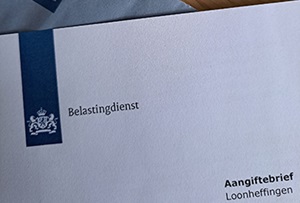
Kreeg u een onderneming geschonken in 2022? En maakte u daarbij gebruik van de vrijstelling van de bedrijfsopvolgingsregeling? Dan ontvangt u in de week van 23 april 2026 een brief van de Belastingdienst.
LEES VERDER
Uw kind heeft een bv. Die bv wil een lening afsluiten bij een bank, maar de bank wil de lening alleen verstrekken als er een borgstelling is. U besluit persoonlijk borg te staan voor de lening. U berekent daarvoor geen vergoeding (borgstellingsprovisie) aan de bv van uw kind. Is hier sprake van een schenking?
De Belastingdienst geeft aan dat hier sprake is van een schenking, omdat u uit vrijgevigheid genoegen neemt met een lagere vergoeding voor de borgstelling dan wat een zakelijke vergoeding is. De schenking wordt toegerekend aan degene die voordeel heeft van die vrijgevigheid, in dat geval uw kind die de aandeelhouder is van de bv.
Let op!De schenking vindt plaats op het moment dat u de borgstelling verstrekt en dus niet pas op het moment dat u zou worden aangesproken als borg, aldus de Belastingdienst.
Door het borgstaan voor een lagere dan een zakelijke vergoeding, worden de aandelen van de bv van uw kind meer waard volgens de Belastingdienst. De bv kan immers onder aantrekkelijke voorwaarden geld lenen bij de bank zonder (of tegen een lagere) vergoeding dan in zakelijke verhoudingen. De hoogte van de schenking is daarom gelijk aan de waardestijging van de aandelen als gevolg van die borgstelling tegen een lagere vergoeding dan zakelijk.
Voor de schenkbelasting wordt gerekend met de tarieven en vrijstelling die gelden voor een kind. De schenking wordt immers toegerekend aan uw kind.
Let op!Het standpunt van de Belastingdienst wordt in de fiscale vakliteratuur bekritiseerd. Neem voor uw eigen situatie daarom contact op met onze adviseurs.

Als u persoonlijk borgstaat voor een lening aan de bv van uw kind, is dat dan een schenking?
LEES VERDER
In de Gemeentewet is sinds eind 2025 opgenomen dat een gemeente een leegstandsheffing kan opleggen aan eigenaren van woningen die langer dan twaalf maanden leegstaan. Het betreffende artikel is per 21 maart 2026 in werking getreden.
Nu de wettelijke bepaling in de Gemeentewet in werking is getreden, kunnen gemeenten ervoor kiezen om de leegstandsheffing op te nemen in een lokale belastingverordening. Pas nadat de leegstandsheffing is opgenomen in zo’n lokale belastingverordening, gaan de twaalf maanden voor leegstand lopen. De gemeente kan dus niet meteen na de lokale belastingverordening de heffing opleggen.
Let op!De Vereniging van Nederlandse Gemeenten (VNG) werkt aan een modelverordening die gemeenten zouden kunnen gebruiken.
De hoogte van de heffing en de beslissing om een leegstandsheffing in te voeren wordt overigens bepaald door de gemeente. Het is dus een keuze en geen verplichting.
Wijzigingen in de Leegstandswet gaan binnenkort voor advies naar de Raad van State. Als deze wijzigingen door de Tweede en Eerste Kamer worden aangenomen, krijgen gemeenten effectievere bevoegdheden om leegstand tegen te gaan. Dit zijn onder meer:

Het artikel in de Gemeentewet dat gemeenten de mogelijkheid biedt om een leegstandsheffing in te voeren is met ingang van 21 maart 2026 in werking getreden. Wat betekent dit?
LEES VERDER
De BAZ betreft een verplichte publieke verzekering tegen inkomensverlies bij langdurige arbeidsongeschiktheid voor zelfstandigen. Het gaat dus nadrukkelijk om een publieke regeling, niet om een private of commerciële verzekering. De BAZ is bedoeld als basisvoorziening. Wie door ziekte, een gebrek, een zwangerschap of bevalling langdurig niet meer kan werken, kan straks onder voorwaarden een uitkering krijgen.
Let op!De BAZ wordt om een aantal redenen ingevoerd. Zo zijn er op dit moment te weinig zelfstandigen adequaat verzekerd tegen arbeidsongeschiktheid, is er sprake van een ongelijk speelveld en vallen onverzekerde zelfstandigen uiteindelijk terug op de bijstand.
De BAZ geldt voor ondernemers in de inkomstenbelasting (IB-ondernemers), met of zonder personeel, die de AOW-leeftijd nog niet hebben bereikt. Het gaat dan concreet om ondernemers die werken vanuit een eenmanszaak, vof of maatschap.
De volgende groepen vallen niet onder de BAZ. Dat betekent dat ze geen premie betalen, maar ook dat ze geen aanspraak kunnen maken op een uitkering.
Volgens de regering hebben dga’s gemiddeld een hoger inkomen en meer vermogen dan IB-ondernemers, waardoor de noodzaak voor overheidsingrijpen minder groot is. Bovendien zou het toevoegen van deze groep aan de BAZ voor problemen in de uitvoering kunnen zorgen.
Ook meewerkende partners zijn om uitvoeringstechnische redenen uitgezonderd. Deze groep is namelijk vooraf niet te identificeren voor de premieheffing.
Mensen die resultaat uit overige werkzaamheden (ROW) genieten, vallen ook niet onder de BAZ. Bij ROW gaat het vaak om bijverdiensten.
Mensen met principiële bezwaren (vaak van godsdienstige aard) tegen elke vorm van verzekering kunnen ontheffing krijgen.
Sommige zelfstandigen combineren het zelfstandig ondernemerschap met een baan in loondienst. Zij zijn voor de werkzaamheden in loondienst via hun werkgever verzekerd voor de WIA. Daarom vallen ze, afhankelijk van de hoogte van hun loon, niet of slechts gedeeltelijk onder de BAZ. Bedraagt het SV-loon (het loon waarover premies werknemersverzekeringen worden betaald) minimaal 142,86% van het minimumloon, dan is de zelfstandige niet premieplichtig voor de BAZ. Het gaat hier naar verwachting om ongeveer 600.000 combinatieverdieners.
Commanditaire vennoten en anderen die winst uit onderneming genieten zonder daarvoor arbeid te verrichten (bijvoorbeeld na een bedrijfsoverdracht), vallen niet onder de BAZ.
Zelfstandigen boven de AOW-gerechtigde leeftijd betalen geen premie, maar hebben ook geen recht op een uitkering.
Zelfstandigen hoeven niet deel te nemen aan de BAZ. Ze kunnen namelijk kiezen voor een opt-out. Ze moeten dan wel een private (commerciële) verzekering hebben die aan de wettelijke voorwaarden voldoet. Dat betekent dat een private verzekering onder meer:
De verzekeraar kan dan voor de verzekerde een opt-out aanvragen bij het UWV. Deze opt-out kan alleen ingaan per 1 januari of bij de start van de onderneming.
Als een zelfstandige kiest voor een private verzekering via de zogenaamde opt-out, moet hij toch nog een premie betalen, de zogenaamde stabiliteitsbijdrage. Dit betreft een vast bedrag per privaat verzekerde. De gedachte hierbij is dat zo wordt voorkomen dat de publieke verzekering vooral de zwaardere risico’s overhoudt en daardoor snel duurder wordt. Deze bijdrage wordt afgedragen door de verzekeraar, maar zal naar verwachting in de premie voor de verzekerde worden verwerkt. De verwachting is dat deze stabiliteitsbijdrage uit zal komen op een bedrag tussen de € 25 en € 35 per maand bij volledige risicoverevening.
Voor zelfstandigen die al een private arbeidsongeschiktheidsverzekering hebben, gaat er overgangsrecht gelden. Om onder het overgangsrecht te vallen, moet de verzekering:
Voldoet de verzekering aan genoemde voorwaarden, dan hoeft de zelfstandige niet verplicht aan de BAZ deel te nemen. De verzekerde hoeft dan ook niet opnieuw medisch gekeurd te worden. De stabiliteitsbijdrage blijft wel van toepassing.
Als de verzekering niet aan de voorwaarden voldoet, kan de zelfstandige deze aanpassen, kan hij een nieuwe verzekering afsluiten die wel aan de eisen voldoet of toch instromen in de publieke BAZ.
Let op!De verzekeraar moet binnen dertien weken na inwerkingtreding van de wet een aanvraag doen bij het UWV voor toepassing van het overgangsrecht.
Let op!Alleen wie voor de peildatum een verzekering heeft, kan gebruikmaken van dit overgangsrecht. Op dit moment is nog onduidelijk wanneer die peildatum bekend wordt gemaakt. Vaak gaat deze direct na de bekendmaking in, dus wacht niet te lang met actie ondernemen.
De premie voor de BAZ bedraagt 5,4% van de winst uit onderneming. Er geldt een maximum van circa € 171 bruto aan te betalen premie per maand.
Let op!De maximale premie van € 171 is gebaseerd op 142,86% van het minimumloon in 2025. Dit bedrag wordt jaarlijks geïndexeerd. De maximale premie van € 171 bruto per maand is verschuldigd vanaf een winst uit onderneming van € 38.000 (5,4% van € 38.000 gedeeld door 12).
Door de koppeling van de BAZ-premie aan de winst uit onderneming, betaalt een zelfstandige met een winst van nul of lager geen BAZ-premie.
Tip! De BAZ-premie is fiscaal aftrekbaar in de aangifte IB als uitgave voor inkomensvoorzieningen.
De zelfstandige ontvangt voor de BAZ-premie een aparte aanslag, naast de aanslag IB en de aanslag Zvw.
De hoogte van de BAZ-uitkering is ook afhankelijk van de winst uit onderneming en bedraagt 70% van de gemiddelde winst, maar maximaal het wettelijk minimumloon. Bij de eerdergenoemde winst van € 38.000 of meer is de uitkering dus het minimumloon. Bij een lagere winst bedraagt de uitkering 70% van de gemiddelde winst.
Let op!Bij winst uit onderneming gaat het om de belastbare winst voor belastingen, vermeerderd met ondernemersaftrekken (zoals de zelfstandigenaftrek, meewerkaftrek, aftrek speur- en ontwikkelingswerk en de stakingsaftrek) en vermeerderd met de mkb-winstvrijstelling.
De uitkering is dus erg laag. Reden waarom gesproken wordt van een basisverzekering. Wie meer uitgekeerd wil krijgen, zal zich aanvullend moeten verzekeren.
Het is verder een alles-of-nietsverhaal. Dat betekent dat er wel of geen recht op uitkering bestaat. Er is geen mogelijkheid van gedeeltelijke arbeidsongeschiktheid zoals bij de WIA. Eventuele inkomsten naast de uitkering worden voor 70% gekort. Werken loont dus wel.
De BAZ hanteert een absoluut criterium. Iemand is arbeidsongeschikt als hij of zij door ziekte, gebrek, zwangerschap of bevalling niet meer in staat is om met arbeid ten minste het wettelijk minimumloon per maand te verdienen. Het feitelijk verdiende inkomen is dus niet van belang. Het UWV gaat kijken of iemand zogeheten basisfuncties kan uitvoeren. Het gaat dan om functies die op de Nederlandse arbeidsmarkt voorkomen met een relatief lage belasting, op of rond minimumloonniveau. Denk hierbij aan eenvoudig administratief werk of lichte productiewerkzaamheden.
Lukt het om zo’n functie uit te voeren, dan is er geen sprake van arbeidsongeschiktheid.
Let op!Het gegeven dat iemand als zelfstandige zijn eigen werk niet meer kan uitvoeren, is dus niet van belang.
Er geldt een wachttijd van twee jaar voordat eventueel tot uitkering wordt overgegaan. Dit heeft als voordelen dat de premie lager uitvalt en de druk op de uitvoering voor het UWV afneemt. Deze wachttijd kan de zelfstandige op verschillende manier overbruggen, zoals door eigen vermogen, een broodfonds of een private verzekering. Wel kan er gedurende de wachttijd een beroep worden gedaan op de re-integratiedienstverlening door het UWV.
Het kabinet wil de BAZ snel door het parlement loodsen. Dit hangt samen met de deadline van 31 augustus 2026 in verband met het EU Herstel- en Veerkrachtplan en de samenhang met de Zelfstandigenwet, waarin een arbeidsongeschiktheidsverzekering een voorwaarde wordt voor het werken als zelfstandige. Het is de verwachting echter dat de BAZ niet eerder dan in 2030 wordt ingevoerd.
Disclaimer
Hoewel bij de samenstelling van deze Advieswijzer de uiterste zorg is nagestreefd, wordt geen aansprakelijkheid aanvaard voor onvolledigheden of onjuistheden. Vanwege het brede en algemene karakter van de Advieswijzer, is deze niet bedoeld om alle informatie te verschaffen die noodzakelijk is voor het nemen van financiële beslissingen.
Het wetsvoorstel voor de BAZ is naar de Tweede Kamer gestuurd. Deze verplichte basisverzekering tegen arbeidsongeschiktheid raakt straks zo’n 1,2 miljoen IB-ondernemers. De verwachting is dat de BAZ niet eerder dan in 2030 wordt ingevoerd. Het zal daarom waarschijnlijk nog jaren duren voordat zelfstandigen van deze verzekering gebruik kunnen gaan maken.
LEES VERDER
U kunt de SLIM-subsidie krijgen voor de kosten van een adviseur die een scholings- en ontwikkelingsplan maakt voor uw bedrijf, of uw personeel loopbaan- en ontwikkeladvies geeft. Ook projecten om uw personeel te stimuleren om hun kennis, vaardigheden en beroepshouding verder te ontwikkelen, vallen onder de subsidiemogelijkheden.
Individuele bedrijven kunnen maximaal €24.999 subsidie krijgen, voor landbouwbedrijven is dit maximaal €20.000. Samenwerkingsverbanden krijgen maximaal €500.000 per aanvraag en maximaal €200.000 per partner. De subsidie bedraagt in de meeste gevallen 60% van de subsidiabele kosten. Alleen voor loopbaan- en ontwikkeladviezen geldt een vast subsidiebedrag van €700 per afgerond loopbaan-of ontwikkelingstraject
Individuele ondernemers kunnen de SLIM-subsidie aanvragen van 7 april 2026 9.00 uur tot en met 4 mei 2026 17.00 uur. Aanvragen is ook mogelijk van 10 augustus 2026 9.00 uur tot en met 7 september 2026 17.00 uur. Samenwerkingsverbanden kunnen de subsidie aanvragen van 8 juni 2026 9.00 uur tot 6 juli 2026 17.00 uur.
Als u de SLIM-subsidie wilt aanvragen, moet u zich eerst registreren. Dit kan via website van Uitvoering van Beleid. Houd er rekening mee dat u de nodige formulieren moet meesturen, zoals een activiteitenplan en begroting.
Als er te veel aanvragen worden ingediend, wordt de subsidie toegedeeld via loting. Dit was al zo voor individuele ondernemingen, maar sinds dit jaar voor het eerst ook voor samenwerkingsverbanden. Met deze nieuwe aanpak wordt voorkomen dat de beschikbare subsidie voor samenwerkingsverbanden te snel is uitgeput.

Ondernemers kunnen ook dit jaar individueel of via een samenwerkingsverband de SLIM-subsidie (Stimuleringsregeling leren en ontwikkelen in mkb-ondernemingen) aanvragen. Via de SLIM-subsidie wordt leren en ontwikkelen op de werkvloer gestimuleerd.
LEES VERDER
Er komen vragen op u af als:
Deze advieswijzer bevat een overzicht van enkele belangrijke zaken waarmee u als ondernemer te maken kunt krijgen bij een echtscheiding. Het zijn complexe zaken, die om deskundige begeleiding vragen. Met behulp van deze advieswijzer inventariseert u uw persoonlijke situatie en komen er zaken aan de orde als:
Tip! Ga regelmatig na of uw huwelijksvermogensregime nog wel past bij uw zakelijke en privébelangen. Laat u daarbij ook goed informeren over actuele wet- en regelgeving.
Let op!Sinds 1 januari 2018 is voor vanaf dat moment te sluiten huwelijken de beperkte gemeenschap van goederen de standaard. In plaats van één gemeenschappelijk vermogen is sprake van drie vermogens: een huwelijksvermogen en een afzonderlijk vermogen voor ieder van de echtgenoten. Voorhuwelijks ondernemingsvermogen valt niet in de beperkte gemeenschap (vraag ook naar de Advieswijzer Beperkte gemeenschap van goederen).
Wel geldt dat een redelijke vergoeding voor kennis, vaardigheden en arbeid voldaan dient te worden aan de gemeenschap, voor zover een dergelijke vergoeding niet al op andere wijze ten bate van de echtgenoten komt of is gekomen. Dit vereist een nauwkeurige administratie tijdens het huwelijk. Het is verstandig om de waarde van de voorhuwelijkse onderneming goed vast te stellen en hierbij op te nemen op basis van welke grondslag dit is gebeurd.
Door de wettelijke regeling die geldt vanaf 1 januari 2018 is het overeenkomen van huwelijkse voorwaarden over het algemeen van nog groter belang dan voor die tijd.
Bij een algehele of beperkte gemeenschap vindt bij echtscheiding verdeling plaats van het vermogen dat in de gemeenschap is gevallen. Beide partijen zijn gerechtigd tot hun aandeel in de gemeenschap. In het kader van de verdeling dient waardering van het ondernemingsvermogen dan wel van de aandelen plaats te vinden, op voorwaarde dat deze tot de gemeenschap behoren.
Zonder huwelijkse of partnerschapsvoorwaarden valt de (waarde van de) onderneming in de te verdelen gemeenschap; met uitzondering van het voorhuwelijks ondernemingsvermogen bij een beperkte gemeenschap van goederen. In dat geval kan wel sprake zijn van een redelijke vergoeding aan de gemeenschap voor kennis, vaardigheden en arbeid, die een echtgenoot ten behoeve van die onderneming heeft aangewend, voor zover een dergelijke vergoeding niet al op andere wijze ten bate van beide echtgenoten komt of is gekomen.
Wellicht heeft u in uw huwelijkse of partnerschapsvoorwaarden wel specifieke bepalingen opgenomen over de gerechtigdheid tot het eigen bedrijf. Denk hierbij bijvoorbeeld aan een verrekenbeding, waarbij de waarde van het geheel of van een gedeelte van de onderneming moet worden verrekend.
Ook kan het zijn dat u een zogenaamd jaarlijks verrekenbeding in uw huwelijkse of partnerschapsvoorwaarden heeft staan waar u nooit uitvoering aan heeft gegeven. De wet gaat er bij een echtscheiding dan in beginsel van uit dat uw totale vermogen gelijk met elkaar verrekend dient te worden.
Tegenbewijs is weliswaar mogelijk, maar de praktijk leert dat dit vaak erg lastig is. Ook kan het zijn dat er wel jaarlijkse berekeningen zijn gemaakt, maar dat die niet goed blijken te zijn; bijvoorbeeld omdat opgepotte winsten in de bv niet meegerekend zijn, terwijl dat wel had gemoeten. Het gevolg is dan dat of de berekeningen opnieuw gemaakt moeten worden (hetgeen vaak complex blijkt te zijn), of dat het totale vermogen toch verrekend dient te worden.
In het kader van een echtscheiding kan om afwikkeling van de huwelijkse voorwaarden worden gevraagd. Het kan dan gaan om verdeling van een eenvoudige gemeenschap of een verrekening in het kader van een verrekenbeding. Ook is het vaak lastig om achteraf nog vast te stellen wat er precies tussen de partijen verrekend moet worden.
Let op!Als u voor het huwelijk een eenmanszaak had die u tijdens het huwelijk met beperkte gemeenschap van goederen (dus alleen bij huwelijken gesloten na 1 januari 2018) in een besloten vennootschap heeft ingebracht, dan wordt deze besloten vennootschap niet zonder meer beschouwd als een voorhuwelijkse onderneming. Dit kan betekenen dat de vennootschap gemeenschappelijk is geworden en uw partner recht heeft op de helft van de waarde van de aandelen in de vennootschap.
Het kan dus zomaar zijn dat u als ondernemer de waarde van uw onderneming moet delen met uw (ex-)partner. De activa/passiva van het bedrijf dienen hiervoor reëel te worden gewaardeerd. De scheiding brengt het risico met zich mee dat het uitkopen van de ex-partner ten koste kan gaan van de continuïteit van het bedrijf. Als het bedrijf dan ook de belangrijkste inkomensbron is, is het zaak te zoeken naar passende oplossingen. Denk hierbij ook aan het (tijdelijk) aanhouden van een belang in de onderneming door uw ex-partner. Maar ook aan het verrekenen met andere bezittingen of het overnemen van schulden.
Let op!Ga na of bij een bedrijfsfinanciering ook privézekerheden, bijvoorbeeld een hypotheek op de woning, zijn verstrekt. Dit vraagt dan om extra aandacht bij de afwikkeling van de scheiding.
Bij een echtscheiding heeft de ex-partner in principe recht op de helft van het ouderdomspensioen dat tijdens het huwelijk is opgebouwd. Dit wordt pensioenverevening genoemd. De ex-partner krijgt dan een voorwaardelijk recht. Daarnaast heeft de ex-partner recht op een bijzonder partnerpensioen/nabestaandenpensioen.
Tip! U bent vrij om samen met uw (ex-)partner een andere verdeling af te spreken of zelfs te besluiten niet tot verevening van het ouderdomspensioen over te gaan. Let wel, in maart 2026 heeft een Kennisgroep van de Belastingdienst laten weten dat het afzien van verevening van pensioen beschouwd kan worden als een schenking, als de echtgenoot die hiervan afziet hier niet voor gecompenseerd wordt en als de Wet verevening pensioenrechten bij echtscheiding wel van toepassing is.
Ook conversie van pensioen is mogelijk. Dan zet u de rechten voor uw ex-partner om in een eigen pensioen en u bent niet meer ‘verbonden’ aan elkaar. Wijkt u af van de wettelijke regeling, dan moet dit wel zijn vastgelegd in de huwelijkse voorwaarden of in het echtscheidingsconvenant. Als u wenst af te wijken van de wet is het van belang om advies in te winnen bij een fiscalist en/of pensioendeskundige.
Let op!Van het bijzonder partnerpensioen/nabestaandenpensioen moet u expliciet afzien als dat gewenst is.
Over pensioen in eigen beheer heeft u voor 1 januari 2020 moeten beslissen, opbouw is sinds 1 juli 2017 al niet meer mogelijk. Koos u ervoor om het pensioen in eigen beheer ongewijzigd te laten (zonder verdere opbouw) en gaat u scheiden, dan blijft uw ex-partner voor zijn of haar deel van het reeds opgebouwde pensioen in eigen beheer afhankelijk van het reilen of zeilen van uw bv. De bv is en blijft immers in dit geval de pensioenuitvoerder. Omdat dit nadelig kan zijn voor uw ex-partner, kan deze eisen dat het pensioenaandeel elders wordt ondergebracht. U en uw bv moeten hieraan meewerken. Dit is alleen anders als door afstorting van het pensioen de continuïteit van uw onderneming aantoonbaar in gevaar komt. Bovendien mag het afstorten er niet voor zorgen dat uw eigen pensioen in gevaar komt. Komt het in gevaar, dan moet er sprake zijn van post-relationele solidariteit, en moet de ex-partner ‘meedelen’ in het eventuele tekort, en krijg dus minder afgestort pensioen mee, maar houdt wel het volledige recht op dan een deel in de eigen bv.
Tip! Het staat u en uw (ex-)partner te allen tijde vrij om te kiezen voor een alternatieve financiële oplossing.
Koos u ervoor om de pensioenaanspraak in eigen beheer af te kopen met een belastingkorting of om te zetten in een oudedagsverplichting, dan verliest uw partner zijn of haar rechten op een deel van het in eigen beheer opgebouwde ouderdomspensioen (partnerpensioen). Uw partner dient daarvoor wellicht ‘passend’ te worden gecompenseerd. ‘Passend’ kan ook betekenen dat u samen met uw partner schriftelijk vastlegt dat compensatie (uitsluitend) plaatsvindt wanneer u overlijdt of bij echtscheiding. Ook hier geldt dat iedere keuze mogelijk fiscale voordelen biedt, maar ook tot ongewenste fiscale complicaties kan leiden en dus moeten deze vooraf goed in beeld gebracht worden.
Let op!In bepaalde situaties is de partnercompensatie belast als periodieke uitkering en/of aftrekbaar als onderhoudsverplichting.
Ook na een echtscheiding hebben uw ex-partner en u de plicht voor elkaar en de kinderen te zorgen door bij te dragen in de kosten van levensonderhoud (alimentatie). Voor het berekenen van de alimentatie gelden de zogenaamde ‘Tremanormen’. Bij de ondernemer is het van groot belang om niet alleen naar de jaarstukken uit het verleden te kijken, maar ook naar de kasstroom van de ondernemer, prognoses en informatie over de onderneming en de branche.
Wanneer een van de ex-partners niet genoeg inkomsten heeft om van te leven, heeft de ander de plicht om bij te dragen in de kosten. Bij verzoekschriften tot echtscheiding die na 1 januari 2020 zijn ingediend, geldt dat de partneralimentatie beperkt is in duur. Hoe lang alimentatie betaald dient te worden, hangt af van verschillende factoren, zoals de duur van het huwelijk, leeftijd van betrokkenen, leeftijd van eventuele kinderen en het moment van het ontvangen van AOW. Een veel gehoorde misvatting is dat de duur van partneralimentatie standaard vijf jaar zou zijn.
In tegenstelling tot partneralimentatie is kinderalimentatie bij de betaler ervan niet aftrekbaar en bij de ontvanger onbelast.
Let op!Partneralimentatie is bij de betaler ervan aftrekbaar en bij de ontvanger belast.
Voor de verkrijger van alimentatie zijn de hiermee samenhangende advocaatkosten aftrekbaar als de procedure ter verkrijging van alimentatie voor hem of haar succesvol verloopt. Dit is ook het geval als de verkrijger geen succes heeft, maar er een redelijke kans op succes is geweest. Degene die alimentatie moet betalen, kan de kosten van de advocaat niet aftrekken. Dit staat los van de vraag of de procedure voor degene van wie de betaling geëist werd, al dan niet succesvol is verlopen.
Over de hoogte en de duur van de alimentatie kunt u met elkaar naar eigen inzicht en mogelijkheden afspraken maken. Neem de afspraken volledig en duidelijk op in een echtscheidingsconvenant. Voorkom discussie over het ondernemersinkomen en de onderlinge draagkrachtverdeling. Daarnaast is het bij een ondernemer van groot belang dat een dubbeltelling voorkomen wordt. Toekomstige geldstromen van de onderneming moeten niet twee keer worden meegenomen, dat wil zeggen zowel bij de waardering van de aandelen als bij de alimentatie.
De kosten van de kinderen (ook wel behoefte genoemd) worden in beginsel berekend aan de hand van het netto gezinsinkomen van partijen ten tijde van het uiteengaan. Verder wordt rekening gehouden met het aantal kinderen in een gezin en de leeftijd van de kinderen. Ook kan rekening worden gehouden met hoge (netto) oppaskosten voor en na de scheiding.
Bij het bepalen van draagkracht van ouders voor kinderalimentatie wordt gebruikgemaakt van een formule die is opgenomen in de Tremanormen. Aan de hand van het netto besteedbaar inkomen wordt dan berekend wat een ouder redelijkerwijs kan bijdragen in de kosten van de kinderen. In de formule wordt rekening gehouden met de bijstandsnorm, alsook een component voor woonlasten.
Worden er schulden afgelost of heeft iemand bijzondere verplichtingen, zoals een arbeidsongeschiktheidsverzekering, dan kan de formule hierop worden aangepast. Ouders die gaan scheiden, hoeven minder kinderalimentatie te betalen naarmate zij meer voor de kinderen zorgen (zorgkorting).
Indien de ouders samen een tekort hebben aan draagkracht voor de kinderalimentatie, dan dient onderzocht te worden of de draagkracht niet hoger is, wanneer gerekend wordt met de daadwerkelijke woonlast van de ouders in plaats van met het forfaitaire bedrag.
Let op!Er kan bij kinderalimentatie sprake zijn van samenloop van onderhoudsverplichtingen. Dit is aan de orde als er sprake is van bijvoorbeeld een onderhoudsplichtige stiefouder of wanneer de ouders kinderen hebben bij verschillende partners. Ook dit heeft gevolgen voor de berekening.
Let op!In tegenstelling tot partneralimentatie is kinderalimentatie bij de betaler ervan niet aftrekbaar en bij de ontvanger onbelast.
Een echtscheiding kan voor de scheidende partners uiteenlopende fiscale consequenties hebben. Op het moment dat u het verzoek tot echtscheiding of scheiding van tafel en bed heeft ingediend en u ook niet meer op hetzelfde adres ingeschreven staat, bent u geen fiscaal partner meer. Wel mag u in dat jaar nog kiezen om als fiscale partners de belastingaangifte in te vullen. Dit kan het jaar daarop niet meer. Bent u geen fiscaal partner meer, dan heeft dit vooral direct gevolgen voor een aantal regelingen in de inkomstenbelasting en voor eventuele toeslagen. Op hoofdlijnen gaat het om de volgende regelingen.
Behoort het ondernemingsvermogen tot de te ontbinden gemeenschap van de (huwelijks)partners? Dan wordt het deel van uw onderneming, dat volgens het huwelijksvermogensrecht toekomt aan uw partner, bij ontbinding van de gemeenschap geacht te zijn overgedragen tegen reële waarde. Over de fiscale meerwaarde (goodwill, reserves en stille reserves) van dit deel van de onderneming moet u als ondernemer dan afrekenen. Onder voorwaarden hoeft er echter niet te worden afgerekend en geldt er een belastingvrije doorschuiffaciliteit.
Als u een vermogensbestanddeel (zoals een pand) ter beschikking stelt aan de onderneming, aanmerkelijk belang vennootschap of werkzaamheid van een verbonden persoon, dan is op dit vermogensbestanddeel de TBS-regeling van toepassing. Partners gelden voor de TBS-regeling als verbonden personen. De positieve en negatieve voordelen behaald met dit vermogensbestanddeel vormen dan belastbaar resultaat uit overige werkzaamheid (box 1). Met de echtscheiding eindigt de verbondenheid en de terbeschikkingstelling en vindt over het betreffende (aandeel in het) TBS-vermogen een fiscale afrekening plaats, tenzij er een doorschuiffaciliteit (fiscale begeleiding) van toepassing is. Bij huwelijkse voorwaarden speelt dit vaak niet. Het vermogensbestanddeel behoort tot uw vermogen en alleen u heeft te maken met de TBS-regeling.
Hebben uw partner en u een aanmerkelijk belang (AB), dan kan de scheiding tot gevolg hebben dat bij een of beide partners niet langer sprake is van een aanmerkelijk belang. Op dat moment is sprake van een fictieve vervreemding in de zin van de AB-heffing met een fiscale afrekening tot gevolg. Onder voorwaarden geldt ook hier een doorschuiffaciliteit.
Bij een echtscheiding verlaat doorgaans een van de partners de woning. Op dat moment is deze woning voor de vertrekkende partner geen hoofdverblijf meer en daarmee zou voor dit aandeel in de woning de eigenwoningregeling en bijbehorende hypotheekrenteaftrek komen te vervallen. Maar, op voorwaarde dat de ex-partner in de woning blijft wonen, blijft de eigenwoningregeling op grond van de scheidingsregeling nog maximaal twee jaar na vertrek gelden. Naast de scheidingsregeling zijn er ook nog vele fiscale valkuilen als er een eigen woning in het spel is. Zo kan de aftrekbaarheid van de eigenwoningrente (deels) in gevaar komen als hierover geen goede afspraken zijn gemaakt.
Een echtscheiding vraagt om goede (fiscale) begeleiding. Er zijn veel regels om rekening mee te houden. Denk hierbij ook aan de verdeling van lijfrenten en kapitaalverzekeringen. Wij kunnen u begeleiden bij dit complexe proces.
Disclaimer
Hoewel bij de samenstelling van deze Advieswijzer de uiterste zorg is nagestreefd, wordt geen aansprakelijkheid aanvaard voor onvolledigheden of onjuistheden. Vanwege het brede en algemene karakter van de Advieswijzer, is deze niet bedoeld om alle informatie te verschaffen die noodzakelijk is voor het nemen van financiële beslissingen.

Wanneer u als ondernemer gaat scheiden, heeft dit in de meeste gevallen ook gevolgen voor de onderneming. Of dit nu een eenmanszaak is of een bv. Een eigen bedrijf maakt een scheiding vele malen lastiger.
LEES VERDER
Please note! Due to significant uncertainty as to whether the government’s plans will be approved by the House of Representatives and the Senate, some of the tips below may still change (in part) before the end of the year. Please bear this in mind!
Should you pay a dividend this year, or would it be better to wait until 2026? There is no one-size-fits-all answer to this question. In any case, be sure to take the following points into consideration:
Please note! Discuss your own situation with our advisers. They can calculate the effect of the dividend payment on, for example, your tax credits and your tax liability in Box 3. Based on this, you can decide whether or not to pay out a dividend. At present, the advice is to wait for the time being until there is a little more clarity on which tax plans will ultimately be passed by the House of Representatives and the Senate.
The measure concerning excessive borrowing from one’s own company broadly means that a director and major shareholder who borrows too much from their own private limited company will pay Box 2 tax on this amount. A threshold of €500,000 currently applies, but the government intends to lower this limit to €100,000. This will be implemented in five stages of €80,000 per year, starting in 2027. By the end of 2027, the threshold will stand at €420,000, and by the end of 2031, the €100,000 limit will have been reached. Although the measure still needs to be passed by the House of Representatives and the Senate, it may well be wise to factor the reduction in the threshold into your dividend planning.
Please note! As is currently the case, home loan debts remain exempt under the proposal and will therefore not count towards the threshold from 2027 onwards. However, for home loan debts incurred on or after 1 January 2023, the condition applies that these must be secured by a mortgage registered against the property.
From 2027, a 12% pseudo-final levy will apply to company cars if these vehicles emit CO₂ (hereinafter: fossil-fuelled company cars). This levy is calculated on the basis of the car’s list price (and, for cars older than 25 years, on the basis of its market value). This is an employer’s levy that you are not permitted to pass on to the employee! Furthermore, the employee may also be liable for the additional tax liability relating to private use.
So what can you still do now to avoid this levy in 2027?
Any vehicle that is not a passenger car, such as a van, lorry or tractor, is also exempt from the 12% pseudo-final levy. Please note, however, that a campervan and a minibus may also be classified as passenger cars. Check the classification in the vehicle registration register. An M1 vehicle is a passenger car!
Please note! When changing employers, the transitional arrangement – which normally runs until 31 December 2030 – ceases to apply. This is because the transitional arrangement is linked to the car in combination with the employer. If a former employee takes the car with them to a new employer, that link is broken and the transitional arrangement lapses. The new employer will then be subject to the 12% pseudo-final levy from day one.
There are still a number of exceptions to the 12% pseudo-final levy. For example, under certain conditions, a replacement car is exempt from the levy for up to fourteen consecutive days, and manual-gearbox driving school cars are also exempt.
There may be various reasons for setting up a private limited company in 2026 and transferring your income tax business into it. One reason could be that you were already planning to do this and also wish to transfer a fossil-fuelled passenger car into the company:
If you contribute the income tax business to the private limited company in 2026 with a tax settlement, you can still benefit from the cessation allowance of €3,630. In 2027, this allowance will fall to €908. If you still have a FOR that is due to be released, you can also make use of the cessation allowance in the event of a silent contribution.
Furthermore, a number of the entrepreneur’s income tax benefits will be further scaled back. For example, the self-employed person’s allowance will fall from €1,200 in 2026 to €900 in 2027; the additional self-employed person’s allowance for a start-up will fall from €2,123 in 2026 to €10 in 2027; and the family business allowance will be reduced by 75% in 2027.
This may also be a reason to switch to a private limited company (BV) in 2026.
Please note! Whether it is advantageous to transfer your income tax-registered business into a private limited company naturally depends not only on the 12% pseudo-final levy, the cessation allowance and other business tax deductions. In addition to tax considerations, other factors, such as limited liability, may also play a role. You should therefore consult our advisers to determine whether switching to a private limited company might be advisable. Do not wait too long to do so. You will need a solicitor to set up a private limited company, and solicitors’ diaries generally fill up quickly towards the end of the year.
From 2027, a new authorisation scheme will come into force for parties that supply workers (labour providers). This is regulated by the Labour Supply Authorisation Act (Wtta).
The licensing scheme applies to anyone who makes workers (including self-employed persons) available to third parties. This includes temporary employment agencies, secondment agencies and agencies that supply self-employed persons. However, even a private limited company that supplies its director-major shareholder to another company may fall under the licensing scheme!
Fortunately, there are exceptions. For example, peer-to-peer lending where no profit is made is not subject to the authorisation scheme. The same applies to lending and borrowing within a group of companies.
If no exception applies, you may be able to apply for an exemption. This is possible if your income from lending services in a given year amounts to less than 10 per cent of your total income and that income does not exceed €5 million per year. In addition, an accountant must certify annually that these thresholds are not exceeded.
Please note! To be able to make use of a transitional arrangement, it is important that you submit an application between 1 November 2026 and 31 December 2026! This will ensure that you can continue to lend for the time being. It is, however, important that you also submit an application for admission to the scheme between 1 May 2027 and 30 June 2027. If you have an SNA quality mark by 30 June 2027 at the latest, you do not need to register for the transitional scheme in 2026. You will, however, still need to apply for admission between 1 May 2027 and 30 June 2027.
A property that is not your main residence – for example, a holiday home or a property you let out – falls under Box 3. If you are planning to purchase such a property, it may be advantageous to have the transfer at the solicitor’s take place in 2027 rather than in 2026.
This is because the transfer tax on the acquisition of properties that are not your main residence is currently still 8 per cent, but will be 7 per cent from 2027 onwards. Furthermore, the flat-rate Box 3 tax on bank balances (should you purchase the property using bank balances) is considerably lower than that applied to the property itself, which is classified as other assets.
For a new, fully electric car made available in 2026, an additional tax liability of 18 per cent applies to the first €30,000 of the list price and 22 per cent on the amount above that. If the new, fully electric car is first made available in 2027, the additional tax liability will be 20 per cent on the first €30,000 of the list price and 22 per cent on the amount above that. If the car runs on hydrogen or is powered by solar panels, the €30,000 limit does not apply and the additional tax liability in 2026 will be 18 per cent of the full list price, and in 2027 20 per cent of the full list price. These additional tax rates apply for a period of 60 months. This may be a reason to try to acquire a car with zero CO₂ emissions in 2026, or failing that, in 2027.
If your car with CO₂ emissions falls under the ‘youngtimer’ scheme, the additional tax liability will not be 22 per cent (or 25 per cent for a car first registered before 2017) of the list price, but 35 per cent of the market value. The ‘youngtimer’ scheme will apply in 2026 if the car is 16 years old or older on 1 January 2026, or if it was already at your disposal in 2025 and turns 16 in 2026. From 1 January 2027, the age limit is likely to rise to 17 years (it is currently 25 years) and from 1 January 2028 to 20 years. Do you drive the ‘youngtimer’ through your income tax business, such as a sole trader? If so, you may wish to transfer the car to your private name. Normally, this isn’t possible without further ado, but due to the legislative change, there may be options available. Please discuss this with our advisers.
Check whether you have any remaining allowance under the work-related expenses scheme (wkr) and make use of it. In 2026, this allowance amounts to 2 per cent of the first €400,000 of the wage bill and 1.18 per cent above that amount. Any allowance remaining in 2026 cannot be carried forward to 2027!
Incidentally, the allowance will increase slightly in 2027. It will then amount to 2.16% on the first €400,000 of the wage bill and 1.18% on the amount above that.
Please note! The targeted exemption for staff discounts on sector-specific products will be abolished from 2027. Therefore, only in 2026 will you still be able to grant a targeted exemption for a reimbursement or discount of up to 20 per cent of the product’s market value, with a maximum of €500 per employee per year.
A new, attractive scheme for share options at start-ups and scale-ups is due to come into force, probably from 2027. Under the new scheme, 35% of the benefit (= the difference between the proceeds from the sale of the shares on the one hand and the contribution and purchase price of the shares on the other) remains tax-free. Furthermore, the employee only pays tax upon the sale of the shares acquired through the share options.
Various conditions apply, and the Netherlands Enterprise Agency (RVO) must classify your company as an innovative start-up or scale-up. What is important for now is that share option rights granted on or after 17 April 2025 may be eligible for the new scheme. It is therefore important that these share option rights have not yet been included in payroll tax as at 31 December 2026. In any case, ensure that share option rights granted on or after 17 April 2025 meet this requirement.

As an entrepreneur, director and major shareholder, employer or private individual in the Netherlands, what can or must you sort out before the end of 2026? Or what should you actually wait to do? What changes are coming into effect in 2027 that you can already prepare for now? We’ve put together a few important tips for you.
READ MORE
Please note! Not all the points listed below are taken from the 2027 Tax Plan. Some changes had already been decided upon, but adjustments have since been made to them.
From 2027, the government will be scaling back various tax benefits for entrepreneurs.
The entrepreneur’s allowance reduces the profit on which an entrepreneur pays income tax. From 2027, further cuts will apply to various components of this allowance.
Please note! This scheme applies to self-employed people who do not meet the 1,225-hour criterion but do meet the reduced 800-hour criterion and are entitled to incapacity benefit.
The cessation allowance and the rates for the co-worker allowance will cease to apply at the start of the third calendar year following the year in which the reduction takes effect. As the changes come into force in 2027, the schemes will therefore cease to apply on 1 January 2030.
As of 1 January 2028, another tax benefit for business owners will be abolished: the discretionary depreciation scheme for start-ups.
Start-up business owners, those planning to cease trading within a few years, and business owners with a co-working partner will be particularly affected. The choice between a sole trader, a general partnership (VOF) or a private limited company (BV) therefore once again requires a calculation based on actual profits and personal circumstances.
Please note!If there are significant changes to your profits, business partnerships or business succession, have a fresh assessment carried out to determine which legal form is best suited to your business.
Tip! Due to the higher aggregate income, benefits may also change. You should therefore check your estimated income for benefit purposes in good time for 2027 and 2028.
Employers may, with retroactive effect up to and including 1 January 2026, reimburse a maximum of €0.25 per business kilometre tax-free. This was previously €0.23. The increase also applies to commuting. The government is now enshrining this increase in law with retroactive effect.
Please note!The increase does not automatically mean that every employee is entitled to €0.25 per kilometre. This depends on the employment contract, the collective labour agreement and the employer’s own mobility policy. For employers, a higher allowance may lead to higher wage costs.
The discretionary allowance on the first €400,000 of the taxable wage bill will increase from 2% to 2.16% with effect from 1 January 2027. This will give you a maximum of €640 extra discretionary allowance per year. This increase was adopted earlier and is therefore not part of the 2027 Tax Plan.
Tip! Update your staff handbook, expense claim policy and payroll administration in good time, and assess whether a higher mileage allowance is desirable from both a financial and employment conditions perspective. Does your organisation offer staff discounts on sector-specific products? If so, consider what the end of this exemption will mean. This will mainly affect the retail and manufacturing sectors.
If, as an employer, you make a passenger car with emissions available to an employee for private use from 2027 onwards, you will be subject to a pseudo-final levy of 12 per cent of the list price. This levy is in addition to the employee’s additional tax liability and must not be passed on to the employee. Transitional provisions apply to cars made available before 1 January 2027.
The pseudo-final levy was already adopted last year, but following consultation, four amendments are being proposed.
The ‘youngtimer’ scheme will be scaled back more gradually than previously stipulated, and the changes will be less far-reaching. The additional tax liability will continue to be based on the market value, but the age limit will rise from 16 years to 17 years in 2027 and to 20 years from 2028 onwards. The previously planned rapid increase to 25 years from 2027 will therefore not go ahead.
Transitional provisions apply to cars that have already been made available by 31 December 2025 at the latest and which will be 17 years old in 2027. These cars may continue to benefit from the youngtimer scheme throughout 2027. From 1 January 2028, the scheme will only apply to cars older than 20 years.
For employers, the decision to provide a company car is becoming increasingly important, particularly due to the ‘pseudo-final levy’. The contract term, drive type and the date on which a car is first made available can have significant tax implications. As a result, an existing lease plan may turn out to be much more expensive or, conversely, much more attractive.
Tip! Before making any new leasing decisions, carefully assess the total employer costs, the employee’s additional tax liability, the lease term and the transitional tax rules.
Normally, the thresholds for tax bands and various tax credits in Box 1 rise in line with inflation. This means that the tax burden normally remains the same as income rises, in line with inflation.
In 2027 and 2028, the government will apply the inflation adjustment only partially. Without this measure, the inflation adjustment for 2027 would amount to 2.6 per cent. Of this, 48 per cent will be applied. As a result, tax band thresholds and tax credits will rise less in line with inflation. Incidentally, the 48 per cent is not applied to the second tax bracket threshold, which therefore remains the same in 2027 as in 2026. The first tax bracket threshold rises from €38,883 to €39,247. The second tax bracket threshold remains at €78,426.
At the same time, the Box 1 rates are changing. For taxpayers under the state pension age, the rate in the first tax bracket will rise by 0.48 per cent: from 35.75 per cent in 2026 to 36.23 per cent in 2027. The rate in the second tax bracket will rise by 0.60 per cent: from 37.56 per cent to 38.16 per cent. The rate in the third tax bracket remains at 49.50 per cent.
Due to the increase in rates and limited indexation, the tax burden in Box 1 will rise. This effect is mitigated for homeowners who can also deduct their mortgage interest at the higher rate of up to 38.16%.
Please note! Always assess your salary, dividends and profits in conjunction with one another. The tax burden may in fact be unexpectedly higher, as the general tax credit depends on your aggregate income. This may therefore also fall as a result of a dividend payment.
Box 3 taxes private assets, such as savings, investments and a second home. Under the current system, the tax authorities calculate the return largely using flat-rate figures. If your actual return is lower, you can provide evidence to the contrary, subject to certain conditions.
The Government has provisionally deferred consideration of the ‘Actual Return on Box 3’ Bill. It will present a new proposal in the 2027 Spring Memorandum. Consequently, the intended introduction on 1 January 2028 will not take place, or at the very least, this date remains uncertain. The Government is re-examining whether a capital gains tax would be more appropriate than a capital appreciation tax.
Under a capital appreciation tax, even an unrealised increase in value is taken into account annually. Under a capital gains tax, tax is only levied upon, for example, the sale of an asset. For entrepreneurs and directors/major shareholders with investments, let property or other assets that are difficult to sell, this makes a significant difference.
Please note!Until a new system comes into force, it remains important to keep accurate records of interest, dividends, rent, costs and changes in value. This information is required for the rebuttal scheme and for weighing up whether to invest privately or through a private limited company.
Tip! Do not wait for the new system. Record the actual return on each asset annually and retain the supporting documents.
The government is making various tax schemes for investment and innovation more attractive. For example, the energy investment allowance will rise from 40% to 45.5% with effect from 1 January 2027. Are you investing in qualifying energy-efficient business assets? If so, you’ll be able to deduct a larger portion of your investment from your profits.
The tax relief for research and development work is also being extended. The flat-rate hourly wage will rise from €29 to €33. This scheme reduces the payroll tax you, as an employer, pay when your employees are working on technically new products, processes or software.
Does your business make use of the innovation box? This scheme is also being made more attractive. From 1 January 2027, the maximum flat-rate amount will rise from €25,000 to €100,000 per year. The flat rate remains capped at 25% of profit. The current three-year application period will also remain unchanged. This allows you to have a larger proportion of your profit taxed at the lower Innovation Box rate.
Tip! Do you wish to make use of the energy investment allowance? Before entering into any commitments, check whether the business asset is included on the energy list. Then submit your application to RVO within the applicable three-month deadline.
To stimulate innovation and growth in specific young enterprises, the government is introducing an attractive tax scheme for employee share options at start-ups and scale-ups.
In principle, the employee pays tax when they actually sell the shares acquired through the options. After deducting the exercise price attributable to the shares, only 65 per cent of the benefit is taxed as income, subject to certain conditions. If the employee sells the share option right rather than the shares themselves, this lower tax base does not apply. The employee may also opt in writing for earlier taxation at the time the option right is exercised or as soon as the shares become tradable.
The scheme applies only to companies that qualify as start-ups or scale-ups and hold a decision from RVO. This decision is valid for eight years from the date of issue. Subject to certain conditions, you may extend the decision in five-year increments, up to a maximum total duration of 23 years. In addition, in principle, there must be a minimum period of two years between the grant of the share option and the sale of that option or the shares resulting from it. If the employee sells earlier due to a sale following the company’s initial public offering (IPO), an exception applies and the rule does apply.
The scheme is due to come into force on 1 January 2027. The definitive date of entry into force will be determined by Royal Decree. Share option rights granted on or after 17 April 2025 may also be eligible for the scheme. For this to apply, the share option rights must not yet have been included in payroll tax as at 31 December 2026, and the other conditions must be met. In that case, your company must apply to the RVO for the decision by 31 December 2027 at the latest.
Tip! Check in good time whether your company is eligible for an RVO decision. Also consider whether employee participation can help you attract, reward and retain talent.
Employers must also pay a so-called ‘freedom contribution’ to fund rising defence expenditure. The government intends to collect most of this additional burden through an increase in the contribution to the Disability Fund (Aof). According to estimates, this increase will generate €1.5 billion in additional contribution revenue in 2027. From 2028 onwards, this will amount to €1.7 billion per year on a structural basis.
The high and low Aof contribution rates have not yet been finalised. The contribution rates will be announced at a later date, alongside the annual contribution rates for employees’ insurance schemes. As a result, it is not yet clear exactly how much your employer’s contributions will increase.
Tip! Allow for higher employer’s contributions in your 2027 staff budget. Adjust your payroll cost calculations as soon as the high and low AOF contribution rates for 2027 have been officially set.
Are you buying a property in which you will not be living yourself on a long-term basis? If so, you will pay transfer tax at the standard residential rate. This applies, for example, to a let property or a holiday home. From 1 January 2027, this rate will fall from 8% to 7%. The 2% rate for a property in which you will be living yourself and the first-time buyer’s exemption remain unchanged.
Please note! This reduction does not apply to commercial premises. In the case of mixed-use properties, conversions and property development projects, there may be some debate as to which part qualifies as a residential property. The use and condition of the property at the time of acquisition play an important role in this regard.
Due to the rate reduction, it may be worth reconsidering the timing of the transaction. You should also take other factors into account, such as financing, return on investment, VAT and the legal structure.
Tip! Before signing the purchase agreement, have an assessment carried out to determine which rate applies to your situation. In doing so, investigate whether it is sensible and feasible to postpone the transfer of title at the solicitor’s office until after 1 January 2027.
Certain non-reimbursed healthcare costs are currently tax-deductible under specific conditions. These include specific medicines, medical aids, dietary costs, transport and additional family care. The relief only applies after any reimbursements and an income-related threshold have been taken into account.
The Government is abolishing the deduction for specific healthcare costs with effect from 1 January 2028. The associated scheme for reimbursement of specific healthcare costs, the TSZ scheme, will also be abolished. For people with a chronic illness, the Government is working on a targeted compensation scheme. The bill does not include any transitional provisions. The measure primarily affects people with a chronic illness, a disability or structurally high, non-reimbursed healthcare costs. Entrepreneurs and directors/major shareholders may also face higher net personal tax liabilities as a result. The financial impact varies greatly, as not every out-of-pocket healthcare expense is currently tax-deductible.
Tip! Make a list of your recurring deductible healthcare costs. This will show which tax benefits may be lost from 2028 onwards and to what extent a future compensation scheme will cover them.

What tax proposals for entrepreneurs did the Dutch Government announce on Prince’s Day 2026? We have listed ten key proposals for you.
READ MORE
The entrepreneur’s allowance comprises the self-employed person’s allowance (in Dutch: zelfstandigenaftrek), the allowance for research and development (in Dutch: aftrek voor speur- en ontwikkelingswerk), the co-worker’s allowance (in Dutch: meewerkaftrek), the start-up allowance in the event of incapacity for work (in Dutch: startersaftrek bij arbeidsongeschiktheid), and the cessation allowance (in Dutch: stakingsaftrek). These allowances may be deducted from business profits for the purposes of income tax.
Foreign taxpayers are taxed in the Netherlands to the extent that they receive Dutch income. Dutch income includes, amongst other things, the profit generated by a foreign entrepreneur’s permanent establishment in the Netherlands. The question is whether the entrepreneur’s allowance may be deducted in full from the profit of this permanent establishment or whether a different allocation must be made?
For the portion of the foreign entrepreneur’s profit that is taxable in the Netherlands, the letter of the law first requires the global profit to be determined, i.e. the foreign entrepreneur’s total profit, including profit earned outside the Netherlands. The Tax and Customs Administration states that the entrepreneur’s allowance and the SME profit exemption (in Dutch: mkb-winstvrijstelling)are deducted in full from these worldwide profits. The profit taxable in the Netherlands is that part of the worldwide profit, after deduction of the entrepreneur’s allowance and the SME profit exemption, which is attributable to the Dutch permanent establishment.
The business allowance is therefore not deducted in full from the profits of the permanent establishment, but in proportion to the ratio of Dutch profits to total worldwide profits.
The Tax and Customs Administration states that the portion of the SME profit exemption that may be charged against the profit taxable in the Netherlands must be determined in the same way as for the entrepreneur’s allowance.
Please note! According to the Tax and Customs Administration, the fact that the entrepreneur’s allowance and the SME profit exemption must be determined in the manner described above also follows from a 2010 ruling by the Supreme Court (in Dutch: Hoge Raad).
The Tax and Customs Administration has provided an answer to the question of whether an entrepreneur residing abroad is entitled to deduct the full business allowance (in Dutch: ondernemersaftrek) from their Dutch profits.
READ MORE
In principle, the Tax and Customs Administration has eight weeks to process your VAT refund claim. If this takes longer, you are entitled to compensation for tax interest provided that the VAT refund relates to a previous year and 1 April has already passed.
Example
The Tax and Customs Administration receives your request for a VAT refund for the fourth quarter of 2025 on 20 January 2026. If you have not yet received a refund decision from the Tax and Customs Administration by 1 April 2026, you are entitled to compensation for tax interest from 1 April 2026.
The period over which tax interest is calculated begins on 1 April or eight weeks after receipt of your claim (if this is later than 1 April). The period runs until fourteen days after the date of the refund decision.
Continuation of example
If the Tax and Customs Administration issues a refund decision dated 15 June 2026, it must reimburse 5% tax interest for the period from 1 April 2026 up to and including 29 June 2026.
Has the Tax and Customs Administration wrongly rejected your VAT refund claim? If so, you must lodge an objection in good time, i.e. within six weeks of the date of the rejection notice. If the Tax and Customs Administration subsequently grants the VAT refund, you are also entitled to reimbursement of tax interest.
Please note! In response to enquiries on this matter, the Tax and Customs Administration has stated that there is no entitlement to reimbursement of tax interest if the original application for a VAT refund was submitted too late and/or if the appeal against the rejection notice was lodged too late.

Have you applied for a VAT refund and is the processing taking a long time? If so, you may be entitled to compensation for tax interest.
READ MORE
It is laid down in law that taxpayers have the right to inspect their own tax files held by the Tax and Customs Administration. In the letter, the State Secretary sets out how the implementation of this right of access to tax files will take shape in the coming years, what the intended timetable is and what exceptions will be made to the right of access.
At present, the Tax and Customs Administration does not yet have a centralised file system: the information in the tax file remains highly fragmented across dozens of unlinked systems. To facilitate the right of access to tax files, the Tax and Customs Administration will therefore need to implement a change in its working methods. The aim is to achieve a structured, externally oriented and accessible filing system, according to the State Secretary. The documents in the tax file will be made available digitally in stages over the coming years.
Under the ‘Keuze digitaal’ programme currently being implemented within the Tax and Customs Administration, decisions, invitations, reminders and submitted documents will gradually become available on MijnBelastingdienst (Business) by 2030. This will later be expanded to include standard letters and automated messages, followed by information from individual files, for example regarding the processing of a tax return.
The letter also sets out a provisional timetable, which includes the planned introduction of the right of access to tax records:
For Customs, the right of tax inspection would only apply to excise duties and consumption taxes. However, the State Secretary is excluding these levies from the right of tax inspection. The State Secretary points out that this does not mean that Customs is not committed to further improving the information position and legal protection of taxpayers.
In a letter to the House of Representatives, the State Secretary for Finance has outlined the current situation regarding the introduction of the right of access to tax records. This right of access will be introduced in phases.
READ MORE
The introduction of the legal presumption does not mean that every contractor working at an hourly rate below €38 is automatically employed by the company. It does, however, mean that the presumption of an employment relationship is accepted. The contractor may rely on this presumption, but the company has the option to demonstrate that no employment contract exists.
If the company fails to prove this, the contractor is entitled to all the protection afforded by employment law. This includes continued payment during holidays and sick leave, and protection against dismissal
The contractor may rely on the legal presumption, but it has effect only under civil law. This means that the UWV, the Tax and Customs Administration and the Labour Inspectorate will not assess this legal presumption. They will continue to carry out their own investigations based on the elements of work, pay and a relationship of authority.
The legal presumption will come into force immediately on 31 December 2026. Do you have a contractor who is already carrying out work for you before 31 December 2026 at an hourly rate of less than €38? And will that contractor still be doing so from 31 December 2026 onwards? If so, from 31 December 2026 there will be a presumption that this contractor is employed by you.

The legal presumption of an employment contract for an hourly rate below €38 will come into force on 31 December 2026. What does this mean for you as a client or company?
READ MORE
Solvit is a body established by the European Commission that mediates in disputes regarding the correct application of EU law. Solvit’s services are free of charge.
The issues you can bring to Solvit are diverse. These include problems related to visas, child benefits, or pensions. For businesses, issues concerning trade and services, the recognition of professional qualifications, and VAT refunds are particularly relevant.
Please note!You cannot use Solvit if you have a problem with another business, if you have a problem as a consumer, or if you are seeking compensation. Solvit also cannot help if your case has been brought before a court.
A complaint or problem can be submitted online. You must indicate the nature of the problem and which government agency you wish to report the issue to. You may also attach relevant documents, such as correspondence. After submission, the Solvit center in your own country will contact you to prepare your case and then forward it to the Solvit center in the country to which your complaint relates. The goal is to resolve a problem within ten weeks.
On the Solvit website, you’ll find numerous examples of cases that have been resolved with Solvit’s help. These include, for example, the failure to refund VAT or delays in doing so. Another case involves the refusal to issue a certificate of inheritance. Yet another example involves the refusal to allow a product onto the French market, even though it complied with European regulations.
Solvit can also be contacted if you need advice on your EU rights. If necessary, you will be referred to services that can provide better assistance. Requests for advice are answered within a week.

Are you, as a citizen or business, facing problems because a government agency in another EU country, Iceland, Liechtenstein, or Norway is not complying with EU law? If so, you can try to resolve this through Solvit.
READ MORE
If you owe taxes, you will receive a notice from the Tax and Customs Administration. The new account number will be included in the notice regarding the taxes due.
Please note!The new account number does not affect the payment method. For example, online payments will still be possible.
If you pay the Tax and Customs Administration periodically via direct debit, you do not need to do anything. The payments will be automatically transferred to the new account number.
You only need to be careful if you have arranged a recurring payment differently, for example via a recurring transfer with your bank. In that case, you must ensure that the account number is updated yourself.
If you accidentally use the “old” account number for a payment to the Tax Authority, your payment will still be forwarded to the Tax Authority and processed there for the time being. The Tax Authority has made arrangements with ING regarding this, so that taxpayers are not penalized.
To pay a provisional or final income tax assessment, you can use the new account number starting April 20, 2026.
The Benefits Service is also switching to Rabobank and will therefore have a new account number starting May 1, 2026. From that date, you can make payments to the Benefits Service using the new account number NL04 RABO 0200112244. The Benefits Service will make its first payments from this number on Monday, June 22, 2026.
Please note! Here too, if you make a payment to the old account number, the payment will be forwarded to the Tax and Customs Administration’s new account number for the time being.
Due to the change in account numbers, the Tax and Customs Administration strongly warns against phishing. Criminals regularly attempt to collect non-existent tax debts from taxpayers via email, text message, WhatsApp, or by phone. However, the Tax and Customs Administration never collects taxes in this manner. If you are unsure whether a message is genuine, follow the step-by-step guide on the Tax and Customs Administration’s website and verify the account number.

As of May 1, 2026, the Dutch Tax and Customs Administration and the Benefits Service will switch from ING to Rabobank. This means that the account numbers will also change.
READ MORE
For businesses that buy or sell goods, cash payments of €3,000 or more will no longer be permitted starting January 1, 2026. It does not matter whether the business is buying from or selling to another business or to a private individual. In all cases, cash payments of €3,000 or more are prohibited.
Please note! A private individual may accept a cash payment exceeding €3,000 from another private individual, for example, when selling on a marketplace.
The €3,000 limit is intended to make it more difficult to launder cash derived from illegal transactions and thereby also combat terrorism. The limit is also intended to ensure that payment transactions remain accessible.
The fine for violating the ban is set at a fixed base amount of €10,000. The Wwft Supervision Bureau, a division of the Tax and Customs Administration, oversees compliance with the ban.
Special circumstances, such as financial capacity, may justify reducing the fine. On the other hand, repeated violations of the prohibition may justify increasing the fine. For example, a fine of €20,000 may be imposed if the prohibition is violated again within five years of a previous fine.
Please note! Criminal proceedings may also be initiated under the Economic Offenses Act.

Starting January 1, 2026, Dutch merchants may no longer make or accept cash payments of €3,000 or more. The base amount of the fine for violating this prohibition is a fixed amount of €10,000.
READ MORE
It is particularly common among migrant workers for employers to provide accommodation and deduct an amount from the employee's wages for this. In the case of the minimum wage, this deduction may still be a maximum of 25% of that wage in 2025.
The government believes that the deduction can encourage a model of earning and dependence on the employee. This can lead to the exploitation of migrant workers. The government therefore wants to abolish the scheme.
The proposal is to reduce the deduction by 5% per year from 2026 and to completely abolish the possibility of deducting housing costs from the statutory minimum wage from 2030.
| Year | Maximum deduction percentage |
| 2025 | 25 |
| 2026 | 20 |
| 2027 | 15 |
| 2028 | 10 |
| 2029 | 5 |
| 2030 | 0 |
Tip! Employers will still be allowed to provide housing for their employees from 2030 onwards. However, it will no longer be possible to deduct part of the costs from the statutory minimum wage.
The proposal has been submitted for internet consultation. Responses to the proposal can be submitted until June 6, 2025.

In the Netherlands in 2025, employers will be allowed to deduct a maximum of 25% of the minimum wage from an employee's statutory minimum wage to cover the costs of housing. The proposal off the Dutch government is to reduce this percentage by 5% annually from 2026 to 2029.
READ MORE

Contact
Schoutlaan 7
6002 EA Weert
0495 53 07 55
info@w-o.nl
W&O Accountants en Adviseurs
Algemene Voorwaarden
Klachtenregeling
Klokkenluidersregeling
Privacyverklaring
W&O Registeraccountants
Algemene Voorwaarden
Klachtenregeling
Klokkenluidersregeling
Privacyverklaring
