
From 2023 companies and other legal entities whose profits exceed € 200,000 will pay significantly more corporation tax. This is because the lower rate of corporation tax of 15% will apply to the first € 200,000 of their profits instead of the first € 395,000 at present.
Entrepreneurs whose profits are subject to income tax may have to pay more tax. This is because the option of allocating a portion of their profits to the retirement reserve is being removed. However, they will not need to immediately settle the tax payable on a retirement reserve already built up.
For 2023 and 2024 the government plans to tax assets in box 3 via the so-called savings variant. This is in response to a Supreme Court judgment in which the current levy was deemed to be in breach of the law. The savings variant takes the actual level of savings, debts and other assets as a basis. These will still be taxed at a flat rate.
The addition to taxable income for an electric car that is first registered or first enters use in 2023 is increasing for cars with a list price of more than € 30,000. The lower addition of 16% will also apply next year, but only on the first € 30,000 of the list price instead of the first € 35,000 at present. The addition will remain at 22% above this level.
The tax-free kilometre allowance of € 0.19 per kilometre is being increased. It is not yet known what level of increase the government has in mind.
The transfer tax for non-residential properties and properties that cannot be regarded as the buyer’s own home is increasing from 8% to 10.1%. On balance, this means that companies and investors, but also persons who buy or let a holiday home, will pay over 26% more transfer tax.
The self-employed person’s allowance is being reduced further from € 6,310 this year to € 5,950 in 2023. In addition, it will only be possible to offset the allowance at a maximum rate of 37.07% instead of 40% at present.
The average income scheme, under which an average of the past three years is taken as a basis for an income tax assessment, is being abolished. This will be particularly disadvantageous for people with variable incomes of more than € 69,398. According to the coalition agreement, the last possible averaging period will be 2022-2024.
The vacant value ratio, a rent-dependent factor used to calculate the value of a fully or partially let property, is being increased significantly. As a result, the value of a let property in box 3 will go up, meaning that the landlord will have to pay more tax in box 3.
The VAT rate applicable to the purchase and installation of solar panels on or in the immediate vicinity of homes is being reduced to 0%. This does not necessarily mean a new tax advantage for the consumer, as private individuals can already claim back the VAT now. The administrative burden will, however, be reduced as a result of this measure.
Please note: most of these measures still have to be approved by Parliament and have not yet been decided on definitively. The increase in the addition to taxable income for electric cars and the reduction in the self-employed person’s allowance have, however, already been adopted.
If you have any questions about any of these changes, please contact us. We will be happy to advise you.
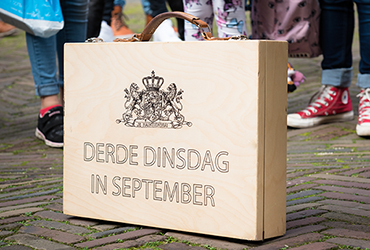
In keeping with tradition, on the third Tuesday in September we will find out what the Dutch government has in store for the year ahead, including in the area of tax. What do we already know about its plans for 2023? Ten important changes are outlined below.
READ
This new obligation relates specifically to employment contracts where the working times are entirely or largely unpredictable, as in the case of zero-hours or min-max contracts, for example. However, the legislator has stated that contracts with an unpredictable work pattern should also be understood to include work where an employer obliges employees to respond to customer requests. This applies to certain on-call and standby services, for example.
If the majority of the hours to be worked are unpredictable, the on-call worker can only be obliged to work at a particular time if he or she has received the following information in writing from the employer on entering into the employment contract:
The on-call worker may therefore refuse calls to carry out work outside these agreed reference days or reference hours. There is no entitlement to receive pay for the agreed reference days and reference hours. Such an entitlement only arises if work is actually carried out.
Practically speaking, this means that, for on-call workers, the employment contract will have to specify the days and times when the on-call worker will need to be available. It is therefore important to make sure that availability is specified in the contract. There are no restrictions on the number of reference days and reference hours that the parties can agree on.
This means that virtually all days of the week and all hours of the day can be specified.
Please note: in the case of existing contracts the new information only needs to be provided within a month of a request being made to this effect.

From 1 August 2022 employers will have an additional obligation relating to on-call workers. In the employment contract they will have to specify the days and times when the on-call worker will need to be available.
READ
The Netherlands must have implemented the EU Directive in its own national legislation by 1 August 2022 at the latest. The bill for the Act on the Implementation of the EU Directive on transparent and predictable employment conditions is now before the Lower House. The EU Directive imposes additional obligations on employers and affects various employment conditions. The purpose of the Directive is to better protect employee rights.
The EU Directive describes a number of additional rights and prohibitions of termination. The purpose of the prohibitions of termination is that you as an employer cannot terminate the employment contract if an employee invokes the new rights. These new rights include the study costs clause, the ancillary activities clause, the right to predictable work and the employer's duty to provide information.
It is no longer possible to agree on a study costs clause for study costs incurred for the necessary performance of the job (and which are prescribed by law or a Collective Labour Agreement). The relevant study or training programmes must be offered to the employee free of charge, and must, if possible, take place during working hours.
The ancillary activities clause is currently not regulated by law. In the new bill, a prohibition of ancillary activities is subject to significant restrictions. A prohibition of ancillary activities will no longer be legally valid. Exceptions will be limited and will only be allowed on the basis of objective reasons.
The employee may submit a written request for work with more predictable and secure employment conditions if the employee has been employed for at least 26 weeks at the time of the adjustment of the employment conditions. If you have 10 or more employees, you must respond to this request within one month; if you have fewer employees, within three months. If you do not respond in time in writing and with reasons, the employee may demand this.
Additional information will have to be provided to employees about the possible outsourcing construction, about the possible probationary period, about the right to training and the provision of additional information about rules and procedures in the event of dismissal.
Please note! The bill must still be approved by the Lower and Upper House.

As of 1 August 2022, a number of new rights and prohibitions of termination for employment contracts will apply. By that date at the latest, Dutch legislation must comply with the European Directive on transparent and predictable employment conditions.
READ
The new ‘Deep Tech Fund’ (DTF) will make €250 million available, primarily for investments in innovative and complex technologies. Funding often proves to be a problem for the development of such technologies.
The DTF will focus on start-ups and scale-ups, or in other words young companies with growth ambitions, often in the technical sector. Companies of this kind tend to devote themselves to the development of new technologies.
A problem often encountered by young technology companies is that they have not yet proven themselves and therefore represent a relatively high risk. This can make finding investors difficult. If such companies are successful, however, they are also highly profitable.
DTF will operate as a co-investor and as an independent part of Invest-NL. Invest-NL is a national agency engaged in the development and financing of companies and projects that will accelerate the transition to a circular economy. Invest-NL has an investment capacity of €2.5 billion.
DTF’s fund management and Investment Committee are independent and provide binding decisions on investment projects.
A new investment fund aimed specifically at knowledge-intensive companies is being launched. The objective is to provide a boost to the technological knowledge of the Netherlands, thereby improving the country’s competitive position.
READ
In certain cases, you as an employer must apply for a work permit for employees who do not originate from the European Economic Area (EEA) or Switzerland. The EEA consists of the EU Member States, Norway, Iceland and Liechtenstein. As of 1 January 2022, a work permit can be granted for a maximum of three years, depending on the conditions.
A work permit with a full labour market check can be granted for a maximum of two years instead of one year. A full labour market check implies that the UWV first checks, according to a certain methodology, whether suitable personnel can be found within the EEA and/or Switzerland; this is called priority labour supply. The available vacancy must also be reported to the UWV at least five weeks before submitting the application. In addition, you must be able to demonstrate that you have made sufficient efforts to fill the vacancy with priority labour supply.
The UWV will not conduct a full labour market check if there are extraordinary circumstances that require a fast filling of the vacancy and that could not be foreseen or influenced.
An exception is made for certain activities, for which no full labour market test takes place. This applies to the exercise of a spiritual, religious or ideological function. An exception is also made for international trade contacts, education, training, voluntary work, international exchange and other cultural contacts, and for foreign nationals with a valid work permit.
The new WAV has also added a number of conditions for obtaining a work permit. For example, you as the employer must pay the wages stated on the work permit to the employee through a bank account. These wages relate to work for a maximum of one month. This way, the Dutch Labour Inspection can better monitor the payment of wages.
The application for a work permit can also be rejected if no economic activities take place in your organisation. If you have recently started your business, you will have to be able to demonstrate that your business has started. The UWV will then agree with you on the period within which you must demonstrate this. Furthermore, if you apply for a work permit of longer than one year, you are obliged to offer the foreign employee training in the Dutch language.

The Foreign Nationals Employment Act (WAV) has been amended. As of 1 January 2022, a work permit can be granted for a maximum of three years. Previously, this was a maximum of one year. In addition, the conditions for obtaining a work permit have been expanded.
READ
Please note:The government’s plans still have to be approved by the Lower and Upper House.

If you were planning to buy an electric car in the near future and register it in your company’s name, do so this year. From next year the addition to taxable income is increasing from 12% to 16% and this lower rate will apply only on the first € 35,000 of the list price instead of € 40,000, as is currently the case. By purchasing the car in 2021, you will benefit from the lower addition to taxable income for five years. This year you will also benefit from a 13.5% environmental investment deduction up to a maximum list price of € 40,000.
The corporation tax rate is 15% on profits up to € 245,000. Next year this rate will apply up to a figure of € 395,000. Above this level profits will be taxed at a rate of 25%. If you own several companies, you can offset profits and losses between them by setting up a tax entity. This advantage comes with a downside, however: you can only benefit from the lower tax band once. You should therefore review your tax entity and terminate it in good time if you wish to do so. If you want to terminate it with effect from 2022, the Tax and Customs Administration must receive your request before 1 January 2022.
In connection with the coronavirus pandemic, exemptions from gift tax have been increased by €1,000 for this year only. The amount of the exemption now stands at € 6,604 for gifts to children and at € 3,244 for gifts to grandchildren and other third parties. Take advantage of this additional exemption!
This year, in connection with the coronavirus pandemic, the fixed budget under the work-related expenses scheme amounts to 3% up to a wage bill of € 400,000 and 1.18% on the excess amount. The rate that applies up to a wage bill of € 400,000 is being reduced to 1.7% in 2022. If possible, you should therefore make use of the fixed budget this year, as any unused portion cannot be carried forward to 2022.
There are some tax credits that your partner can only receive to a limited extent if he/she has insufficient income him/herself. This applies to the general tax credit, the employed person’s tax credit and the income-dependent combination tax credit. Anyone born before 1 January 1963 is not affected by the restricted payment of the general tax credit, but is subject to the restrictions relating to the employed person’s tax credit and income-dependent combination tax credit. You can avoid losing these tax credits by allocating income to your partner in box 2, such as dividends, or having your partner pay tax on assets in box 3.
If you invest more than € 2,400 this year, you may be entitled to the small-scale investment tax credit (KIA). This is an additional deduction from your profits. The amount of the deduction decreases the more you invest. You should therefore consider postponing investments at the end of this year if you would then receive a higher KIA in 2021 and 2022.
If you make environmentally friendly investments, you may be entitled to the environmental investment deduction (MIA). The percentages for this deduction are being increased in 2022, so postponing your investments until 2022 would be an attractive option. However, it is not yet clear which assets will be eligible for the MIA in 2022 and what percentage will apply to the asset in question. This will be published at the end of 2021 in a new Environmental List (Milieulijst). Keep an eye on this at the end of this year and decide then whether you would be better off making your environmentally friendly investment this year or next year. Make the necessary preparations now with your supplier.
Your private assets are taxed in box 3. The reference date for this is 1 January of the year in question. You should therefore make sure that you do not withdraw too much cash from your sole tradership or company before 1 January. That’s because, depending on the level of your assets, in 2022 you will pay up to 1.71% in tax on the cash withdrawn. You can also pay cash from your private assets into your business before 1 January.
If you want to gift a sum to your children or a third party in connection with the purchase of their own home or the repayment of their mortgage, this year the gift is untaxed up to an amount of € 105,302. If you make the gift this year, this will reduce your assets in box 3 by the same amount, which could save you up to around € 1,800 in tax.
Healthcare costs are still deductible. This year they can still be deducted at a maximum rate of 43%, which will fall to a maximum rate of 40% next year. A threshold applies, however, which means that only healthcare costs above this threshold are deductible. If you have paid a substantial sum to your dentist this year, for example, and also want to buy a new hearing aid, consider doing so this year as well. You will probably then exceed the threshold by a larger amount, which will save you tax.

Which tax-related measures can you still benefit from this year as an entrepreneur? How can you respond smartly now to changes that will apply from 2022? Here are ten practical tips.
READ
From 1 January 2022 you can grant your employees an untaxed homeworking allowance of up to € 2 per day. This amount is based on a calculation by Nibud (National Institute for Family Finance Information) of the average additional costs incurred, e.g. for coffee and heating, for each day worked at home. Under certain conditions it was already possible to grant an untaxed allowance for setting up a home workstation. An untaxed travel allowance of up to € 0.19 per kilometre for commuting also remains in place for days when the employee travels to the office.
Please note: The travel allowance of € 0.19 may not be awarded to employees on days when they are working from home.

That means that if you pay a homeworking and travel allowance, you must always determine the allowance on a per-day basis. You can also opt to follow a practical scheme that has been approved by the legislator.
Paying employees in the form of share options is becoming more attractive. This will allow start-ups and scale-ups to attract talent more easily, for example, and boost new business development in the Netherlands.
At present, tax is paid on share options when the option right received is converted into shares. The downside of levying tax at this moment is that employees (and the employer) pay tax immediately, even though they are not always able to sell the shares yet or do not always have sufficient funds to pay the tax.
From 1 January 2022 employees can decide for themselves when the tax is levied:
In 2022 it will remain possible for directors/major shareholders (DGAs) of innovative start-ups to apply a reduction to their customary salary. This will help to improve the liquidity position of these DGAs. Originally, this scheme was due to expire on 1 January 2022, but this end date has been pushed back one year.
For a number of years now the government has been encouraging companies to invest in innovative, environmentally friendly assets by means of the environmental investment deduction (MIA). The MIA allows companies to deduct a percentage of the investment costs from their taxable profit. That means they pay less income or corporation tax.
From 1 January 2022 the percentages are being increased, entitling companies to a higher deduction. Making environmentally friendly investments is therefore becoming more attractive. Three percentages currently apply to the MIA: 13.5%, 27% and 36%. From 1 January 2022 these will be raised to 27%, 36% and 45%.
Tip: Consider postponing your environmentally friendly investments until 2022!
Which percentage applies to an environmentally friendly asset is indicated on the Environmental List (Milieulijst). The Netherlands Enterprise Agency (RVO) updates the Environmental List at the end of each year. In combination with the Vamil (arbitrary depreciation of environmental investments) scheme your net tax benefit can rise to over 14% of the investment amount.
The government wants to continue to encourage the purchase of zero-emission cars, even though this is costing it more than expected. It is therefore making the following proposal:
The tax plans include two proposals relating to the income-dependent combination tax credit (IACK):
Income tax rates will remain the same as proposed in last year’s tax plan. They will therefore be as follows in 2022:
Income tax rate/national insurance contributions for 2022 Taxable income
of more than (€) but no more
than (€) Rate for 2022 (%) 1st band - 69,398 37.07 2nd band 69,398 - 49.50
The corporation tax rate for 2022 will also remain as previously announced:
Corporation tax 2021 2022 Profit up to € 245,000/€ 395,000 15.0% 15.0% Profit above € 245,000/€ 395,000 25.0% 25.0%
In a judgment the EU Court of Justice has ruled that domestic and foreign companies must be treated equally. In the Netherlands too, domestic companies are treated differently from foreign companies when it comes to refunding forms of advance corporation tax, such as dividend tax. To bring Dutch legislation into line with EU law, the government is proposing the following:
Three changes are being made to the homeownership scheme with effect from 1 January 2022. The scheme is being made fairer by removing unintended restrictions on mortgage interest relief.
To eliminate these restrictions, changes are therefore being made in relation to the home equity reserve, the repayment balance and the existing home acquisition debt (this is a loan taken out to purchase your own home before 1 January 2013).
Since 1 January 2021 first-time buyers under the age of 35 have not paid any transfer tax when purchasing their home (one-off exemption). Buyers aged 35 and over who will be living in the property themselves have paid 2%, while buyers who will not be residing in the property themselves have paid 8%. Under the government’s proposal, buyers will not automatically be subject to the general rate (8%) if unforeseen circumstances arise after the purchase, but before the transfer. Certain conditions must be met, however.
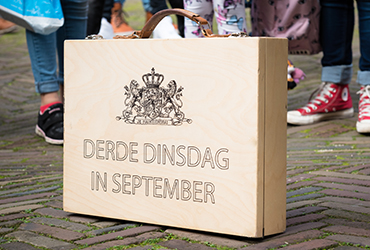
What important tax proposals for entrepreneurs did the caretaker Minister of Finance pull from his briefcase on Prince’s Day? An explanation of the ten most important ones is provided below.
READ

Additional funds are also being made available for income support via the Temporary Support for Necessary Costs (TONK) scheme. This was announced by the government on Friday, 12 March.
The TVL is a contribution towards fixed costs for entrepreneurs who suffer a drop in turnover of at least 30% as a result of the coronavirus crisis. This contribution was increased to 85% from 1 January and will be raised to 100% from 1 April.
To determine the level of your company’s fixed costs, the industry average will be taken as a basis by referring to your SBI code in the Commercial Register. A company’s actual fixed costs do not determine the compensation. The fixed costs as a percentage of turnover are therefore fixed for your industry and are linked to your SBI code.
State Secretary Mona Keijzer (Economic Affairs and Climate Policy) also recently announced that entrepreneurs whose actual main business activity differs from the SBI code in the Commercial Register of the Chamber of Commerce can still qualify for compensation under the TVL or for a higher level of compensation than they would receive on the basis of their SBI code. This is a consequence of a court ruling.
Hardship clauses are therefore being included in the TVL. These make it possible to deviate from the SBI code if the entrepreneur plausibly demonstrates that the actual main activity of the business differs from this. This possibility of diverging from the SBI code will apply with retroactive effect from 1 January 2021.
TVL applications for the first quarter of 2021 can be submitted via rvo.nl until 5 p.m. on 30 April. The TVL application period for the second quarter of 2021 is expected to open from mid-May.
Under the TVL for the second quarter a supplement of 21% will now be available only to agricultural and horticultural businesses. The supplements for non-food retail outlets and the travel sector are being withdrawn from the TVL scheme in the second quarter.
In addition to the expansion of the TVL, the government is also making significantly more funding available for income support via the TONK scheme. A sum of € 130 million had originally been allocated to this scheme, but this is now being raised to € 260 million. The TONK is intended for people who are no longer able to cover their fixed costs, due to a loss of income resulting from the coronavirus crisis, and focuses in particular on housing costs.
Applications under the TONK can be submitted to your local authority with retroactive effect from 1 January of this year. The opening date for applications differs from one local authority to another. The target group that is eligible for the TONK and the level of the contribution are also at the local authority’s discretion and may therefore differ between local authorities. However, the government has called on local authorities to be generous in the granting of TONK payments.
You are eligible for the TONK if you are aged 18 or above, have suffered a significant loss of income due to the coronavirus crisis, are no longer able to cover your housing costs out of your income or assets and other financial support is insufficient. Other conditions also apply, which can differ from one local authority to another.
Please note:Your local authority will determine the level of assets you can have while still remaining eligible for the TONK. This can therefore differ between local authorities.
The term ‘housing costs’ refers to rent or mortgage payments, but also to costs of electricity, gas and water, service costs and municipal taxes. Your local authority will determine which costs can be covered by the TONK.

The compensation available under the Reimbursement of Fixed Costs for SMEs scheme (TVL) is being increased once again. For the second quarter of this year, i.e. from April to the end of June, compensation amounting to 100% of fixed costs will apply.
READ

The NOW scheme is a contribution towards payroll costs for companies that have suffered a drop in turnover of at least 20% as a result of the coronavirus crisis. This was initially capped at 90% of payroll costs and from 1 January 2021 will not exceed 85% of payroll costs. From 1 April 2021 more stringent conditions will apply and the level of the payroll costs subsidy will also be reduced.
Employers who have applied for a subsidy initially receive an advance payment after submitting their application. The UWV can only calculate the definitive subsidy once the actual drop in turnover is known. To allow this calculation to be made, employers have to submit a separate ‘application for definitive determination of the subsidy’ for each application period.
Due to, amongst other things, the complexity of the applications and the workload that accountancy firms are facing, the decision has been taken to extend the application period for definitive determination of the subsidy under NOW 1.0 until 31 October 2021. The application periods for definitive determination of the other subsidies under the NOW scheme have also been extended.
Please note:The opening date for applications for determination of the subsidy under NOW 2.0 has also been brought forward from 15 April 2021 to 15 March 2021.
NOW period UWV application period Period for definitive application to UWV NOW 1.0 1-03-2020 to 30-05-2020 1 7-10-2020 to 31-10-2021 NOW 2.0 1-06-2020 to 30-09-2020 2 15-03-2021 to 5-01-2022 NOW 3.1 1-10-2020 to 31-12-2020 3 4-10-2021 to 26-06-2022 NOW 3.2 1-01-2021 to 31-03-2021 4 31-01-2022 to 23-10-2022 NOW 3.3 1-04-2021 to 30-06-2021 5 31-01-2022 to 23-10-2022
When the definitive subsidy is determined a portion of the advance already paid out may be reclaimed. Due to the ongoing restrictions associated with the lockdown, this could put companies in financial difficulty.
Please note: The UWV is therefore offering generous payment schemes that take the personal situation of employers into account. One of the options is a deferment of payments.
Employers are being given more time to submit their definitive application for the payroll costs subsidy under the NOW scheme (Temporary Emergency Bridging Measure for Sustained Employment). Minister Wouter Koolmees has announced that the deadline for applying for definitive determination of the subsidy under NOW 1.0 has been extended until 31 October 2021.
READ

The contribution towards payroll costs under the Temporary Emergency Bridging Measure for Sustained Employment (NOW scheme) is being expanded rather than scaled back. The maximum compensation under the scheme will amount to 85% instead of the current level of 80% in the event of a 100% drop in turnover. The reduction in the maximum amount paid per employee from twice to 1x the maximum daily wage, which was expected to apply from 1 April, has been scrapped.
The TVL is also being expanded. From a drop in turnover of 30% entrepreneurs will receive compensation amounting to 85% of their fixed costs. This means there will no longer be a sliding scale of compensation. From 1 January the scheme is also open to companies with more than 250 employees. In addition, a similar scheme is being introduced for the agricultural and horticultural sector.
The maximum payment under the TVL is increasing further from € 90,000 to € 330,000 and to € 400,000 for companies with more than 250 employees. The minimum amount of support offered by the TVL will rise from € 750 to € 1,500. Additional support will also be made available via the TVL for start-ups.
Due to the compulsory closure of non-essential shops, the stock subsidy for retail outlets in the non-food sector is also going up. In the first quarter of 2021 the supplement on top of the TVL will amount to 21%. This equates to a subsidy of 17.85% of turnover (21% x 85%). The maximum amount is also being raised to € 200,000. This subsidy will not be limited by the maximum amounts payable under the TVL itself.
Contrary to previous plans, a means test will not be introduced from 1 April 2021 for the Temporary Bridging Scheme for Independent Entrepreneurs (Tozo). This means that self-employed persons whose income falls below the minimum social income and who have assets will also be eligible for income support.
A package of additional tax measures has also been introduced:
Entrepreneurs who have been severely affected by the measures taken to deal with the coronavirus will again be receiving financial compensation. Existing measures are being improved and new ones introduced.
READ

Weert branch
Schoutlaan 7
6002 EA Weert
0495 53 07 55
info@w-o.nl
W&O Accountants en Adviseurs
General terms and conditions
Complaints procedure
Whistleblower policy
Privacy statement
