
Employers' organizations VNO-NCW and MKB-Nederland had discouraged the additional increase, as the minimum wage has already been raised substantially and thus causes sharply rising wage costs.
In 2023, for example, the minimum wage increased by more than 10%. As of Jan. 1 of this year, it increased again by 3.75%. Also, as of that date, the minimum wage was also based on a 36-hour work week. Employees who contractually work more than 36 hours therefore gained more than 3.75% as of Jan. 1, 2024.
The increase in the minimum wage also affects benefits, such as AOW pension and welfare.

The Dutch minimum wage will be increased by 1.2% as of July 1, 2024 after all. The increase is a result of an adopted motion by the Lower House.
READ
With effect from 1 January 2024 the fixed budget under the work-related expenses scheme has been reduced to 1.92% on the first € 400,000 of the wage bill (2023: 3%). It will remain at 1.18% on the excess amount of the wage bill.
The standard amount under the customary salary scheme for a DGA and his/her co-working partner is increasing to € 56,000 in 2024 (2023: € 51,000). This scheme applies to anyone who has a substantial shareholding in a company (or whose partner has such a substantial shareholding) and also works for that company. They must receive a salary that is ‘customary’ for such work. The standard amount of € 56,000 is one of the elements used to assess what is customary.
This year the exempted travel allowance for the costs of business travel, including commuting, has increased to € 0.23 per kilometre. This allowance applies to all forms of transport and therefore also to kilometres travelled by bicycle or moped, for example. The increase to € 0.23 per kilometre is also applicable to a DGA who is employed by his/her company.
From 2024 simpler rules will apply to tax-free public transport season tickets. As of this year it no longer matters whether such a season ticket is purchased by the employer and made available (employer retains ownership) or supplied (employee acquires ownership) to the employee or whether it is purchased by the employee and subsequently reimbursed. The only condition is that it is also used for business purposes, e.g. commuting. If that is the case, a specific exemption applies to a public transport season ticket that has been made available, supplied or reimbursed. The amended rules also apply to the making available, supply or reimbursement of an off-peak pass.
From 1 January 2024 a statutory minimum hourly wage applies, amounting to € 13.27 per hour for employees aged 21 and above. This means that the salary scales in many collective labour agreements will need to be adjusted and recalculated, as there are no longer any fixed monthly, weekly or daily amounts.
Please note: The statutory minimum hourly wage that applies, in view of the employee’s age, must be indicated on the payslip, along with the period to which the payslip relates.
You can grant volunteers who perform voluntary work within your organisation an allowance that will not be taxed by the Tax and Customs Administration. On 1 January 2024 the level of the maximum untaxed volunteer’s allowance increased to € 2,100 per year and € 210 per month.
The volunteer’s allowance must not exceed the maximum amounts and the volunteer must not carry out the work in question as part of his/her profession. The Tax and Customs Administration assumes that the work is not carried out on a professional basis if the maximum hourly allowance in 2024 amounts to € 5.50. For volunteers under the age of 21 this maximum hourly allowance is € 3.25 in 2024.
The 30% scheme is a tax facility under which, subject to strict conditions, up to 30% of the salary may be paid free of tax to employees recruited from abroad. This scheme has been restricted with effect from 2024. In 2024, for example, the 30% scheme can only be applied to a salary not exceeding € 233,000. This maximum does not apply in 2024 if you were already applying the 30% scheme for the employee concerned in the last pay period of 2022.
The 30% scheme is also being scaled back with effect from 2024. For the first 20 months you will be able to pay 30% of the salary free of tax as an expense allowance. This will then fall to a level of 20% for the next 20 months and to 10% for the 20 months after that. This does not apply in 2024 if you were already applying the 30% scheme for the employee concerned in the last pay period of 2023.
The application of the 30% scheme is subject to a number of conditions. One is that the employee has specific expertise that is scarce or not available at all on the Dutch labour market. An employee is considered to meet this specific expertise requirement if his/her pay is above a set salary standard. In 2023 the employee’s salary had to amount to at least € 41,954, but this is rising to € 46,107 from 2024. No salary standard applies to employees who work at a research institute in scientific research or education or employees who are doctors in training to become a specialist (AIOSs). In the case of incoming employees who are under the age of 30 and have obtained a master’s degree a salary standard of € 31,891 applied in 2023. This is rising to € 35,048 in 2024.
From 1 July 2024 employers who employ 100 or more people will be required to report on the business travel and commuting journeys of their employees. The employers concerned must report, for example, the total number of kilometres that their employees have travelled for business and commuting purposes, but also the annual total of kilometres travelled, broken down by mode of transport and fuel type. The data for 2024 must be submitted by 30 June 2025 at the latest.
In 2024, subject to certain conditions, you can pay your employees an untaxed allowance of € 2.35 per day (2023: € 2.15) for the additional costs associated with working from home. The standard amount set for the value of meals in company canteens (or similar areas) or at staff parties in the workplace is also rising in 2024. In 2023 this was € 3.55 per meal and in 2024 amounts to € 3.90 per meal.
In 2024 the maximum salary assessable for contributions is increasing to € 71,628 from € 66,956 in 2023. For employees with an assessable salary above € 66,956 an employer may therefore owe higher contributions, even though the contribution percentages for certain employee insurance schemes have fallen compared with 2023. The contribution payable under the Healthcare Insurance Act (Zvw) may also rise for employees and DGAs with an assessable salary above € 66,956. The maximum healthcare insurance contribution payable for employees in 2024 amounts to € 4,706 (an increase of € 233 compared with 2023). In the case of DGAs the maximum level of this contribution in 2024 is € 3,811 (an increase of € 175 compared with 2023).

On 1 January 2024 numerous payroll-related changes were once again introduced that affect employers and directors/major shareholders (DGAs). These include the reduction in the fixed budget under the work-related expenses scheme (WKR) and the restriction of the 30% scheme. Which ten changes stand out in particular?
READ
Please note: Some of these tips relate to proposals in the 2024 Tax Plan that still have to be approved by the Lower and Upper House. The government also frequently announces new plans or revises its plans. It is therefore important to always contact your advisor to discuss the situation.
From 1 January 2024 the rate in box 2, which also applies to dividend income, is changing. The current rate of 26.9% will be replaced with two rates. A rate of 24.5% will apply to income up to € 67,000 (or a collective amount of € 134,000 for tax partners), with a rate of 31% applying above this figure. Bear in mind that, following a motion passed by the Lower House, the higher rate applicable from 1 January 2024 may be set at 33% instead of 31%. Take steps to anticipate the forthcoming rate changes in box 2 as well as you can. The question to consider is whether it is advisable to pay out a dividend in 2023 or instead wait until 2024 and subsequent years. The same applies to a planned sale of shares: is it best to proceed with this in 2023 or to wait until 2024? This question needs to be assessed in each individual case to make the right decision, as it all depends on your personal circumstances. You should therefore always consult with your (tax) advisor.
In 2023 make sure you take full advantage of the possibilities available to you under the work-related expenses scheme. This is particularly important, as the fixed budget will be reduced again in 2024. Up to a wage bill of € 400,000 the fixed budget is currently still 3%, but this will fall to just 1.92% in 2024. As in 2023, a rate of 1.18% will apply above this level in 2024. You should therefore assess the remaining amount of your fixed budget and think about whether allowances and benefits in kind that you are planning to grant in 2024 could possibly be brought forward to 2023.
Do you have more than 100 employees? If so, from 1 January 2024 you are required to record the CO2 emissions that result from the kilometres travelled by your employees. A record must be kept of all trips made by staff; this covers commuting and all other business trips. The Netherlands Enterprise Agency (RVO) will calculate the CO2 emissions on the basis of the data submitted. Do you meet the criteria? If so, you have until 1 January 2024 at the latest to adapt your records accordingly so you can keep track of this data. The data for 2024 will need to be submitted by no later than 30 June 2025. For the time being, there is only an obligation to report this data.
If your companies are currently grouped together in a tax entity for corporation tax purposes, it is worth reviewing this. The tax entity pays corporation tax on the total profits of the combined companies. Given the difference between the lower and higher rate of this tax, terminating the tax entity may be beneficial. After all, in 2024 the difference between the rates will be 6.8 percentage points (19% and 25.8% respectively), with the lower rate applying to the first € 200,000 of your profit. If the tax entity is terminated, each company can take advantage of the lower rate separately. Talk to your advisor to make sure that terminating the tax entity would not have any other (adverse) consequences.
With effect from 2023 a taxpayer with little income no longer receives a partial payment of the general tax credit, employed person’s tax credit and income-dependent combination tax credit. If your partner has no or insufficient income of their own, but together with your partner you have taxable assets (box 3), you can use these assets to (partially) prevent the loss of tax credits. You do this in your tax return by allocating all or part of the assets to the partner who has no or little income of their own. If you have a company, you can also decide to pay out a dividend and allocate part of that dividend to your partner. Assets and/or dividends that you allocate to your partner are taxable for your partner, which means that he or she can then take advantage of the tax credits in full or in part.
The business succession scheme (BOR) and transfer facility (DSR) are important facilities relating to the gifting or inheritance of a (family) company. Changes are being made to the BOR and DSR from 2025, although one aspect is being introduced earlier, from 1 January 2024. This means that any property rented out must be designated as an investment. In many situations it already is, but due to this change this will automatically be the case from 2024. If you are considering gifting your company in the near future and would like to take advantage of the BOR or DSR, discuss with your advisor whether – in view of the above changes – it would be advantageous to do this in 2023 or 2024 or instead wait until 2025.
In the area of corporation tax there is a facility that allows the deduction of gifts. This is possible up to a maximum of 50% of a company’s profit, but can never exceed € 100,000. Provided that you remain within this limit, the gift is also not regarded as a disguised dividend paid to the shareholder(s). The possibility for companies to deduct gifts is being scrapped, however. This means that, from 2024, gifts made by companies will no longer be deductible. On the other hand, from that point on such payments will never be regarded as a disguised dividend, i.e. even if the gift exceeds 50% of the profit or € 100,000. Are you considering making a gift from your company to an ANBI (public benefit organisation)? If so, do this by 31 December 2023 so you can deduct it in 2023. Your company must, of course, have made a sufficient profit in 2023 for this to be possible. Costs for which you receive something in return (such as sponsorship or advertising) will remain deductible in the normal way.
In 2024 the energy investment deduction (EIA) will be reduced from 45.5% to 40%. If you are planning to make energy-saving investments in the near future, do this in 2023 if possible. Make sure you take any related effects into account, such as the impact on the level of your profit and on the small-scale investment tax credit (KIA).
2023 is the last year in which you can take advantage of the renewable energy and energy-saving investment subsidy (ISDE) for small-scale wind turbines and solar panels A budget of € 30 million has been set aside for this in 2023. All legal entities, but also partnerships, foundations, general partnerships and limited partnerships, are eligible for this subsidy.
In 2023 you are allowed to arbitrarily depreciate a number of new capital goods in which you invested this year. In this way you can reduce your profit in 2023, which can result in an immediate tax saving. On the other hand, this means that over the remaining years the depreciation on these goods will be lower and you will therefore pay more tax then. Arbitrary depreciation is therefore not necessarily always beneficial, for example if your profit in 2023 is taxed at a lower rate than in future years. Under this facility, in 2023 you can arbitrarily depreciate, on a one-off basis, 50% of the cost of the asset, taking the residual value into account. The other 50% must be depreciated in the normal way. However, you can also choose to apply less or no depreciation at all to half of the investment amount (minus the residual value), so that you can depreciate more in future years. Consider applying arbitrary depreciation in 2023 if this will be advantageous for you.

Which tax-related measures can you still benefit from this year as an entrepreneur? How can you respond smartly now to changes that will apply from 2024? Here are ten practical tips.
READ
The aim of the business succession scheme (BOR) and transfer facility (DSR) is to remove, as far as possible, the obstacles presented by the normal (high) level of taxation that applies to a business succession. You can therefore pass on the baton to the next generation with a fiscal incentive. The BOR thus plays an important role in the transfer of family companies. Considerable attention has been paid to the BOR and the rationale behind, resulting in an announcement that the scheme is being tightened up.
From 1 January 2024 property that is being rented out will no longer be classified as business assets, but will fall under investment assets. It will then no longer be possible to gift such property under the BOR.
Please note! The above change will also affect the level of business assets when applying the transfer facility in the area of income tax. This means that the person making the gift will no longer be able to transfer the corresponding portion of the box 2 tax claim that applies to the shares.
Please note! Further measures to tighten the rules have been announced for 2025 and 2026, such as the abolition of the efficiency margin that allows 5% of business assets to consist of investments.
Tip! Are you considering gifting your business and applying the BOR? If so, it may be advisable to speed up this process.
From 1 January 2024 the uniform rate of 26.9% in box 2 will be replaced with two rates. Dividends received up to € 67,000 will be subject to a rate of 24.5%. A rate of 31% will apply to the excess amount. Tax partners will benefit twice from the low band, which means, for example, that a dividend payment of € 134,000 will be taxed at the low rate of 24.5%.
With this measure the government wants to encourage holders of substantial shareholdings to pay out profits more often (annually) instead of hoarding them in their company.
Please note! Dividend payments also affect the general tax credit, box 3 assets and excessive loans. Talk to your advisor about whether paying a dividend now would be advantageous or whether it would be better to wait until 2024 or to pay a higher amount as a dividend later all at once.
Tip! Does your partner have no income? If that is the case, pay out a dividend to take advantage of the general tax credit.
The SME profit exemption is a deductible from your taxable profit for income tax purposes. From 1 January 2024 the rate of this exemption for entrepreneurs will be reduced from 14% (2023) to 12.7%. This means that entrepreneurs who are subject to income tax, such as sole traders, general partnerships and self-employed persons, will pay more tax from 2024. Those with the highest profits will be the biggest losers from this change.
Tip! Ask your tax advisor whether your business being subject to income tax is still the best option for you.
Tip! Think about whether you could defer certain costs until 2024 so your profits will be lower and you will pay less tax on them.
As things stand, the aim is for actual returns to be taxed in box 3 from 2027 onwards. Until that time imputed returns will continue to be taken as a basis. There are three categories: bank and savings balances, investments and debts.
It has been stipulated by law that from 2024 shares in homeowners’ associations (VvEs) will fall under the category of bank and savings balances. Do you own a flat? If so, this may mean that you will pay less tax in box 3. This ‘reclassification’ will also apply to funds held in a notary’s client accounts.
The tax-free allowance in box 3 is not being adjusted for inflation. In addition, the rate in box 3 will be rising from 32% (2023) to 34% in 2024.
Tip! On 18 September 2023 the Advocate General concluded that the Box 3 Reparations Act (Wet rechtsherstel box 3) also infringed the prohibition of discrimination and the right to property. If the Supreme Court follows this advice, this may have consequences for your box 3 income. You should therefore make sure you lodge an objection in good time to safeguard your rights.
Please note! In 2024 claims and debts that exist between tax partners and between parents and minor children will not belong to any category, as they will no longer be subject to tax. It will therefore be possible to omit them entirely from your tax return.
Tax on income from employment and home is being increased in a number of areas:
Is your business investing in energy-saving assets? If so, it is possible to deduct a certain percentage of the investment amount directly from your profit via the energy investment deduction (EIA). As this means your profit will be lower, you will pay less tax as an entrepreneur. For 2023 the rate is 45.5%. This will be reduced to 40% in 2024. Changes are also being made to the Energy List of energy-saving investments that qualify for the EIA. The precise details will be determined in the fourth quarter of 2023.
Tip! Are you considering an investment in energy-saving assets? If so, it may be worthwhile to do this in 2023. Make sure that you notify the Netherlands Enterprise Agency (RVO) of your investment in good time.
The work-related expenses scheme allows you, as an employer, to grant your employees all kinds of allowances and benefits in kind free of tax. The fixed budget under the work-related expenses scheme was expanded on a one-off basis in 2023 to 3%, on a wage bill of up to € 400,000. In 2024 it will be limited to 1.92% of your wage bill up to € 400,000 and 1.18% on the excess amount.
Please note! The tax- and contribution-free kilometre allowance of € 0.21 per kilometre is increasing to € 0.23 per kilometre from 1 January 2024.
In 2025 it will become more expensive to purchase a new car. The flat-rate portion of private motor vehicle and motorcycle tax (BPM) will be increasing by € 200. BPM is a tax payable on the purchase of a new car or motorcycle. An exemption from BPM will still apply to electric cars next year. In 2025 this exemption will be scrapped, which means the purchase price of electric cars will be higher in 2025 than in 2024.
The BPM exemption for vans will also no longer apply from 1 January 2025.
Tip! Do you want to take advantage of the BPM exemption for entrepreneurs who are subject to VAT when purchasing a van? If so, place the order promptly, so you can benefit from the exemption in 2024!
Tip! The level of BPM payable on vans depends on the vehicle’s CO2 emissions. If you replace vans after 1 January 2025, it is therefore fiscally advantageous to replace your vans with zero-emission variants.
The Netherlands has a statutory minimum wage. This takes the form of a monthly minimum wage. From 2024 it will change to an hourly minimum wage. Everyone aged 21 or above who is working for the minimum wage will therefore receive the same hourly pay. A monthly, weekly or daily wage will not be permitted.
Please note! The minimum monthly wage will be converted to an hourly wage on the basis of a 36-hour working week. This means that employers will face an increase in wage costs if they have employees who are contracted to work for more than 36 hours a week for a minimum hourly wage.
From 1 January 2024 a number of new reporting obligations will be introduced. Employers with more than 100 employees, for example, will have to keep a record of the CO2 emissions of their staff. In addition, payment service providers will be required, under certain conditions, to share all payment data relating to cross-border transactions with the Tax and Customs Administration, with the aim of combating VAT fraud. Lastly, digital platforms will have to report on their sellers for the first time.
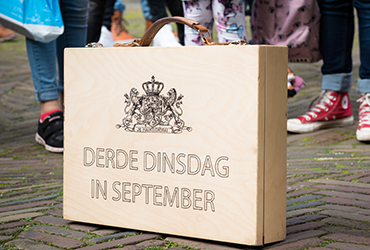
What important tax proposals for entrepreneurs did the Minister of Finance, Sigrid Kaag, pull from her briefcase on Prince’s Day 2023? An explanation of the ten most important ones is provided below.
READ
The BOR and DSR are important facilities relating to the donation or inheritance of a (family) company. Under both it is possible to obtain a substantial exemption from the tax that is payable, on the condition that the company is continued. Changes are being made to the BOR from 2025, although certain aspects are being introduced from 1 January 2024. The first of these means that any property rented out must be designated as an investment. (This change also applies to the DSR in relation to a substantial shareholding) From 2024 the requirement that, if you take advantage of the BOR or DSR, no more than 5% of a company’s assets may consist of investments is being abolished.
The rate in box 2 applies to income from a substantial shareholding, such as dividends. This rate currently stands at 26.9%, but this will be replaced by two separate rates. The first will apply to income up to € 67,000 and will be set at 24.5%, that is 2.4 percentage points lower. On income above € 67,000 the rate will be 31%, i.e. 4.1 percentage points higher. With this measure the government hopes to combat the hoarding of profits in companies.
If you make an energy-saving investment, you may be entitled to the energy investment deduction (EIA). For 2023 the EIA allows you to deduct 45.5% of the investment costs from your profit. In this way you reduce your profit and have to pay less tax. The EIA is being scaled back in 2024; in other words, the percentage is being reduced and the maximum amount of the investment for which you can claim the EIA – currently € 136 million – is also being lowered. The exact figures are not yet known.
Tip: If you are considering such an investment, it may therefore make sense to go ahead with it in 2023.
Next year it will become more expensive to purchase a non-electric car. From 2024 the so-called flat-rate portion of private motor vehicle and motorcycle tax (BPM) will be increased by € 200.
Please note: In 2024 electric cars will still be exempt from BPM, but that will no longer be the case from 2025. From that point on the purchase price of a new electric car will therefore also increase.
If you settle a provisional income tax assessment in a single payment, you benefit from a payment discount. This payment discount has already been abolished for corporation tax and the same will apply to income tax from 2024.
If you bring a tax matter before the courts and win, you are entitled to compensation for legal costs. If these proceedings take too long, compensation for non-material damage is also added to this. From 2024 compensation for legal costs in cases relating to the WOZ (Valuation of Immovable Property Act) and BPM is being reduced and compensation for non-material damage is being abolished. By taking this step, the government is aiming, in particular, to discourage legal actions being brought on a no-cure, no-pay basis.
As you know, in box 3 you are currently faced with different imputed returns for savings and other assets such as shares and property. If you own a flat, you are automatically a member of the Homeowners’ Association (VvE). The VvE builds up reserves for communal expenses, such as painting. You have to include your share in this reserve in box 3. From 2024, by law, this share must have the same imputed return as savings. The same will apply to a share in the assets held in a notary’s client account. Furthermore, any claims and debts that exist between tax partners and between parents and minor children will no longer need to be included in your tax return.
Another change is an increase in the tax credit for green investments from 0.7% to 1.1% of the exempted amount. Introducing a separate imputed return for claims is also being considered. The percentage could then be the same as that for debts.
Please note: On Wednesday 6 September 2023 the Lower House of the Dutch Parliament will be meeting to debate the issues that it may want to declare controversial on account of the collapse of the government. We will keep you up to date with information on any important matters that may be postponed.

On Prince’s Day, 19 September 2023, the Dutch government will be announcing its tax plans for 2024, in spite of its caretaker status. This status raises the question of how extensive the 2024 Tax Plan will be. What changes to the government’s fiscal plans do we already know about?
READ
If you are struggling to meet your payment obligations, there may be options available to you. On the other hand, if you can afford to loosen your belt a little, it may make financial sense to pay off your debts early.
In October 2022 entrepreneurs had to start paying off any coronavirus-related tax debts that they had accrued. In principle, payments must be made monthly in equal instalments and you have up to five years to settle these debts. One condition of this payment scheme is that you keep up with the monthly payments. Another condition is that you file your tax returns (including for VAT and payroll tax) correctly and on time for any taxes arising from 1 October 2022 and make the corresponding payments promptly and in full.
The Tax and Customs Administration is currently sending out letters to entrepreneurs who it believes are failing to comply with the conditions of the payment scheme. It is asking these entrepreneurs to make up any payment arrears as quickly as possible.
Please note: If you do not comply with the conditions of the payment scheme, the Tax and Customs Administration is entitled to withdraw the scheme. It will not take this action immediately. If you have not made up your payment arrears by April, you will receive another letter in mid-April. If you then fail to make up your payment arrears within 14 days, at some point from mid-May you will receive a decision from the Tax and Customs Administration withdrawing the payment scheme. The Tax and Customs Administration will then commence collection of the debt from mid-June 2023.
The payment scheme will not be withdrawn by the Tax and Customs Administration if you only fall behind with one instalment, provided that you are complying with the other conditions of the scheme. For the time being the Tax and Customs Administration is still taking an accommodating stance in such cases.
If you are unable to comply with the conditions of the payment scheme, there are still options available to you. By taking advantage of these, you may be able to avoid the Tax and Customs Administration ultimately withdrawing the payment scheme. You can ask to pay off the debt over seven instead of five years, for example. It is also possible to request quarterly instead of monthly payments. Lastly, you also have the option of making a one-off request for a payment holiday of up to six months. However, this will mean that your subsequent monthly payments will be higher.
Please note: These options are also subject to certain conditions. Our advisors can provide you with relevant advice on these.
The Tax and Customs Administration is entitled to withdraw the payment scheme for your coronavirus-related tax debts if you fail to comply with your new payment obligations arising after 1 October 2022. For these tax debts it is not possible to obtain an additional deferment or arrange a payment scheme.
Tip: For tax debts accrued before 1 October 2022 it is, however, possible to obtain an additional deferment of payments, subject to certain conditions.
You pay late payment interest on your accrued coronavirus-related tax debts. For a while the rate of this interest was 0.01%, but it currently stands at 2%. On 1 July it will rise further to 3% and then to 4% on 1 January 2024. If you are able to pay off your coronavirus-related tax debts more quickly, you will therefore save a significant amount in interest. Almost 22,000 entrepreneurs have already opted for this solution and have paid off these debts in full. Of course, you do not have to pay them off completely to make interest savings. Even paying off a portion of the debt early will save you interest.

During the coronavirus crisis Dutch companies could opt to temporarily defer the payment of their tax debts. More than 266,000 entrepreneurs had to start paying off these debts from 1 October 2022. It has now become clear that over 103,000 of them are behind with their payments.
READ
With effect from 1 January 2023 the fixed budget under the work-related expenses scheme has been increased temporarily to 3% on the first € 400,000 of the wage bill. On the excess amount of your wage bill it amounts to 1.18%. This increase will apply for one year. The percentage will be reduced to 1.92% on the first € 400,000 of the wage bill from 2024.
The standard amount under the customary salary scheme for DGAs is increasing to € 51,000 in 2023 (2022: € 48,000). This scheme applies to anyone who has a substantial shareholding in a company and also works for that company. A partner of a DGA who carries out work within the company also falls under the scheme. In their payroll tax return they must include a salary that is 'customary' for such work.
Abolition of efficiency margin
The efficiency margin has been abolished with effect from 2023. To determine the level of the customary salary, the DGA can therefore no longer take 75% of the salary for the most comparable position as a basis. From 2023 the reference amount will be 100% of the salary for the most comparable position.
This year the exempted travel allowance for employees who use their own transport has increased to € 0.21 per km. This will rise to € 0.22 per km from 2024.
Employees can receive a travel allowance for commuting on days when they travel to a regular place of work. This allowance can be paid on the basis of the kilometres actually travelled, but you also have the option of granting a fixed allowance.
Homeworking allowance
With effect from 2023 the exempted homeworking allowance has increased to € 2.15 per day. The travel and homeworking allowances are exempt and are not charged to the fixed budget under the work-related expenses scheme.
The statutory minimum wage has increased by as much as 10.15% with effect from 1 January 2023. This brings the minimum wage for employees aged 21 and above to € 1,934.20 per month. The minimum wage is adjusted in line with wages under collective labour agreements on 1 January and 1 July each year. It is applicable to a full working week. How many hours per week this amounts to differs from sector to sector. It can be 40 hours, although some sectors employ a shorter working week of 38 or 36 hours, for example. The minimum youth wages are a fixed percentage derived from the minimum wage for employees aged 21 and above and are therefore also increasing by 10.15%.
In an additional payroll tax assessment the Tax and Customs Administration determines the amount of tax or contributions to be paid, but often also other matters too, such as tax interest and penalties. From 2023 you no longer have to lodge an objection separately against all these different elements: an objection against one element will be considered an objection against them all. The same will apply if you wish to appeal against the decision on your objection.
If you ask the Tax and Customs Administration to impose an additional payroll tax assessment or if you send a correction report that results in an additional assessment, in certain situations you will be charged tax interest. From 2023 the Tax and Customs Administration will charge the tax interest for no more than ten weeks after receiving your request, even if it takes longer than this to deal with it.
You can grant volunteers who perform voluntary work within your organisation an allowance that will not be taxed by the tax authorities. This maximum untaxed volunteer's allowance is indexed annually. On 1 January 2023 the level of the maximum untaxed volunteer's allowance increased to € 1,900 per year.
You must apply the anonymous rate if an employee has failed to provide his/her (full or correct) details, such as his/her name, address or citizen service number. If you receive the (full/correct) details from your employee during the course of the year, you then apply the regular rate from that point on. Up to the end of 2022 it was not permitted to correct an earlier deduction that had been based on the anonymous rate. The employee could offset this deduction later via his/her income tax return, which could then result in the employee receiving a refund.
From 2023 an earlier deduction of payroll tax/national insurance contributions at the anonymous rate can now be corrected after you receive the full/correct details. It is only possible to do so in the same year. Corrections must be sent for the returns submitted earlier that year.
The application of the 30% scheme is subject to a number of conditions. One is that the employee has specific expertise that is scarce or not available at all on the Dutch labour market. An employee is considered to meet this specific expertise requirement if his/her pay is above a set salary standard. This salary standard is indexed annually. For 2023 the salary standard has been set at a taxable annual salary of € 41,954 (2022: € 39,467). This salary standard of € 41,954 excludes the final-levy components and therefore excludes the 30% allowance. In most cases the scarcity of the expertise is no longer subject to specific checks, but it is checked if, for example, all workers with certain expertise meet the salary standard.
No salary standard applies to employees who work at a research institute in scientific research or education or employees who are doctors in training to become a specialist. In the case of incoming employees who are under the age of 30 and have obtained a master's degree a salary standard of € 31,891 applies in 2023 (2022: € 30,001). The master's degree must be comparable with a master's degree from a Dutch university.
The practical learning subsidy is an allowance for the costs that employers incur for supporting an apprentice, participant or student. This scheme was due to run until the end of the 2021/2022 academic year. However, the Ministry of Education, Culture and Science has decided to extend it by a further year. You can therefore also apply for a practical learning subsidy for the 2022/2023 academic year. In 2023 the period for submitting applications runs from Friday 2 June 2023 to Friday 15 September 2023 at 5 p.m.

On 1 January 2023 numerous changes were once again introduced that affect employers and direc-tors/major shareholders (DGAs). These include the additional increase applied to the work-related expenses scheme and the abolition of the efficiency margin for determining the customary salary of DGAs. Which ten changes stand out in particular?
READ
The change to the energy-intensity percentage is linked to energy tax. On reflection, the government does not think it is fair to make energy tax a variable rather than a fixed element of the calculation used to determine energy intensity under the TEK.
Another condition of the TEK was that an entrepreneur had to consume more than 5,000 m³ of gas or 50,000 kWh of electricity a year to qualify for the scheme. This condition has also been scrapped.
The TEK is intended only for energy-intensive SMEs. To qualify for the TEK, a company therefore has to meet a number of requirements. An SME must:
Energy-intensive SMEs receive compensation amounting to 50% of the increase in energy costs above a set threshold price, up to a maximum of € 160,000. The threshold price has been set at € 1.19 per m3 of gas and € 0.35 per kWh of electricity.
Please noteThe maximum of € 160,000 applies per company and not per energy contract or branch. If your company has several branches, you cannot therefore receive the maximum of € 160,000 for each branch.
The TEK will be implemented by the Netherlands Enterprise Agency (RVO). On the RVO website a ‘keep me informed’ page has also been made available, through which SMEs can sign up to receive information about the organisation and launch of the TEK.
Please noteThe TEK may not be launched until the second quarter of 2023. Following discussions in the Tweede Kamer [Lower House], however, it seems very likely that the scheme will be launched on 1 January 2023. It will apply with retroactive effect for the period from November 2022 to the end of December 2023. If entrepreneurs are already experiencing problems now, a deferment of tax payments may be a possible solution. Banks have also shown themselves to be more willing to offer credit in such situations.

The conditions that apply to the Energy Cost Contribution Scheme (TEK) are being relaxed. A company’s energy costs will have to amount to at least 7% of its turnover, instead of the previous level of 12.5%. The consumption threshold has also been removed. As a result, more SMEs will qualify for the TEK.
READ
Please note: Some of these tips relate to proposals in the 2023 Tax Plan that still have to be approved by the Lower and Upper House. The government also frequently announces new plans or revises its plans. It is therefore important to always contact your advisor to discuss the situation.
If you were already planning to buy an electric car costing more than € 30,000 in the near future and register it in your company’s name, you should make the purchase this year, if possible. That is because, from 2023 the reduced addition to taxable income of 16% will apply only to a list price of up to € 30,000, instead of € 35,000 at present. You will therefore benefit from a 6-percentage-point reduction in the addition to taxable income (16% instead of 22%) on the portion of the list price between € 30,000 and € 35,000 for a maximum of five years.
The tax on assets, also known as the box 3 tax, has been the subject of much discussion recently. From 2026 tax will have to be levied on actual returns. Until that time, from 2023 onwards income will still be determined on the basis of imputed returns. However, the actual composition of a person’s assets will be taken as a basis, divided between three different categories: 1. bank and savings balances, deposits, cash; 2. all other assets; 3. all debts. Each category has its own imputed return. The level of this return is not yet known for categories 1 and 3, although it will be significantly higher for category 2 (6.17% in 2023) than category 1. As the reference date for the assets is 1 January, you have only a short time to prepare for this. Bear in mind that any shifting of assets between categories that takes place between three months before and three months after the turn of the year may be ignored in connection with anti-abuse legislation.
This year the fixed budget under the work-related expenses scheme amounts to 1.7% up to a wage bill of € 400,000 and 1.18% on the excess amount. Up to this amount you can grant your employees all kinds of allowances and benefits in kind free of tax, such as the familiar Christmas hamper, and will also pay no tax as an employer, provided that you remain within the fixed budget. You should therefore make use of the fixed budget this year, as any unused portion cannot be carried forward to 2023.
In 2023 buying a commercial property, holiday home or investment property will become more expensive. This is due to the increase in the transfer tax payable on such properties. If you were planning to purchase one of these properties in the near future, do this in 2022. At present, transfer tax is charged at a rate of 8%, but will rise to 10.4% in 2023. That means you will pay 30% more transfer tax next year.
If you want to gift a sum to your children or a third party in connection with the purchase of their own home, this year the gift remains untaxed up to an amount of € 106,671. In 2023 the exemption will be reduced to € 28,947 and will be abolished entirely from 2024. It is therefore only possible to take full advantage of the exemption in 2022. Under the current scheme the recipient of the gift has three years to spend it on his or her own home. This will remain the case for gifts made in 2022: in other words, the recipient has until 2024 at the latest to spend the gift on his or her own home.
Up to now, under certain conditions, it was possible to spread the exemption over three consecutive years. This will remain possible for gifts that were made in 2021 and for which use was made of the exemption referred to above: in such a case it is therefore possible to make further gifts in 2022 and 2023 while benefiting from the exemption. In the case of gifts made in 2022, it is only possible to supplement them in 2023, up to the maximum amount that applied for 2022. From 2023 onwards it will no longer be possible to spread the exemption.
The percentage additions to taxable income for private use of a company car apply for a period of 60 months. After this period the percentage valid for the year in question applies. This means that, in the case of electric cars that were first registered in 2018, the addition to taxable income of 4% on the entire list price will change in the course of 2023 to an addition of 16% on the first € 30,000 and 22% on the excess amount. If you own such a car, you may be able to avoid the higher addition, for example by making the car a private asset. This option is particularly attractive for directors/major shareholders (DGAs). For entrepreneurs subject to income tax it is only possible to do this if the use of the car for business purposes will not exceed a proportion of 10% in 2023. Another option is to make sure your private use of the car does not exceed 500 km. There will then be no addition to your taxable income.
Healthcare costs are still deductible. This year they can still be deducted at a maximum rate of 40%, which will fall to a maximum rate of 36.93% next year. A threshold applies, however, which means that only healthcare costs above this threshold are deductible. If you have paid a substantial sum to your dentist this year, for example, and also want to buy a new hearing aid, consider doing so this year as well. You will probably then exceed the threshold by a larger amount, which will save you tax.
As a director/major shareholder (DGA), you are obliged to award yourself a customary salary each year, which is taxed in box 1. Expense allowances also count towards your customary salary, provided that they are identifiable. As a result, you may not have to award yourself as much in the form of gross salary. Whether the expense allowances are taxed or untaxed is irrelevant. An untaxed allowance for meals or travel expenses is one example. The addition to taxable income for private use of a company car also counts towards your customary salary. In the case of a car with a value of € 60,000 and an addition of 22%, you can therefore reduce your gross salary by € 60,000 x 22% = € 13,200.
If you invest more than € 2,400 this year, you may be entitled to the small-scale investment tax credit (KIA). This is an additional deduction from your profits. The amount of the deduction decreases the more you invest, starting from an amount of € 110,999. If your investments exceed this amount, you should therefore consider postponing investments at the end of this year if you would then receive a higher KIA in 2022 and 2023. If you are also entitled to the energy investment deduction (EIA) or environmental investment deduction (MIA) for the investment in question, think about whether it makes sense to postpone the investment. Which investments will be eligible for the EIA and MIA in 2023 will not become clear until the end of 2022. Your investment may no longer be eligible in 2023, but it is also possible that in 2023 the EIA and/or MIA will result in a higher deduction. It may also be advisable to put off investments due to the plans to narrow the corporation tax band and increase the rate of this tax. On the other hand, if you are investing € 2,400 or less this year, consider bringing forward an investment you had planned for 2023.
The corporation tax rate is 15% on profits up to € 395,000. Next year a rate of 19% will apply up to a figure of € 200,000. Above this level profits will be taxed at a rate of 25.8%. In 2023 you will therefore pay more tax in the first band. This band has also been narrowed significantly, which means your profits will more quickly fall under the 25.8% rate. If you own several companies, you can offset profits and losses between them by setting up a tax entity. This advantage comes with a downside, however: you can only benefit from the lower tax band once. Although from 2023 the tax advantage will be a good deal less than in 2022 (maximum of € 13,600 from 2023 compared with € 42,660 in 2022), you may want to review your tax entity. If you want to terminate it with effect from 2023, the Tax and Customs Administration must receive your request before 1 January 2023.

Which tax-related measures can you still benefit from this year as an entrepreneur? How can you respond smartly now to changes that will apply from 2023? Here are ten practical tips.
READ
With effect from 1 January 2023 the minimum wage will increase by more than 10% in one step. As the old-age pension and social assistance benefits are linked to this, they will also rise proportionately.
The work-related expenses scheme allows you as an employer to grant your employees all kinds of allowances and benefits in kind free of tax. The fixed budget under the work-related expenses scheme is being increased from 1.7% up to a wage bill of € 400,000 in 2022 to 1.92% up to a wage bill of € 400,000 in 2023. For the part of the wage bill above € 400,000 the fixed budget will amount to 1.18%. If you exceed this fixed budget, you have to pay 80% tax via the final levy in your payroll accounting.
As a director/major shareholder (DGA), you have an obligation to award yourself a customary salary and include it in your company’s payroll accounting. By law, in 2022 this customary salary must be set at least at 75% of the salary for the most comparable position or at the level of the highest salary received by the employees of your company, if one of these amounts exceeds € 48,000.
As the salary for the most comparable position is difficult to determine, a so-called efficiency margin of 25% applies. This efficiency margin is being abolished with effect from 2023. It is therefore possible that, from 2023 onwards, you will have to award yourself a higher salary as a director/major shareholder.
Corporation tax rates are rising and the tax bands are being narrowed. From 1 January 2023 the rate applicable up to a taxable profit of € 200,000 will be 19%, with profits above this taxed at 25.8%. This means profits will more quickly fall into the top band of 25.8%. The reason for the increase is to collect more tax from profitable companies in order to reduce the burden on citizens and increase their purchasing power.
Corporation tax 2022 2023 Profit up to € 395,000 in 2022/€ 200,000 in 2023 15.0% 19.0% Profit above € 395,000 in 2022/€ 200,000 in 202325.8% 25.8%
The rate applicable in the 1st band is being lowered slightly: from 37.07% (2022) to 36.93% (2023). This 1st band is also being widened to € 73,071 (€ 69,398 in 2022). Tax credits are being increased.
Income tax rate/national insurance contributions for 2023 Taxable income of more than (€) but no more than (€) Rate for 2023 (%) 1st band - 73,031
36.93 2nd band 73,031
- 49.5
The employed person’s tax credit is also being raised from 1 January 2023 with the aim of improving purchasing power.
Do you hold more than 5% of the shares, profit-sharing certificates or voting rights in a company? If so, you are considered to be a substantial shareholder. The income you receive from this holding, such as dividends, is taxed in box 2 for income tax purposes. At the moment the applicable rate is 26.9%.
The government is planning to introduce two bands in box 2 with effect from 2024, namely 24.5% up to € 67,000 and 31% for the excess amount.
In 2023 the rate for box 2 will remain as it was in 2022: 26.9%.
The rate in box 3 will increase incrementally. In 2023 the applicable rate will be 32% (currently 31%). The rate in box 3 will then rise by 1% in 2024 and 2025, to 33% and 34% respectively.
To cushion the impact for small savers, the tax-free allowance will increase from € 50,650 to € 57,000 with effect from 2023.
Lastly, following the Supreme Court’s ‘Christmas judgment’, and the reparations due as a result, the tax base in box 3 will be adjusted. The Tax and Customs Administration will take the actual distribution of your assets between three asset groups as a basis:
The transfer tax applicable to property that cannot be regarded as the buyer’s own home (in short: investment property) is increasing from 8% to 10.4%. On balance, this means that companies and investors, as well as people who buy or let a holiday home, will pay more transfer tax.
The vacant value ratio is a rent-dependent factor used to calculate the value of a fully or partially let property whose tenant has security of tenure. This is being increased with effect from 1 January 2023. As a result, the value of a let property in box 3 will go up, meaning that the landlord will have to pay more tax in box 3. This change will also have an impact on gift and inheritance tax.
In addition, two further changes are being made:
Please note: The vacant value ratio does not apply to holiday homes or non-residential properties.
The tax exemption for gifts made to assist a person with the purchase of his or her own home (also known in Dutch as the ‘jubelton’) will be abolished entirely from 1 January 2024. This exemption currently amounts to € 106,671 (2022) and applies to recipients aged between 18 and 40. In anticipation of its abolition in 2024, the exemption will be reduced to € 28,947 from 2023.
For households, alongside the package of measures intended to increase purchasing power, the government has also announced a price cap for electricity and/or gas, up to a certain level of consumption. In addition, the Minister of Economic Affairs and Climate Policy, Micky Adriaansens, has announced that a support package for entrepreneurs will be introduced around November. It is not yet clear what these plans will look like.

What important tax proposals for entrepreneurs did the Minister of Finance, Sigrid Kaag, pull from her briefcase on Prince’s Day 2022? An explanation of the ten most important ones is provided below.
READ

Weert branch
Schoutlaan 7
6002 EA Weert
0495 53 07 55
info@w-o.nl
W&O Accountants en Adviseurs
General terms and conditions
Complaints procedure
Whistleblower policy
Privacy statement
