
Employers may provide their employees in the Netherlands with a tax-free travel allowance of €0,25 per kilometer retroactively effective January 1, 2026. Until now, this tax-free amount was €0,23 per kilometer in 2026.
This amount applies to commuting and business travel. It does not matter which mode of transportation the employee uses. The allowance therefore applies to travel by car, bicycle, on foot, or by public transportation.
Please note!The government is encouraging employers to utilize this maximum tax-free travel allowance, but an employer is not required to actually reimburse the employee €0,25 per kilometer. The amount of the allowance is and remains an agreement between the employer and the employee.
Tip! If an employee travels by public transportation, an employer may also choose to reimburse the actual costs of public transportation tax-free. This was already possible and has therefore not changed.
Tip! Employers who make use of the retroactive effect may use correction notices to incorporate the increase in the tax-free travel allowance into the 2026 payroll-tax returns already filed.
The increase from €0,23 to €0,25 also applies to entrepreneurs subject to income tax (IB) and profit-sharing participants. They will be able to claim deductible business travel expenses at a rate of €0,25 per kilometer in their 2026 income tax return for the entire year 2026.
A volunteer who waives their right to a travel allowance may also include €0,25 per kilometer for their mileage throughout 2026 when calculating their charitable donation deduction on their 2026 income tax return.
Please note! Only the amount has changed from €0,23 to €0,25 per kilometer. The other conditions for this deduction remain unchanged. You must therefore still meet these conditions before you are eligible for the deduction..
Individuals can also claim €0,25 per kilometer for the entire year in their 2026 income tax return. This applies to:
Please note!Additional conditions also apply to these deductions. These have not changed, so you must still meet them to be eligible for the €0.25 per kilometer deduction.
The approval to reimburse €0,25 instead of €0,23 tax-free is included in a policy decision. On Prinsjesdag 2026, this will be included in a bill. The increase from €0,23 to €0,25 is not just for 2026, but is structural. This means that the €0,25 rate will still apply after 2026.
The government is exploring further measures to mitigate the impact of high fuel prices. For example, there is a proposal to offer unlimited train travel during off-peak hours (weekdays between 9 a.m. and 4 p.m. and from 6:30 p.m. to 6:30 a.m., and all day on weekends and holidays) for €49 per month. This would be available from June 21 to September 1, 2026.
Please note! A similar product for unlimited travel during off-peak hours with NS already exists. It is called Flex Dal Vrij and currently costs €127.95 per month. During the period from June 21 to September 1, 2026, this would cost €49 per month.
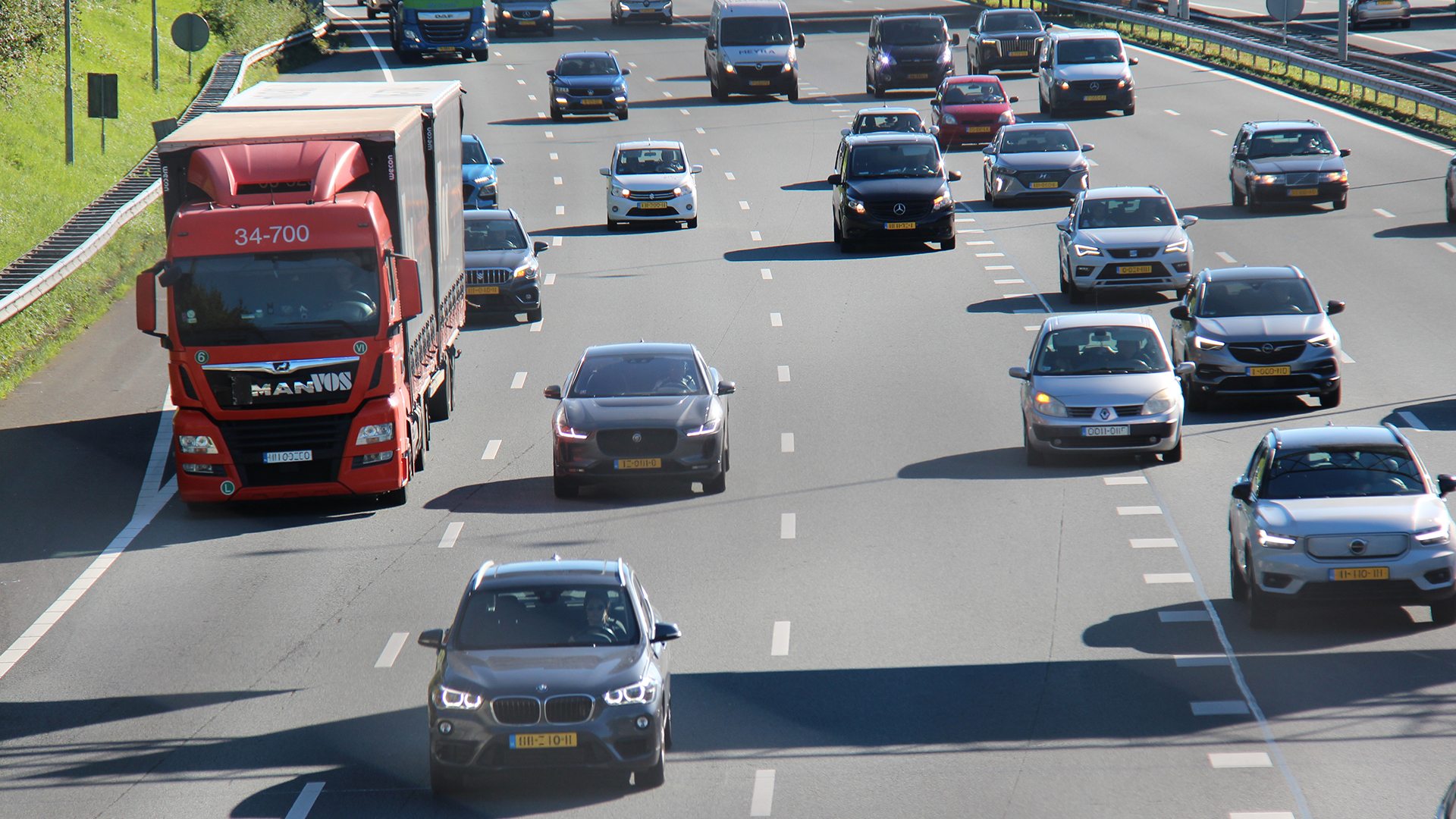
Starting May 22, 2026, it will be possible in the Netherlands to retroactively apply a tax-free allowance for travel expenses of €0,25 per kilometer, effective January 1, 2026. What does this mean for employers, employees, business owners, volunteers, and individuals?
READ
If you owe taxes, you will receive a notice from the Tax and Customs Administration. The new account number will be included in the notice regarding the taxes due.
Please note!The new account number does not affect the payment method. For example, online payments will still be possible.
The most commonly used new account number for the Tax and Customs Administration is NL04 RABO 0200112244. However, please note that different new account numbers are used for some taxes.
If you pay the Tax and Customs Administration periodically via direct debit, you do not need to do anything. The payments will be automatically transferred to the new account number.
You only need to be careful if you have arranged a recurring payment differently, for example via a recurring transfer with your bank. In that case, you must ensure that the account number is updated yourself.
If you accidentally use the “old” account number for a payment to the Tax Authority, your payment will still be forwarded to the Tax Authority and processed there for the time being. The Tax Authority has made arrangements with ING regarding this, so that taxpayers are not penalized.
To pay a provisional or final income tax assessment, you can use the new account number starting April 20, 2026.
The Benefits Service is also switching to Rabobank and will therefore have a new account number starting May 1, 2026. From that date, you can make payments to the Benefits Service using the new account number NL04 RABO 0200112244. The Benefits Service will make its first payments from this number on Monday, June 22, 2026.
Please note! Here too, if you make a payment to the old account number, the payment will be forwarded to the Tax and Customs Administration’s new account number for the time being.
Due to the change in account numbers, the Tax and Customs Administration strongly warns against phishing. Criminals regularly attempt to collect non-existent tax debts from taxpayers via email, text message, WhatsApp, or by phone. However, the Tax and Customs Administration never collects taxes in this manner. If you are unsure whether a message is genuine, follow the step-by-step guide on the Tax and Customs Administration’s website and verify the account number.

As of May 1, 2026, the Dutch Tax and Customs Administration and the Benefits Service will switch from ING to Rabobank. This means that the account numbers will also change.
READ
The indexation of the statutory minimum hourly wage is based on the average percentage change in contractual wages across the private sector, the subsidized and premium-supported sectors, and the public sector. In total, the statutory minimum hourly wage will increase by 1.90% as of July 1, 2026, compared to January 1, 2026. This brings it to €14.99.
Please note! As a result, the reference monthly wage will increase to €2,337 gross per month as of July 1, 2026. This reference monthly wage is used to determine the amount and indexation of various benefits.
The statutory minimum youth wages are a percentage of the statutory minimum hourly wage that applies to everyone aged 21 and older. Due to the indexation of the statutory minimum hourly wage, the minimum youth wages will also increase as of July 1, 2026.
AgePercentageMinimum hourly wage21 years and older 100% € 14.99 20 years 80% € 11.99 19years 60% € 8.99 18years 50% € 7.50 17years 39.5% € 5.92 16years 34.5% € 5.17 15 years 30% € 4.50
Please note! The percentage for employees aged 16 through 20 will increase effective January 1, 2027. For a 20-year-old, this will then be 87.5%, for a 19-year-old 75%, for an 18-year-old 62.5%, for a 17-year-old 50%, and for a 16-year-old 40%. For a 15-year-old, the percentage will remain at 30%.
BBL students (students in a vocational training program with an employment contract) aged 15 through 17 and 21 and older are entitled to the minimum hourly wage as stated above. For BBL students aged 18 through 20, lower rates apply.
AgePercentageMinimum hourly wage 20 years 61.5% € 9.22 19 years 52.5% € 7.87 18 years 45.5% € 6.82
Please note! Effective January 1, 2027, there will no longer be any lower rates for BBL students aged 18 through 20. BBL students in this age group will therefore be entitled to the standard minimum youth wage.

The Dutch statutory minimum hourly wage will be indexed again as of July 1, 2026, and will therefore increase to €14.99.
READ
For businesses that buy or sell goods, cash payments of €3,000 or more will no longer be permitted starting January 1, 2026. It does not matter whether the business is buying from or selling to another business or to a private individual. In all cases, cash payments of €3,000 or more are prohibited.
Please note! A private individual may accept a cash payment exceeding €3,000 from another private individual, for example, when selling on a marketplace.
The €3,000 limit is intended to make it more difficult to launder cash derived from illegal transactions and thereby also combat terrorism. The limit is also intended to ensure that payment transactions remain accessible.
The fine for violating the ban is set at a fixed base amount of €10,000. The Wwft Supervision Bureau, a division of the Tax and Customs Administration, oversees compliance with the ban.
Special circumstances, such as financial capacity, may justify reducing the fine. On the other hand, repeated violations of the prohibition may justify increasing the fine. For example, a fine of €20,000 may be imposed if the prohibition is violated again within five years of a previous fine.
Please note! Criminal proceedings may also be initiated under the Economic Offenses Act.

Starting January 1, 2026, Dutch merchants may no longer make or accept cash payments of €3,000 or more. The base amount of the fine for violating this prohibition is a fixed amount of €10,000.
READ
The simplicity of the plan is key. Currently, anyone wishing to operate in multiple EU member states often has to set up a separate company in each member state, such as a subsidiary. Each member state has its own conditions and rules regarding matters such as start-up capital and registration. An EU Inc. would greatly simplify this process through a harmonized set of rules. Choosing an EU Inc. is optional.
The incorporation of an EU Inc. can be completed entirely digitally within 48 hours for less than €100. There is also no capital requirement. Furthermore, a central EU registry containing company data will be introduced, and companies will automatically receive tax and VAT numbers upon registration. Bankruptcy proceedings will also be conducted entirely digitally.
EU Inc. companies can launch stock option plans for their employees, with tax obligations to the tax authorities only arising upon the sale of the options. Investing is simplified by eliminating formal procedures and intermediaries in share transactions. Member states can decide for themselves whether to grant EU Inc. access to the stock market, whereby protection can be offered against hostile takeovers.
The EU announced several new initiatives, such as digitizing communication beatween businesses and the government as much as possible. There are also plans to establish separate judicial chambers for EU Inc. companies. Furthermore, the goal is to enable fully cross-border remote work for startups and scale-ups. Other initiatives include improving access to capital and evaluating European venture capital funds, creating equal tax frameworks, and reducing administrative burdens.
The EU Inc. will be introduced via a regulation. The advantage is that this will have direct effect in all member states. A disadvantage is that unanimous support is required for a regulation. This carries the risk that countries will seek to add exceptions during the negotiations. The goal is to finalize decision-making on the EU Inc. by 2026.

The European Commission (EC) aims to make it possible to quickly establish a European limited liability company without initial capital: the EU Inc. The EU Inc. can operate in multiple countries, thereby enhancing the competitiveness of European companies.
READ
Cash payments of €3,000 or more will be prohibited in the Netherlands starting January 1, 2026. The ban applies to all businesses that buy or sell goods in or from the Netherlands, regardless of the sector in which they operate. It does not matter whether the business is buying or selling to another business or to a private individual. Furthermore, it does not matter whether the transaction takes place in the Netherlands or abroad. In all cases, cash payments to or from businesses based in the Netherlands of €3,000 or more are not permitted.
Please note!Private sellers are exempt from the ban. For example, a private individual selling something to another private individual via Marktplaats may still accept a cash payment exceeding €3,000.
An exception applies to the enforcement of the ban for purchases outside the EU. A business based in the Netherlands may therefore pay in cash for a purchase outside the EU of €3,000 or more.
Representatives from various vehicle, metal, and shipping sectors—where parties from Africa, South America, and Eastern Europe often pay in cash—have discussed with the Minister of Finance the challenges arising from the ban on cash payments. However, these discussions have not led the minister to grant an exception for these sectors.
The minister does not intend to allow a broader exception for specific goods, sectors, or transactions with foreign parties. This would conflict with the purpose of the cash payment ban, be unenforceable, and not align well with the European ban on cash payments set to take effect in 2027.
Starting July 10, 2027, a European ban on cash payments of €10,000 or more will also take effect. This European ban does not mean that the threshold in the Netherlands will then be raised to €10,000. EU countries are free to set their own threshold for cash payments, provided that it remains below €10,000 as of July 10, 2027.
The ban currently applies only to the trade in goods. A ban on cash payments for services will follow starting July 10, 2027, with the introduction of the European ban. In the Netherlands, the limit for services will be €3,000, just as it is for goods.

Effective January 1, 2026, a ban on cash payments of €3,000 or more for goods will take effect. An exception applies to purchases made outside the EU. No other exceptions will be introduced.
READ
Although there will be no change as of January 1, 2026, employers should already take into account the 12% pseudo-final levy in payroll tax from 2027 onwards. From 2027, employers will owe 12% pseudo-final levy on the catalog value of passenger cars with CO2 emissions that they make available to employees. The levy does not apply to cars that are not used privately, whereby commuting kilometers are considered private. Furthermore, the tax also does not apply to passenger cars without CO2 emissions or to cars that are not passenger cars (e.g., delivery vans).
Please note! Transitional law applies to passenger cars that were already made available before January 1, 2027. For these passenger cars, the tax will only apply from September 18, 2030.
For the private use of new cars with zero CO2 emissions, an additional tax liability of 18% will apply in 2026 on the first €30,000 of the catalog value and 22% on the value above that amount. If a new car with zero CO2 emissions is made available in 2027, the additional tax liability will be 20% on the first €30,000 of the catalog value and 22% on the value above that amount. This additional tax liability applies for the first 60 months after the month in which the car was first registered for road use. For hydrogen or solar-powered cars, the additional tax liability percentages of 18% and 20% apply to the entire catalog value.
Please note! The additional tax liability for cars with CO2 emissions will be 22% in 2026. For cars manufactured before 2017, the additional tax liability is 25% of the catalog value. This only differs if the car has no CO2 emissions or falls under the youngtimer scheme. In that case, the additional tax liability for the car without CO2 emissions is 21% of the catalog value up to €30,000 and 25% above that amount. For youngtimers, 35% of the market value applies.
The additional tax liability for private use of a car that was first registered sixteen years ago will be 35% of the market value in 2026. This is also known as the youngtimer scheme. In 2025, the age limit for this scheme was still fifteen years.
If the car is less than sixteen years old in 2026 but was first registered before January 1, 2017, the additional tax liability in 2026 will be 25% of the catalog value. If such a car has no CO2 emissions, an additional tax liability percentage of 21% can be applied up to a catalog value of €30,000 in 2026.
Tip! Transitional law applies to cars that were already made available to the same employee in 2025 and that were fifteen years old or older in 2025. For these cars, an additional tax liability of 35% of the market value may be assumed for the whole of 2026.
Please note! As of January 1, 2027, the age limit in the youngtimer scheme will be raised to twenty-five years. Transitional law will then no longer apply.
The statutory gross minimum hourly wage is always indexed on January 1 and July 1. As of January 1, 2026, this will be increased to €14.71 for employees aged 21 or older (as of July 1, 2025, this was still €14.40). Minimum hourly wages derived from this apply to employees between the ages of 15 and 20. There is an intention to increase these percentages as of January 1, 2027, from 80% to 87.5% for a 20-year-old, from 60% to 75% for a 19-year-old, from 50% to 62.5% for an 18-year-old, from 39.5% to 50% for a 17-year-old, and from 34.5% to 40% for a 16-year-old.
The soft landing for the enforcement of bogus self-employment as it applied in 2025 will be partially extended in 2026. This partial extension means that, in principle, the Tax and Customs Administration will also start with a business visit in 2026 instead of immediately conducting a tax audit. The entrepreneur will then, in principle, be given the opportunity to improve their business operations.
In 2026, as in 2025, the Tax and Customs Administration will be able to impose additional tax assessments. In cases of (obvious) bogus self-employment, the Tax and Customs Administration will therefore have the option to take action. Whereas in 2025 it was not yet possible to impose penalties for misconduct, this will be possible from 2026 onwards. The extension of the soft landing therefore does not apply to penalties for misconduct. The Tax and Customs Administration can impose a penalty for misconduct in cases of (conditional) intent or gross negligence. The extension of the soft landing does still apply to penalties for non-compliance. This means that the Tax and Customs Administration will not impose any penalties for non-compliance in 2026.
Please note! The extension of the soft landing only applies in 2026. From 2027 onwards, the Tax and Customs Administration will no longer start with a company visit and will therefore also impose default penalties.
The standard amount for customary wages in 2026 will be €2,000 higher than the standard amount in 2025 and will amount to €58,000 per year. The customary wage you will have to apply in 2026 will depend not only on this standard amount, but also on the wage paid in the most comparable employment and on the wage of the highest-earning employee of your private limited company or affiliated private limited companies.
In 2026, as in 2025, the discretionary scope in the WKR will be 2% of the wage bill up to €400,000 and 1.18% above that amount. From January 1, 2027, the discretionary scope will increase to 2.16% of the wage bill up to €400,000 and 1.18% above that amount.
The tax-free allowance for working from home will be €2.45 per day in 2026 (2025: €2.40). The standard amount for the value of meals in canteens or during staff parties at the company location will also increase in 2026 to €4.05 per meal (2025: €3.95). The standard amount for accommodation in lodging will increase from €6.80 per day in 2025 to €7.00 per day in 2026.
The maximum tax-free volunteer allowance in 2026 will be €2,200 per year and €220 per month (in 2025 €2,100 per year and €210 per month). The tax-free volunteer allowance must remain within the maximum amounts and the volunteer must not perform the work on a professional basis for designated, non-commercial organizations. The Tax and Customs Administration assumes that the work is not performed as a profession if the maximum hourly allowance in 2026 is €5.75 (in 2025 this was €5.60). For volunteers under the age of 21, this maximum hourly allowance is €3.40 (in 2025 €3.30).
The wage cost benefit (LKV) for job agreements has been changed with effect from 2026. For example, you no longer need a target group declaration for this LKV, but you must check the target group register at the UWV to see whether the employee is included in it. Furthermore, the maximum period of three years has been abolished. From 2026, you will therefore be entitled to this LKV as long as the employee is employed by you and is included in the target group register. From 2026, people with learning disabilities and employees with an indication for sheltered employment will no longer be entitled to the LKV, unless you can make use of the transitional law for employment relationships that commenced before 2026.
Please note! Another LKV, the LKV for older employees, will be abolished on January 1, 2026, for employment relationships that began on or after January 1, 2024. For employment relationships that began before that date, the right to the LKV for older employees will continue to exist in 2026 until the end of the maximum term of three years.
Employers with 100 or more employees are required to report on their employees' business travel and commuting. This obligation is known as the ‘Work-related personal mobility reporting obligation’, abbreviated to WPM.
The intention is to exempt companies with up to 250 employees from this obligation from 2027 onwards. Legislation to this effect is currently being prepared. The State Secretary is consulting with the Association of Netherlands Municipalities (VNG) about enforcement until January 1, 2027. He would like municipalities and environmental services to exercise restraint in enforcing their powers with regard to companies with up to 250 employees until January 1, 2027.

If you are an employer or work with self-employed professionals, it is important to be aware of the changes that will take effect on January 1, 2026. We have listed ten important points for you.
READ
The fixed customs duty of € 3 will apply to all goods entering the EU if the sellers from outside the EU are registered in the EU's single window system for imports. Ninety-three percent of all e-commerce to the EU is registered in the one-stop shop system.
The levy will only apply to parcels with a value of up to € 150. Customs duties already apply to parcels worth € 150 or more.
Please note! The fixed customs duty will apply per product group. If a parcel contains three different products, a fixed customs duty of € 3 will be payable three times from July 1, 2026.
The € 3 customs duty is a temporary solution until 2028. In November 2025, the Council of the European Union committed to introducing customs duties for small parcels as soon as possible. Once introduced, customs duties will be paid on all goods worth less than € 150 at the normal EU rates for the individual products. Until then, the temporary arrangement will apply from July 1, 2026, whereby a fixed customs duty of € 3 will be levied. It will therefore still be possible to undervalue parcels in order to evade and avoid tax and import duties.
There is also a proposal to introduce a € 2 levy for administrative costs in addition to the fixed customs duty. This is due to take effect from November 2026, but the government is considering introducing it earlier in the Netherlands. In doing so, the Netherlands is following developments in France, Belgium, and Luxembourg. Implementation will take place on February 1, 2026, at the earliest.

From July 1, 2026, a fixed customs duty of € 3 per product will be levied on imports into the EU of small parcels with a value of up to € 150.
READ
Employers will pay extra tax if, from January 1, 2027, they make a company fossil fuel passenger car (CO2 emissions greater than zero) available to their employees for private use for the first time. The catch with this regulation is that commuting is also considered private use! In principle, the tax amounts to 12% of the catalog value. For passenger cars made available before 2027, the levy will not take effect until September 17, 2030. Therefore, you should also take this regulation into account if you are considering making fossil fuel passenger cars available for the first time before 2027. If you are purchasing or leasing a car with a longer term, you may want to opt for an emission-free passenger car.
Please note! The additional tax liability for company cars will also remain in place! However, the lower additional tax liability for company cars that do not emit CO2 will be abolished in 2026. If you purchase an electric car in 2025, you will still benefit from the low additional tax liability for a maximum of five years.
If you have private assets, it is important to take into account the tax you have to pay on the different types of assets in box 3. The amount of box 3 tax depends not only on the amount of your assets, but also on their composition.
Furthermore, movable property for personal use (such as household effects, jewelry, or a boat) is not included in box 3. You can therefore save on tax by planning wisely around the reference date of January 1, 2026. Buy movable property for personal use before January 1, 2026, rather than just after that date. And if you have sold immovable property in box 3, check whether it can be transferred to the notary before January 1, 2026. In that case, the statutory return on this property on January 1, 2026 will not be 7.78%, but the much lower statutory return that applies to bank balances.
Please note! Advice regarding box 3 is always tailored to individual circumstances and involves more than described above! Therefore, consult your advisor for your own situation.
If your total actual return in box 3 is lower than the total calculated statutory return, you may be able to invoke the box 3 rebuttal rule. The Supreme Court ruled on this in mid-2024. In principle, it is possible to invoke the box 3 rebuttal rule for the years 2017 to 2027. However, for the years 2017-2020, this is only possible if your final income tax assessment was not yet irrevocably determined on December 24, 2021, and you lodged an objection or requested an ex officio reduction in good time. To invoke the rebuttal rule, you must use the Opgaaf Werkelijk Rendement (OWR) form. The Tax and Customs Administration will be sending out letters in phases starting in July. Once you receive this letter, please contact our advisors as soon as possible. In certain cases, the response period is only twelve weeks!
Please note! The calculation of the actual return is likely to differ from what you have in mind for an actual return. For example, unrealized changes in value are also taken into account. To assess whether you can invoke the box 3 rebuttal rule, please contact our advisors.
Tip! If your actual return is higher, you do not need to do anything. You simply pay box 3 tax based on the statutory return.
In 2025, the rate in box 2 will be 24.5% up to an income of €67,804 (or €135,608 for joint tax partners). The rate for amounts above this will be 31% in 2025. It is therefore more attractive to pay dividends up to €67,804 (€135,608 for fiscal partners) than a higher amount. Check what amounts of dividends you want to pay out in the coming years and take these rate differences into account.
A VAT adjustment scheme already applies to investments in movable and immovable property. From 2026, a VAT adjustment scheme will also apply to services of at least € 30,000 (excluding VAT) relating to immovable property. From 2026, these investment services will be monitored in the year of commissioning, plus the four subsequent years. If the use for VAT-taxed and/or VAT-exempt services changes during that period, the VAT deduction on the investment service will be revised.
The VAT revision scheme only applies to services that serve the immovable property for several years, such as the renovation and maintenance of immovable property, but also demolition work related to a renovation. Materials, installations, machines, and tools that are incorporated into a service and lose their independence after installation or assembly are also considered part of the investment service.
The VAT revision scheme will apply to investment services that are put into use from January 1, 2026. If you put these investment services into use before this date, they will not be affected by the scheme.
Tip! The € 30,000 limit applies per service.
After years without enforcement (except in cases of malicious intent), the Tax and Customs Administration will resume enforcement of bogus self-employment from January 1, 2025. Please note that from 2026, fines may also be imposed again, even if there is no intent or bad faith. Pseudo-self-employment occurs when a self-employed person (freelancer) is actually employed by a client according to the legal rules. Do you work with self-employed people? Then check carefully whether they should actually be employed by you. What agreements have you made, how have you recorded them, and do the agreements actually correspond to practice?
Please note! Contractual agreements do not always correspond to how things work in practice. The actual performance of the work is decisive.
Are you planning to purchase a home that you will not use as your primary residence, for example, a home to rent to your child? If possible, wait until after 2025. From 2026, the transfer tax for homes that you will not use as your main residence will be reduced from 10.4% to 8%. This can make a significant difference to your wallet. For example, the benefit for a home worth € 500,000 is already € 12,000.
Under the work-related expenses scheme, as an employer you do not pay tax if your reimbursements and benefits in kind to your staff remain within the discretionary scope. In 2025, this will be 2% up to a total taxable wage bill of €400,000 and 1.18% above that amount. Check whether you still have any discretionary scope left and make use of it if you want to reward your staff with extra benefits. Any surplus discretionary scope cannot be carried over to 2026. If you are a director/major shareholder of a private limited company, you can also give yourself a tax-free bonus in this way, provided that this bonus meets the customary practice test.
Tip! Up to a total amount of € 2,400 per employee per year, the Tax and Customs Administration assumes in principle that the customary practice test has been passed.
Amounts paid for the purchase of an annuity are deductible under certain conditions. For those with a pension shortfall in 2024, the annual tax allowance for the deduction of annuity premiums in 2025 is 30% of income (including profit and wages). The maximum annual allowance in 2025 is € 35,798. Perhaps you also have reserve allowance from previous years? If so, you can use a maximum of € 42,108 of this in 2025. Make sure you pay the annuity premiums in 2025! Only then can you still deduct them in your 2025 income tax return. If you pay in 2025, your bank balances on January 1, 2026 will be lower and you may also pay less tax in box 3 for 2026.
Please note! The amounts paid for annuities are only deductible if there is insufficient pension accrual. The 2025 tax allowance reflects this pension shortfall in 2024.
Do not let the period for reinvestment reserves (HIR) formed in the past expire. In principle, you must use any HIR you formed in 2022 before December 31, 2025. If you do not, the HIR will be released and you will owe tax on it.
Tip! In special circumstances, a longer reinvestment period is sometimes possible. For more information, please contact our advisors.
Let op! Some of the above tips are not yet final and still need to be approved by the new House of Representatives and Senate. We would therefore be happy to discuss with you personally whether it is wise to take action or not.

What can or must you arrange as an entrepreneur, director/major shareholder, employer, or private individual at the end of 2025? What changes will take effect in 2026 that you can anticipate now? We offer ten important tips.
READ
Please note!This article outlines government proposals that will be debated by the Lower and Upper House over the forthcoming period. Unless indicated otherwise, the proposed measures will enter into force with effect from 1 January 2026.
From January 1 2027 as an employer, you will owe a pseudo-final levy of 12% if you provide a passenger car with CO2 emissions to an employee for private use and/or commuting. The aim of this scheme is to accelerate the transition to electric passenger cars, in line with the climate targets for 2030. Fully electric passenger cars and passenger cars used exclusively for business purposes are excluded from the regulation.
Please note!Commuting is explicitly classified as private use. This is therefore different from the calculation of the additional tax liability for private use of a company car!
From January 1 2027 you will therefore have to calculate a pseudo final levy on a monthly basis. You can pay this levy monthly, but you can also wait until the second payroll tax period in 2028 to pay it. The levy may not be passed on to the employee. A personal contribution from the employee for private use does not affect the amount of the levy.
Please note!Until 17 September 17 2030 no pseudo-final levy is due on passenger cars made available to employees before 1 January 2027. After this date, the levy will apply to all fossil fuel passenger cars used for private purposes.
From 1 January 2026 the government will implement a number of adjustments to the current box 3 scheme as a prelude to the new system based on actual returns. The intended implementation date of the new system is 1 January 2028. Below are the most important points as of 1 January 2026:
For taxpayers younger than the state pension age, the rate in the first income tax bracket will decrease slightly, from 35.82% (2025) to 35.70% (2026). The second bracket will increase slightly, from 37.48% (2025) to 37.56% (2026). The third bracket will remain unchanged (49.50%). For taxpayers older than the state pension age, there will be a reduction in the first bracket from 17.92% (2025) to 17.80% (2026). The second bracket will increase slightly, from 37.48% (2025) to 37.56% (2026), and the third bracket will also remain unchanged (49.50%).
In addition, the bracket lengths in box 1 of the income tax will change with limited indexation. The highest rate of 49.50% will apply to incomes above €79,137.
To make working more attractive, the maximum employed person's tax credit will be increased from € 5,599 (2025) to € 5,712 (2026).
The maximum general tax credit will increase slightly, from € 3,068 to € 3,115 (for taxpayers older than the state pension age from €1,536 to € 1,554), and the maximum income-related combination credit will increase from € 2,986 to € 3,032. The elderly tax credit and the single parent tax credit will also increase slightly.
For entrepreneurs, the self-employed deduction will decrease from € 2,470 to € 1,200; this is in line with the policy of phasing out tax benefits for the self-employed. For entrepreneurs, this means that the tax incentive for self-employment will further decrease. The SME profit exemption will remain unchanged at 12.70%.
The reporting obligation for work-related personal mobility (WPM) now only applies to companies with 250 or more employees. Previously, this obligation applied to companies with 100 or more employees, but on Prince´s Day it was announced that the threshold for the obligation would be raised to 250 employees.
Since 1 January 1 2020 an additional tax liability of 7% (minus any personal contribution by the employee) applies to a company bicycle that an employee also uses privately. This additional tax liability is mandatory as soon as the bicycle is used for commuting. The government proposes to amend this scheme with retroactive effect to 1 January 2020. If the bicycle is not parked at the employee's home or place of residence, or if it is parked there for no more than 10% of the time, the additional tax liability is zero. This means that no wage or income tax is due. In this way, the scheme prevents unintended taxation in the case of, for example, hub bicycles or campus bicycles. This scheme also applies to entrepreneurs subject to income tax.
Please note!If the bicycle is parked more than 10% at the employee's home or place of residence, the regular additional tax liability of 7% applies.
From 1 January 2026 four rates will apply to transfer tax (already adopted in 2024). The standard rate of 2% applies to homes that the buyer uses as their primary residence. First-time buyers under the age of 35 can, under certain conditions, apply a 0% exemption when purchasing a home with a market value of up to € 555,000 (2026). For homes that are not used as a primary residence, a new rate of 8% will apply from 2026. This includes investment properties, vacation homes, homes for children, or rented homes.
Please note!The rate for non-residential properties will remain at 10.4%. This applies to commercial real estate, business premises, and undeveloped land, for example.
The government has decided to maintain the reduced VAT rate of 9% on culture, media, and sports. The increase to 21% as of 1 January 2026, which was adopted at the end of 2024, will therefore be scrapped. Maintaining the low rate will cost € 1.3 billion on a structural basis. The government will cover this by limiting the inflation adjustment on income and payroll tax.
Please note!However, the general rate of 21% will apply to accommodation providers (such as hotels and B&Bs) from January 1, 2026. This adopted VAT increase will therefore not be reversed.
The temporary RVU threshold exemption will be continued on a structural basis from 2026. This will allow employees – under certain conditions – to stop working up to three years before reaching the state pension age and receive a benefit. If that benefit remains within the threshold amount, the employer will not pay a pseudo-final levy of 52%.
In addition to the continuation of the scheme, the threshold amount will also increase by € 300 gross per month and this amount will be indexed annually in line with the minimum wage. In 2025, the RVU threshold exemption will be € 2,273 per month.
The pseudo-final levy paid on amounts above the RVU threshold exemption will also increase. Above this threshold, a pseudo-final levy of 52% currently applies, but this will rise to 57.7% in 2026, to 64% in 2027, and to 65% from 2028 onwards.
Green investments currently yield a tax benefit through an exemption in box 3. In addition, a tax credit of 0.1% applies to the exempt amount. The scheme applies to investments in recognized green funds that finance sustainable and innovative projects.
This benefit has already been gradually phased out since January 1, 2025. In 2025, the exemption will be € 26,312 (€52,624 for tax partners). In 2026, the exemption will still exist, but in 2027 it will only amount to €200 (€400 for partners). The scheme will therefore effectively be abolished.
The tax credit will formally remain in place in 2027, but the effect will be marginal due to the 0.1% percentage. The tax benefit was actually supposed to be abolished on January 1, 2027, but due to implementation problems at the Tax and Customs Administration, the final abolition has been postponed to 1 January 1 2028.
Four measures relating to inheritance and gift tax were presented on Prince`s Day 2025. The government's aim is to clarify tax practice and prevent unfair situations. The proposed measures are:

What tax proposals for entrepreneurs came out of the Dutch Government on Prince’s Day 2025? We have listed ten important plans for you.
READ

Weert branch
Schoutlaan 7
6002 EA Weert
0495 53 07 55
info@w-o.nl
W&O Accountants en Adviseurs
General terms and conditions
Complaints procedure
Whistleblower policy
Privacy statement
